
Back in July 1971, Coca-Cola debuted a TV commercial that would become one of the most iconic in the brand’s history. “Hilltop” featured a diverse group of people gathered on an Italian hillside, sharing their voices and bottles of soda, and famously singing, “I’d like to buy the world a Coke.” It was a Don Draper-approved multicultural, apolitical masterpiece.
It was also a complete fantasy. Despite the kumbaya vibes of the spot, 1971 America was a much more complicated and volatile place than what was depicted in the ad. It was the peak of the Vietnam War protest movement, with 60% of Americans opposing the war and 500,000 people demonstrating in D.C. just a few months before the ad dropped. Racial tensions continued to simmer, the economy struggled with high inflation, and unemployment peaked at 6.1%. Oh, and the Pentagon Papers were released that July.
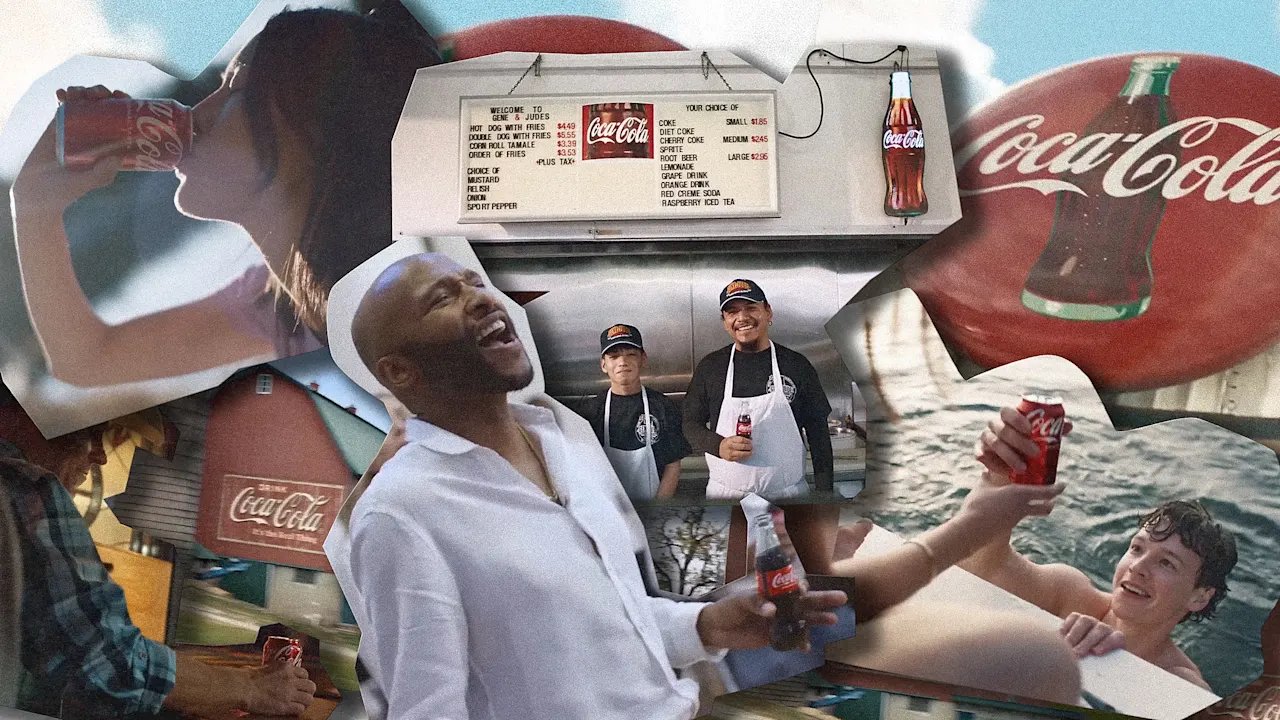
This week, Coke reheated a similar strategy and launched its yearlong, nationwide campaign to celebrate America’s 250th anniversary with a three-minute video called “Drink in America.” It’s a direct descendant of the “Hilltop” spot—with a modernized cornucopia of diverse people, activities, jobs, and geographies—that’s set to an inspirational tune.
Much like the 1971 spot, this is an incredibly idealized version of America. It feels especially weird amid intense partisan politics, an increasingly unpopular president, and a war with Iran. This video isn’t just selling sugar water—but an America you would barely recognize online. Against the backdrop of the news every day, it doesn’t quite feel like the Real Thing.
How do you throw a party in the middle of a war while so many folks at home are doomscrolling content designed to keep them hating each other? Coke went back to its original recipe to look for an answer, and there are lessons here for all the other brands getting their own America250 campaigns ready.
Celebration nation
This summer marks America’s 250th anniversary, and despite all the political chaos at home and abroad, people definitely still want to celebrate.
A recent M Booth survey reports 62% of Americans say the 250th anniversary is personally important, and 8 in 10 say it’s a moment to celebrate America’s history, achievements, and values. Yet 60% say the country is more divided now than at any period in their lifetime.
In January, contextual advertising platform Chicory surveyed 1,000 U.S. consumers and found that while 58% of Americans plan to celebrate the nation’s anniversary, enthusiasm was far weaker for younger adults. “There’s a lot more hesitation within the Gen Z cohort,” Chicory CEO and cofounder Yuni Baker-Saito told Fast Company in February.
This is what the professionals call a brand challenge.
Joining Coke to take a crack at it are brands such as Amazon, Chevrolet, and Stellantis (Dodge, Jeep, Ram, Chrysler), who are partnering with America250, the nonprofit that’s organizing the official celebration of the U.S.’s semiquincentennial.
As delusional as they first appear in the context of everyday reality, both “Hilltop” and “Drink in America” offer an escape. A few moments in a harmonious alternate reality. In the first season of Mad Men, the world’s most famous fictional adman, Don Draper, said that advertising is based on one thing: happiness. “And you know what happiness is?” Draper asked. “It’s the smell of a new car. It’s freedom from fear. It’s a billboard on the side of the road that screams with reassurance that whatever you’re doing, it’s okay. You are okay.”
That’s what Coke is singing about. And it’s one of the few brands, thanks to “Hilltop” and its ubiquitous iconic brand status, that may actually have permission to be this corny. The brand tapped the same vein in 2014 with “America the Beautiful,” a lovely multilingual rendition that probably gave Stephen Miller the dry heaves and a rash.
Another brand with this kind of permission may be Budweiser, thanks to its legacy of creatively plucking heartstrings every Super Bowl Sunday. You know: like a galloping Clydesdale and flying bald eagle becoming best pals to the tune of “Free Bird.”
But not every brand can be so lucky.
Patriotic sales pitch
In a country as polarized as America is right now, it’s impossible to find a single definition of patriotism. For brands looking to tap into the emotions behind national pride, it can be a sword’s edge to walk between saccharine cheeseball and alpha ’Murica energy. In the Trump era, falling too far on either side risks alienating multiple groups of very wealthy potential customers.
The latter was on full display last year when Ram Trucks told us all to never stop being American. Cloaked in the stars and bars, and just dripping in unintentional comedy, this was the truck nuts of patriotic ads.
There’s arguably something to be said for leaning into the worst stereotypes of the American image. Here, Ram does that in a way that reminds me of a 2014 Cadillac spot called “Poolside.” In it, we get a guy in full-on hustle culture mode, looking down his nose at the weak and lazy European culture of “work to live” over “live to work.”
Both the Ram and Cadillac ads swing hard at stereotypes of the American image, yet they lack another, crucial aspect of that image—a sense of humor. There’s a self-awareness missing that would immediately shift these from being a laugh-at situation into a laughing-with dynamic.
For that, let’s revisit a 2010 Dodge Challenger spot called “George Washington.” It’s like someone saw the revisionist history of Inglourious Basterds and said, ‘Hey, let’s do that with the American Revolution for a car ad.’ The redcoats turned tail and ran once a few Dodge muscle cars were roaring toward them. This still delivers several similarly clichéd aspects of the American image, but serves it up with a wink. Enough to stoke the Ricky Bobby demographic, but also laugh with some self-awareness.
Some of the best advertising is made when brands find true stories of how that company actually lives and breathes out in the real world. That’s also a sound strategy for any brand trying to find its own definition and expression of national pride.
Walmart’s “American Jobs” spot from 2017 is a good example of a company heralding U.S. workers while also touting its own horn for bringing manufacturing jobs back stateside. Verizon made a similar move in 2019 with a Super Bowl spot that highlighted the brand’s role in helping first responders. And Dodge found a hit with its 2013 big game spot called “God Made a Farmer.” Workers, farmers, American jobs, and first responders are the kind of specific yet broadly inspiring people that can instill national pride across the aisle.
Broad, anthemic ads aiming to encompass all it means to be American risk being too watered down by their own sweeping generalities. Like many great stories, a broader message is often best told with specificity. Individual examples hit points harder. It’s why so many ads for the Olympics focus on the individual athlete stories over trying to sum up what the entire Games mean.
Toyota’s 2021 Super Bowl ad titled “Upstream” creatively illustrated the power of Paralympic swimmer Jessica Long’s life story.
As America250 brand campaigns continue to roll out, they don’t need to define America or what being American is all about. Despite all the doom and gloom, there are thousands of incredible individual stories to tell about this country. Find one and sing about that.



