
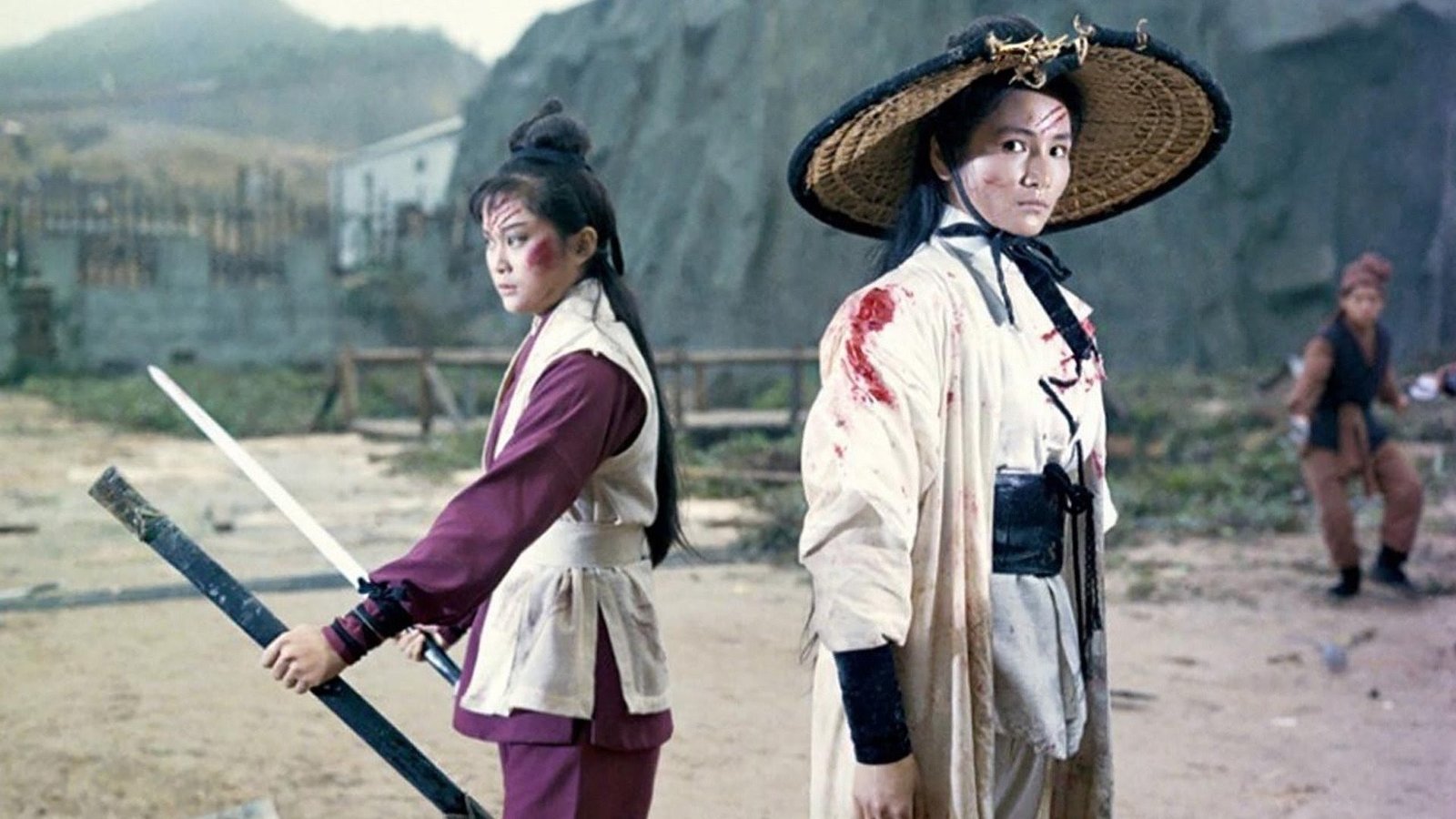
“The Lady Hermit” arrived at a pivotal moment for both the studio and its leading star, Cheng Pei-pei, which much later on would become internationally known in “Crouching Tiger, Hidden Dragon. Having risen to prominence with “Come Drink with Me”, Cheng had become one of the defining female action icons of Hong Kong cinema, and this production effectively serves as a symbolic passing of the torch to newcomer Shih Szu, whom the studio was grooming as her successor. Within this context, the narrative of mentorship gains an additional meta layer, with the seasoned warrior guiding the younger disciple both on screen and within the industry itself. The film was also a commercial success upon release, placing among the top box office entries of its year, further solidifying its standing within the Shaw Brothers canon.
Buy This Title
on Imprint Asia by clicking on the image below
The story follows Cui Ping, a young and ambitious martial artist , who arrives in a town seeking the legendary Lady Hermit in order to gain the skills necessary to defeat the notorious Black Demon. Unbeknownst to her, the humble servant woman she befriends, is in fact the very master she seeks, living in hiding after sustaining serious injuries in a past confrontation with the villain. As circumstances force the master to reveal her identity, she reluctantly takes Cui Ping under her wing, training her in the arts needed to confront their common enemy. Complicating matters is the presence of Chang-chung, whose relationships with both women introduce a romantic triangle that ultimately affects their bond and drives part of the final act.
Ho Meng-hua follows closely the recipe of the wuxia genre, with the familiar recipe of pupil meeting master, master reluctantly agreeing to teach, training session, separation and eventual reunion against a common foe follower to the letter. However, the fact that both master and student her are women adds a very intriguing element in the film, particularly due to the presentation of this rare dynamic of mentorship between them. At the same time, the presence of Chang-chung and the complications the romantic arc offers, even if somewhat forced in the narrative, adds a rather original aspect to the whole trope, and also emotional stakes that culminate in the final confrontation.
From a technical standpoint, the production excels in multiple areas. Danny Lee Yau-tong’s cinematography is particularly striking, with vivid use of color in sunset and sunrise sequences, as well as strong location work and carefully constructed sets that enhance the period atmosphere. The training sessions in particular, as much as the final battle in the pagoda will definitely stay on mind for their visual prowess, while the latter, along with some of the initial scenes, offers the best in terms of action choreography, which does get quite brutal on occasion.
Chiang Hsing-Lung’s editing results in a brisk pace, which both suits the aesthetics and helps hide some of the illogicalities in terms of story. The sound design is impressive, even if the clash of the swords sound is quite typical, while the lush musical score amplify the intensity of the action and the emotional weight of key scenes.
Cheng Pei-pei delivers a commanding presence as the titular hermit, embodying both authority and vulnerability, while her role resonates as a fitting culmination of her Shaw Brothers period. Shih Szu proves effective as the impulsive yet talented disciple, balancing youthful enthusiasm with the necessary growth her character undergoes and a temper that suite her age. The chemistry between the two women is also of the highest level, in one of the best traits of the movie Lo Lieh, although somewhat underutilized in comparison to the two leads, adds a layer of charm and serves as the catalyst for the emotional conflict, while his presence is the main source of the slight comedy in the film.
“The Lady Hermit” stands as a highly entertaining and well-crafted wuxia that may follow a familiar formula but elevates it through the rare female dynamics in its center, the acting, and the overall audiovisual presentation. Furthermore, it it remains a significant entry in the genre for its emphasis on female warriors and its symbolic role in the transition between two generations of stars.



