
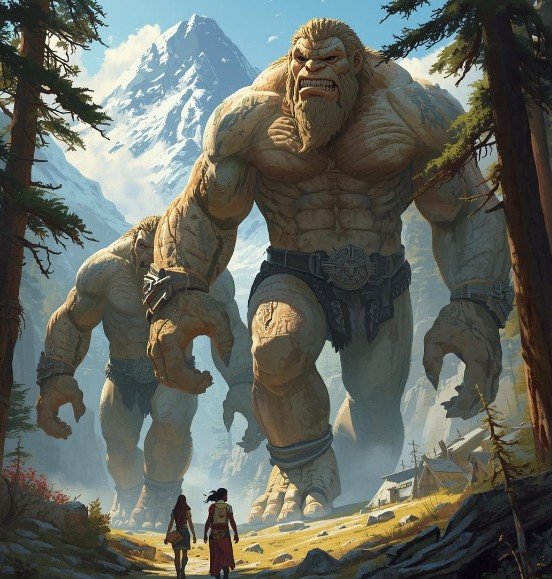
For centuries, stories of a mysterious ape-like creature roaming the snowy peaks of the Himalayas have fascinated explorers, scientists, and local communities alike. Known as the Yeti, this legendary figure is often described as the Himalayan counterpart to Bigfoot — a large, elusive creature said to inhabit remote wilderness areas and avoid human contact.
What Is the Yeti?
The Yeti, sometimes called the “Abominable Snowman,” is believed to be a tall, hairy, human-like creature that lives in the high-altitude regions of Nepal, Tibet, and surrounding areas. According to traditional accounts, the Yeti walks upright, leaves large footprints in the snow, and possesses great strength and agility.
Local Himalayan communities have passed down stories of encounters for generations. In their folklore, the Yeti is not always portrayed as frightening — sometimes it is seen as a spiritual guardian of the mountains or a symbol of nature’s power.
Why People Compare the Yeti to Bigfoot
The Yeti and Bigfoot share striking similarities:
Large, ape-like appearance — both are described as tall, hairy, and human-like.
Remote habitats — the Yeti in snowy mountains, Bigfoot in dense forests.
Rare sightings — both creatures are said to avoid humans.
Footprint evidence — reported tracks have fueled ongoing curiosity.
Lack of definitive proof — neither has been scientifically confirmed.
Because of these parallels, many researchers and enthusiasts consider them regional variations of the same idea: an undiscovered primate or a myth inspired by real animals.
Scientific Explanations
Scientists remain skeptical about the Yeti’s existence. Several investigations suggest that supposed Yeti evidence — including hair samples and footprints — may actually come from known animals such as Himalayan brown bears or other wildlife. High-altitude conditions, harsh weather, and limited accessibility also make the region prone to misidentification and exaggeration.
Still, the mystery persists due to occasional reports from climbers and locals who claim unusual sightings.
Cultural and Historical Impact
The legend of the Yeti plays an important role in Himalayan culture and global popular imagination. It has inspired:
Expeditions and scientific studies
Books and documentaries
Tourism and mountaineering folklore
Ongoing debates about undiscovered species
Whether real or mythical, the Yeti represents humanity’s fascination with the unknown and the possibility that nature still holds hidden secrets.
Myth or Hidden Creature?
Like Bigfoot, the Yeti sits at the crossroads of folklore, science, and mystery. While no conclusive evidence confirms its existence, the legend continues to spark curiosity about unexplored regions of our planet and the stories cultures create to explain them.

The question remains open: Is the Yeti simply a myth shaped by imagination and misidentified animals, or could it be a real creature waiting to be discovered in the vast wilderness of the Himalayas?



