
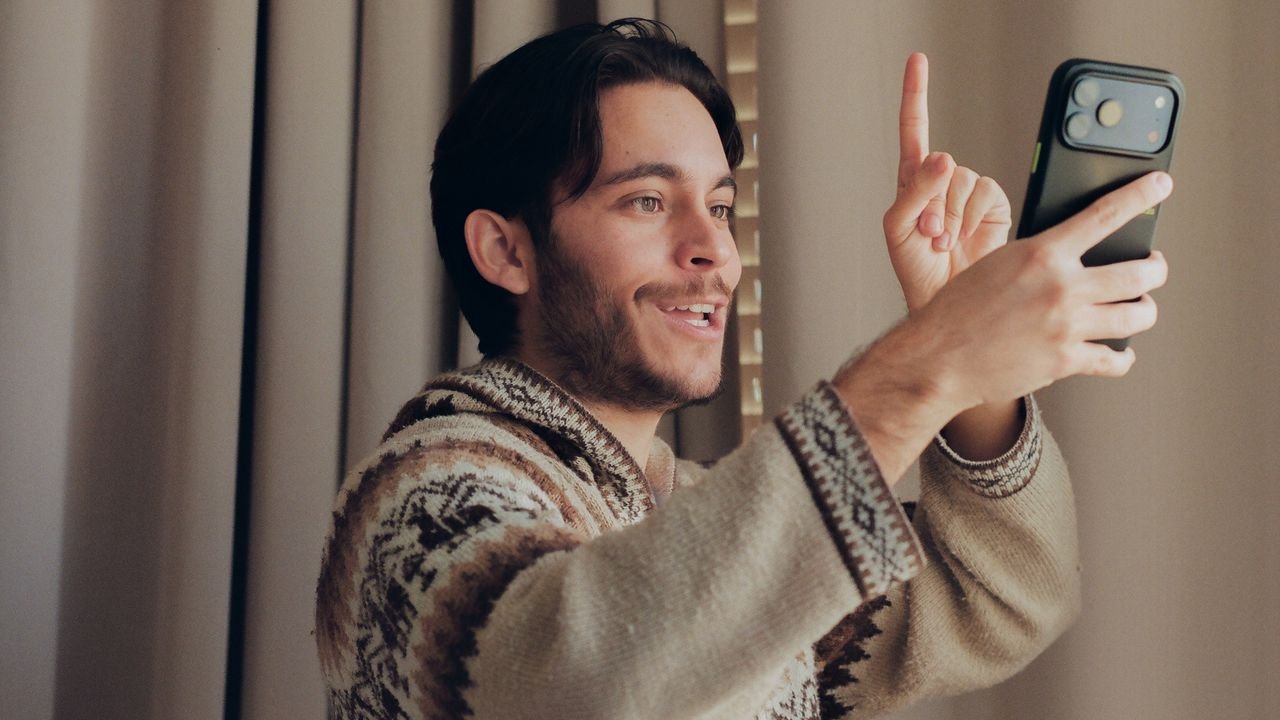
Espina had intended to become an immigration lawyer, but he never took the bar exam, because by then he had realized that he could be more effective on social media. He had graduated from Vassar at the start of the COVID pandemic, when job hunting was practically impossible, and was living at home, in College Station, when the Brazos network asked him to conduct his citizenship-test classes online. He started on Facebook. When he ran out of questions to explain, he began to share details of what he had learned from his correspondence with detained migrants, and to respond to comments on his time line. Some followers suggested that he also post his videos on TikTok, a relatively new platform at the time which had just become the most downloaded app in the world.
Espina wasn’t impressed by the content that he saw there. “I thought it was kind of a silly app,” he remembered. But he posted a few videos about the citizenship test, and they took off. He soon realized that there was no one offering relevant, useful information in Spanish for a U.S. audience—Latino content creators were mostly second-generation immigrants who posted in English. “There was no one producing content in Spanish for Latinos that wasn’t entertainment. I grew quickly, without competition,” he said.
His core audience was, and remains, migrants working in construction, restaurants, hotels, hospitals, and other sectors considered essential. As his reach grew, he began posting more about his own life—a birthday message for his mother, a puppy he adopted, a soccer game he watched at a friend’s house—and he started receiving requests for more information about the immigration system and policy. Espina gathered that information from a variety of sources, he told me, including immigration lawyers with whom he engages in online groups; government websites; and traditional news outlets such as the New York Times, the Washington Post, the Wall Street Journal, and CNN. Influencers “rely heavily on traditional media,” he said at the International Symposium on Journalism at the University of Texas at Austin last year. He himself does not corroborate the information independently. “If something is very relevant and those outlets have verified it, I consider it credible,” he told me.
Jorge Ramos has also become an independent content creator—he is now on Substack, TikTok, and YouTube, and also hosts a podcast with his daughter, Paola. He was an anchor at Univision for nearly forty years, but, he said, “audiences were falling year after year, as if the Martians had abducted them.” He added, “They were, of course, migrating from television to digital media. The credibility and trust that the big media outlets once had were also fading. Now people place their trust in individuals.” (Many traditional news outlets, in turn, are now offering more content in the form of short videos, in which writers speak directly to audiences.) He sees this trend as a tremendous opportunity for Spanish-language journalists who have been pushed out of traditional media—Univision essentially dissolved what remained of its once ambitious U.S. digital-news operation earlier this year—and for those just beginning their careers. “When I started, everyone wanted to be an anchor. Today, trying to do that would be a very serious mistake. You have to be a surfer, navigating content across different platforms,” Ramos said. “Carlos does it better than anyone else in Spanish.”
Another factor that may explain Espina’s popularity is a stark departure from traditional media conventions: if members of his audience are in trouble, he may help them financially. Recently, he bought a van for a follower who has two children with disabilities; paid for a prosthetic leg for a young man; and covered a three-thousand-dollar bond for a migrant detained by ICE whose mother is blind, then picked him up from the detention center and drove him home. Espina has given hundreds of thousands of dollars in direct aid while also contributing significant sums to a nonprofit he has started, which aims to support both migrants and the wider community. He is also planning to one day buy land in Houston to build a community center that will serve local needs.



