
Prior to the arrival of Spanish colonists, the Te’po’ta’ahl, whom the Spanish came to call Salinians, were an indigenous people who called this region home.
They inhabited this portion of the Central Coast from the coast over the Santa Lucia Mountains, to the Salinas River.
The region’s modern agricultural roots, which run deep, are often dated to an influx of Swiss-Italian immigration in the late 1840s and onward, after the discovery of gold in California.
Today, the region grows an array of produce, and is called ‘America’s Salad Bowl’, producing over half of the country’s lettuce, as well as broccoli, artichokes, cauliflower and strawberries.
Some of the Santa Lucia Highlands’ most prominent families, among them the Pisonis and Franscionis, are now fourth-generation farmers, in some cases managing both produce and fine wine vineyards.
Gary Pisoni and Gary Franscioni, who went to high school together, planted some of the region’s most prominent vineyards in the 1980s and 1990s, where their families once managed cattle.
One of those sites is somewhat confusingly called Garys’, as in, there are two of them. Be careful where you put the apostrophe.
The two Garys Pisoni (left) and Franscioni.
(Image credit: Jimmy Hayes)
A clone all their own
No one is more synonymous with the Santa Lucia Highands than the gregarious Gary Pisoni. His impressive locks and infectious smile make him the perfect ambassador for a region known for its outgoing wines.
Gary planted the beginnings of the Pisoni vineyard in 1982, and he did so with some Pinot Noir that he acquired, as his son Mark Pisoni puts it, ‘years ago when customs were a little more lenient.’
The Pisoni clone, as it is now known, comes from a renowned vineyard in Vosne-Romanée, in Burgundy’s Côte-d’Or.
‘Dad first planted this clone on our ranch in the early 1980s,’ Mark explains, ‘and it is only found at our Pisoni Vineyard, and then we have only shared it with our partner Gary Franscioni. So, it’s only planted at our Pisoni estate, Garys’ Vineyard & Soberanes Vineyard. Then on Gary Fransiconi’s two properties- Sierra Mar & Rosella’s.’
Mark continues: ‘A few things that make it special are that it is massal selection, so it shows some diversity in the vineyard versus the more common clonal selections.
‘Cluster size is average, and they are very tight with small berries. The most remarkable thing for me is that I always felt this clone made a very “complete” wine with great depth, aromatics and maintained acidity well without blending other clones.’
He concludes: ‘We have been asked by nurseries over the years and other outside growers, but have not had any interest in commercialising the clone. It is part of Dad’s and our region’s history.’
Contours and climate
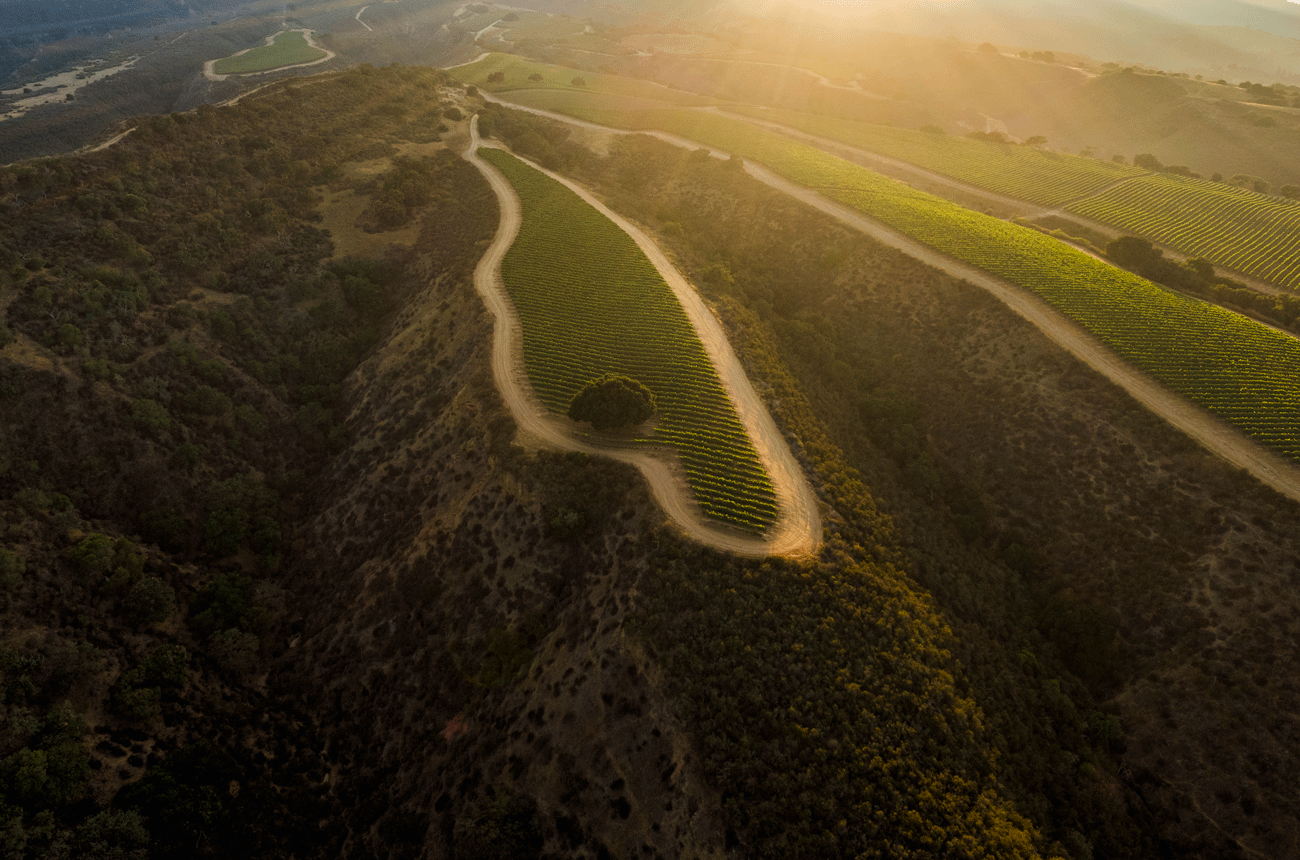
The Santa Lucia Highlands may be the most visibly obvious wine appellation in America.
River Road, which runs nearly the entire length of the appellation, sits between the Salinas River and above your head to the west are the benchlands, or ‘highlands’, which are really alluvial terraces where the vineyards begin. Up there is where the wine grows.
These alluvial formations range from 50 to nearly 200 feet above the fertile valley floor, facing east. The soils are poor, fast-draining and sandy, with plenty of granite-based alluvium, a composite of sand, gravel and stones.
‘The Santa Lucia Highlands is the only place that I know of where the warmest part of the day falls between noon and 1 pm,’ says Adam Lee, the founder of Siduri and winemaker at Clarice.
Once the Central Valley warms up, it pulls in strong, cold winds from the Monterey Bay, which is unusually cold owing to a deep-sea canyon off the coast.
The winds mean, of course, thicker skins in the grapes, which can result in more tannins, but because of the speed of the winds, they also stop the ripening of the fruit each day.
‘This really cools down the area. The winds passing over the vine leaves at a fairly high speed shut them down and delay ripening. We often get 130 days’ worth of hang time, while Burgundy is amazed at 100 days,’ says Lee.
Fortunately, the long growing season and the arid climate balance the shortened days; this means that there is no pressure of a pending frost or autumn rains to push harvest before the fruit has fully matured.
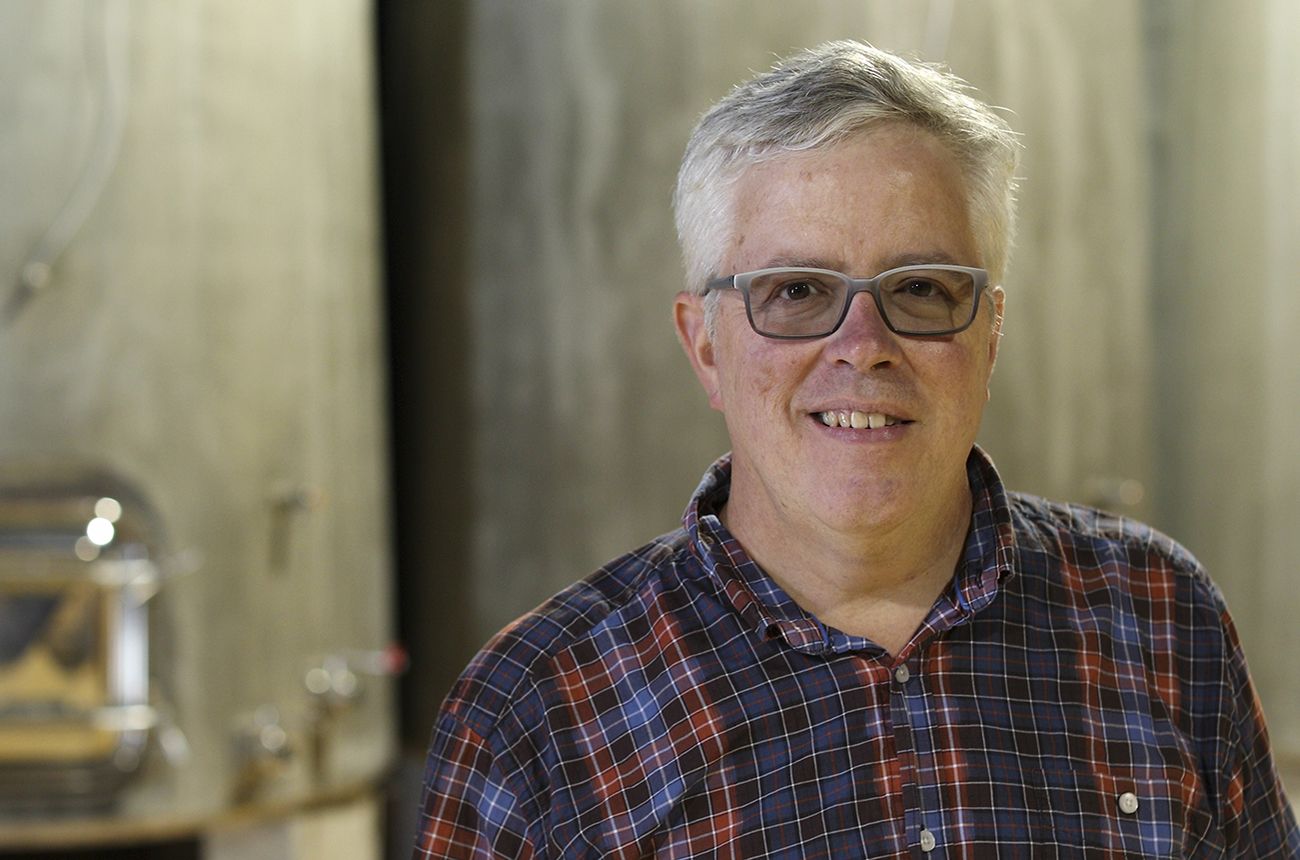
Adam Lee of Clarice and formerly Siduri.
(Image credit: Wildly Simple Productions / Santa Lucia Highlands Wine Artisans)
Building on bold fruit
‘California Pinot Noir’ is often code for its fruit-forward character, undeniable ripeness and fruit-driven expression.
That’s available in spades, so the region’s best wines weave complexity and nuance into the undeniable Santa Lucia Highands fruit.
For many, it’s whole cluster management, picking earlier or finding other ways to dial in precision.
‘The Santa Lucia Highands does have this propensity to deliver bolder fruit,’ says second-generation winemaker, Jeff Pisoni. ‘Our aim really is to have that balance, nuance, and elegance, a style that you’re seeing more and more of in the region.’
Pisoni continues: ‘I see all these traits: our rugged soils, wind, fog, and the mountains, as contributing to great raw material. But it’s a lot, and we have to be careful with it.
‘For me, the critical elements for bringing these into balance are harvest timing and acidity. Acidity, which plays a huge role in the stability, interaction with and perception of phenolics and tannins.
‘Finally, it’s fermentation management, specifically extraction, and how you manage air or reduction. “Ripeness” or sugar always gets the dialogue, but these other factors are tremendously important. I think the phenolic potential in the Santa Lucia Highands is amazing, but it can overshadow other positives.’

The Santa Lucia Highlands.
(Image credit: Santa Lucia Highlands Wine Artisans)
A young region matures
In terms of Pinot Noir, Pisoni’s 1982 planting more or less marks the very beginning of modern fine wine in the Santa Lucia Highlands.
Much of the growth happened in the mid to late 1990s, and more plantings followed into the 2000s.
Which means, it’s a very young region, and wines from young vines can tend to be on the monochromatic side.
Shallow root systems cause the fruit on the vines to ripen quickly (particularly in warmer years) and tend to produce wines with pronounced primary fruit characteristics.
But that’s changing.
‘When I started, the vines were quite young with very shallow roots,’ says Adam Lee.
‘Flavours become more complex, and stem ripening can truly happen as a long hang time can become far longer – even in a warm year. That’s why I think the future of Santa Lucia Highlands lies in not just producing wines of great fruit, but also additional complexity.’
(Image credit: Caraccioli Cellars)
A stylistic shift
While ripe fruits have long been the hallmark of the Santa Lucia Highands, a youth movement of sorts is happening in the region’s wine styles.
At the top end, the wines made by Jeff Pisoni and Adam Lee show an elegance and nuance that embraces the region’s undeniable fruit signature.
There is also a cadre of young Santa Lucia Highands winemakers, including Corral’s Adrien Valenzuela and Chad Silacci of Rustique Wines, who are chasing fresher styles of wine that emphasise elements beyond the region’s ripe fruit.
However, no one is pushing the region towards wines of a new era, one focused on clarity, precision and place with an edgy, almost Old World bent, more than Scott Caraccioli.
His story is reflective of many in this region. Like the Pisonis and Franscionis, he’s a fourth-generation row crop farmer and a second-generation wine grower.
‘The wine that really inspired me to operate outside the Pinot Noir and Chardonnay mainstays, and showcased what else we can do here was Bibiana’s 2016 Cattleya Syrah from Soberanes,’ Caraccioli admits. This motivated him to work with Mark Pisoni, who farms the site, to obtain Alban clone cuttings.
‘The great thing about this region is that it allows you to take a more elegant approach. Restraint, nuance, and understated wines are what we’re trying to achieve at Caraccioli,’ he says. (Scott’s winemaking team is a father-son duo, Greg and Chris Vita.)
Caraccioli is also looking beyond the Santa Lucia Highands to find out how some of California’s sought-after winemakers, particularly those from cool-climate regions, might use the Caraccioli estate’s Escolle Vineyard as a canvas to paint a different version of the region.
‘Someone like Ian Brand has made me a better grower,’ says Caraccioli. ‘His diverse perspective, having worked with vineyards on a broad scale throughout the greater Central Coast, enables him to share thoughts and practices that have positively impacted Escolle.’
He adds: ‘Ian’s an outsider; he didn’t grow up here as so many of us did, and his point of view and associated winemaking are really important for a region like ours. Growing Gamay, for instance, was a direction that stemmed from conversations with Brand.’
‘As we evolve and mature as a region, our wines will become more refined,’ he continues.
‘With these granitic soils as our core, we can see that Syrah and Gamay are really brilliant matches for that soil type. The soils in Beaujolais and the Northern Rhône are so similar to ours here, and there’s an opportunity with these varieties.’
20 brilliant bottles from the Santa Lucia Highlands
Related articles
Explore More



