
Doctors told Chevon Byfield that he only had a few months to live. His heart would give out by Thanksgiving.
But 10 years later, Byfield is still alive, waiting for an organ donor. His failing heart beats with the help of an LVAD, a device that helps pump blood to the struggling organ.
“It does dawn on me that for me to continue living, somebody has to die,” said Byfield, who has been on the heart transplant list for nearly seven years, longer than any other patient across Memorial Healthcare System’s six Broward hospitals. In fact, he’s waited for a heart longer than other patients across the country usually wait for a heart or other organs. It’s been difficult to find a large enough heart for his nearly 6-foot-5 frame.
The 39-year-old father of two said he owes his extended life to “Dr. Jesus.” That’s his nickname for Dr. Iani Patsias of Memorial Transplant Institute, who Byfield says saved his life years ago. The two met in Memorial’s ER, months after doctors in Miami had diagnosed Byfield with heart failure and told him he only had a few months to live.
“I guess he was doing rounds and he saw my chart, and he’s like, ‘Yo, get this guy to ICU right now.’ …. I think that moment push-started saving my life,” said Byfield.
Byfield was diagnosed in his late 20s with congestive heart failure, a condition that affects about 6.7 million adults 20 years and older in the U.S. His heart can’t pump enough blood and oxygen to meet his body’s needs.
He’s been in and out of the hospital many times since then. Wednesday marked seven years since Byfield underwent a procedure at Memorial to implant the LVAD into his chest. His only ask at the time was to be back home in time for his daughter’s first birthday.
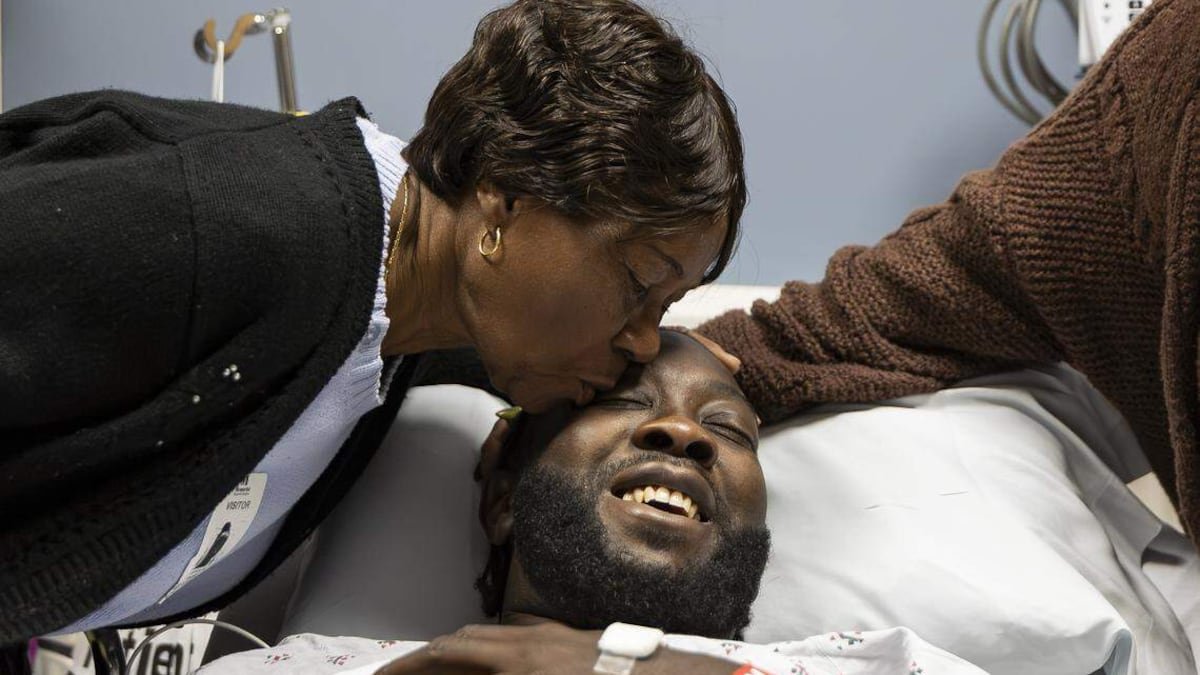
On Tuesday, as he checked into Memorial again, just a few days after celebrating his daughter’s eighth birthday, he expressed hope that he would finally match with a compatible heart.
“I’m ready for my next chapter in my life to begin,” Byfield said.
Byfield is one of over 100,000 people waiting for a lifesaving organ transplant in the country. Some patients are lucky and, within a few months, match with an organ. For others, like Byfield, the process can take years.
Age, blood type, medical urgency, organ availability and other factors can affect how quickly a person finds a suitable organ. Donor organs are distributed locally first, and if no match is found, they are offered regionally, then nationally.
People in need of a heart or lung transplant usually get matched the fastest. The national wait time for a heart or lung transplant is about four months, according to the Gift of Life Donor Program, one of the country’s federally designated nonprofit organ procurement organizations.
Byfield’s situation is more complicated. Besides needing a larger heart, Byfield also has the most common blood type — O positive — which means he’s competing with more people for compatible hearts, according to Patsias.
Like any organ transplant, there’s always a risk Byfield’s body could reject the new organ. And unlike kidneys, only deceased donors can give the gift of a new heart.
‘Put this LVAD to the test’
Sometimes, a patient’s worsening condition can increase their chances of matching with an organ on the ever-changing waitlist. Every time Byfield is hospitalized, for example, his chances of getting a new organ increase.
Tuesday marked the fourth time Byfield had been hospitalized at Memorial within a span of years. Doctors are treating him for an ongoing infection that has taken root along the cable that connects the LVAD’s internal pump in his heart to the external controller outside his body.
But it’s a better chance for Byfield to match with a donor. “I have a good feeling,” Byfield told the Miami Herald inside his private hospital room on Tuesday.
It’s hard to say how long Byfield will be hospitalized this time around. The last time he was hospitalized, in 2024, he remained at the hospital for six months. No heart matches were made.
Byfield’s ongoing and “controlled” infection is also becoming more challenging to treat, according to Patsias.
“That is the reason why we need to transplant,” the doctor said.

Despite the challenges, Byfield is grateful for the time the LVAD has given him. He goes around town, talking to patients, firefighters, police, anyone who will listen, about how LVADs can be used to extend someone’s life. How to respond and care for someone living with the machine. The importance of organ donation.
That pump, after all, is what has kept him alive all these years. He’s been able to spend time with his daughter and see the birth of his son. He travels. Plays basketball. Hits heavy weights at the gym. He’s done things he really shouldn’t be doing for a patient with a weak heart, he admits.
“I’ve put this LVAD to the test,” Byfield said. “I try not to let myself be restricted from it … and I tell everybody these stories in hopes that they can see the same light that I had to see, even through the darkness.”
If you didn’t see the machine that’s latched onto his chest, you wouldn’t know he’s waiting for a heart. Still, the machine is only a temporary solution — like a Band-Aid — for Byfield’s heart failure.
The next chapter
By the time people like Byfield are implanted with an LVAD, their heart is very weak and can no longer function properly without the extra help. Heart pumps, like heart transplants, are considered the last resort for people with failing hearts who have tried everything else, such as medications, lifestyle changes and other heart procedures.
While some patients may live the rest of their life with the machine, others like Byfield will use the machine as a temporary fix while they wait for transplant, according to Patsias. That’s why the heart pumps are sometimes called “bridge-to-transplant” devices. And just like transplantation, LVADs come with their own set of serious risks, including blood clots, right heart failure, device malfunctions, bleeding and infection, according to the Mayo Clinic.
Some days are worse than others for Byfield, but the LVAD, he said, has made a difference in his life.
On Tuesday, as he settled into his hospital room following a routine procedure to see how his heart is doing, Byfield laughed and joked with the Memorial staff who have become like a second family to him.
“They’ve done a lot for me,” he said, recalling how staff gathered to help him following a house fire.
He struggles to talk about what it would mean for him to get a new heart. As he scrolled through photos and videos of his kids, Byfield talked about how his children give him strength. He wants to see them grow up. But he also knows his day of celebration would be a day of mourning for another family.
“All my daughter wants to do is go swimming with me,” said Byfield. “She’s never been able to do that because I’ve had an LVAD since she was a baby.”
But for now, he’s still here. Waiting for a new heart.
How to become an organ donor
Anyone interested in registering as an organ donor can visit donatelifeflorida.org to learn more. For those interested in being a living donor, such as for kidneys, contact Memorial Transplant Institute in Broward County, the Miami Transplant Institute in Miami-Dade County or another transplant center near you to learn more.



