
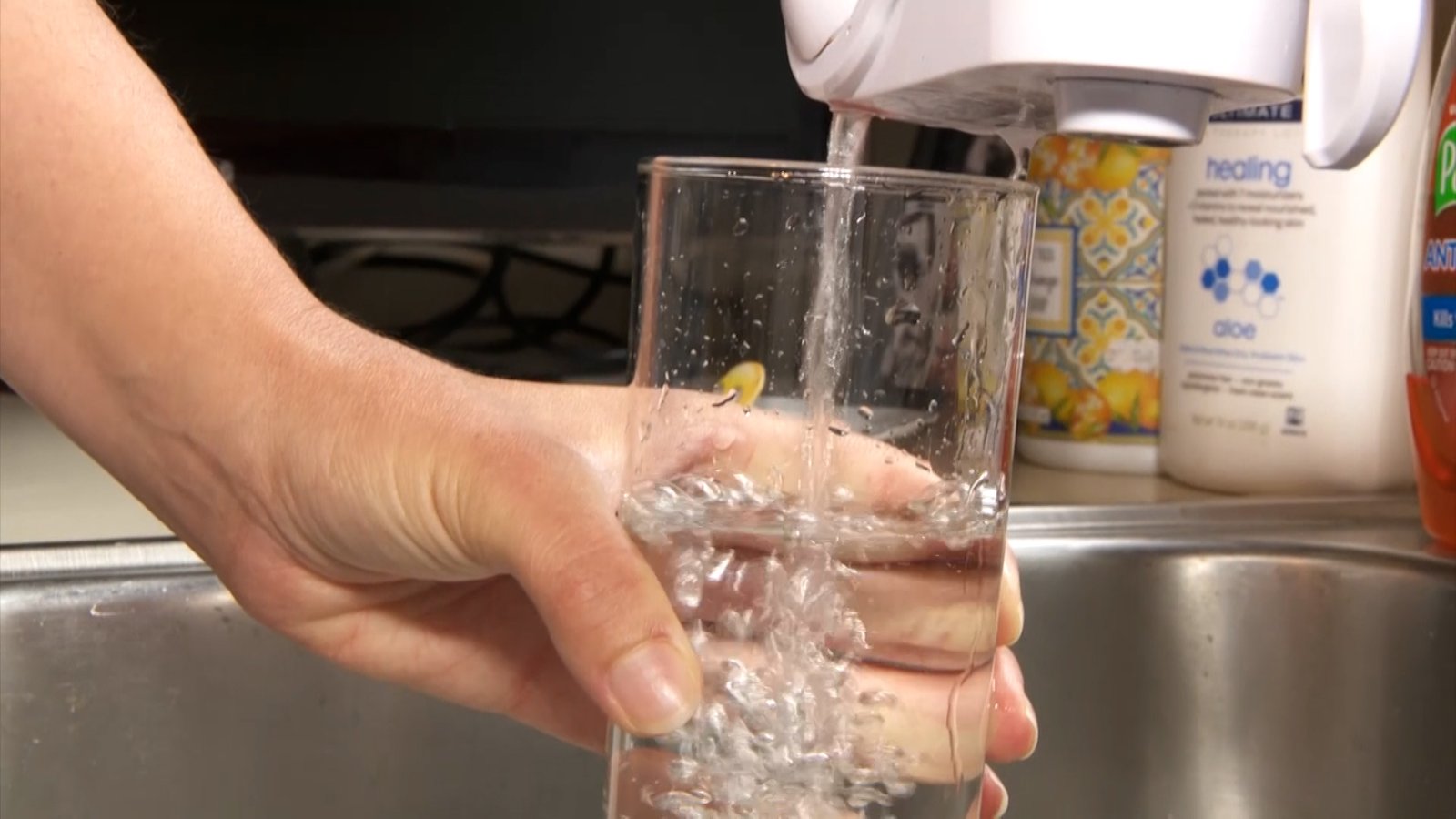
Levels of toxic forever chemicals known as PFAS in New Jersey drinking water have been cut in half, according to a study from Rutgers University health researchers who analyzed years of data from dozens of systems across the state. They credit a 2018 rule in New Jersey that regulates PFAS, or per- and polyfluoroalkyl substances and sets an enforceable standard.
Hari Iyer, who is a lead author of the study and a cancer epidemiologist at Rutgers Robert Wood Johnson Medical School, shares what his team found and what it means for public health. This interview has been lightly edited.
Joanna Gagis, anchor: Can you remind us what PFAS are?
Hari Iyer: PFAS are called forever chemicals, and they’re found in a number of household goods and consumer goods. One thing that many of your audience will likely be familiar with are takeout packages. So we like these packages because they keep our food warm and they keep the soups from leaking out of the package. It’s those same properties that prepare food and keep it so nice for transport that actually lead them to be very persistent in our bodies and in the environment.
JG: You studied the last 19 years of water quality in the state when it comes to PFAS. What did you find in terms of the levels and the reductions that we’ve seen?
HI: The story really starts in 2006 when really concerningly high levels of water were found in Brick Township, in water nearby an industrial contamination site. Over that 20-year period, we found that these levels started to drop pretty dramatically by almost half for two of the chemicals that are most strongly linked to adverse health outcomes.
We see that as a real success of New Jersey’s regulations and a number of officials and advocacy groups around the state who had been identifying these areas of contamination, reporting them to the government. It’s a very good story, frankly.
JG: What are some of the adverse health outcomes associated with PFAS?
HI: The most important ones for people to be familiar with are immune response — when we get sick, our ability to recover from it. It turns out that people with high levels of these chemicals may struggle to respond after illness. So that’s one. Another area is liver function and kidney function. People who are exposed to high levels of these chemicals may have a struggle to recover with those illnesses as well.
JG: This is where New Jersey gets a little bit wonky in terms of the law, but there are actually high federal standards for the amount of the limited amount of PFAS that can be in our water. But New Jersey was the first state to pass enforceable laws. Can you help us understand what that means and how New Jersey’s regulation has actually started to move the needle here?
HI: New Jersey was one of the first states to really take all this evidence from the scientific literature in humans, in toxicology studies, in animals and cells, and combine that with really robust monitoring across the state. And so I think that it’s really a great model for other states that are concerned about this to follow, combining scientific evidence on these health impacts with a surveillance system that is allowing the state to monitor changes in these levels over time, because that is the way that we in this study were able to demonstrate that the policy is having the intended effect.

JG: So really, this is water filtration systems that have been enforced throughout the state. Yes?
HI: Yeah. What was very interesting in our study is that we found that a lot of the water systems were taking action prior to the formal enactment of these laws. They wanted to make sure that they were able to be ahead of this because obviously it costs a lot to install granulated activated carbon mechanisms to sequester these PFAS from water.
Other water systems identified wells that actually had very high levels of contaminants and were able to pull these offline. Sometimes even anticipation of the law allows a lot of businesses and water systems to take action.
JG: Well, interesting because you did look at large water systems in the state. You just mentioned wells. I’m curious, does this law enforce the same requirements for smaller water systems for wells that maybe are privately owned?
HI: Unfortunately, I’m not necessarily the expert on the policy side. I will say for our study, a limitation was we did not conduct the study in wells and so about 10% of the New Jersey population that is served by wells. There are some concerns that because those wells aren’t tested as often, there may in fact be some of these benefits and these declines that we saw may not hold in some of those areas.
JG: You said that we are down 50%. What does that mean, still in terms of the level of contaminant that is in our drinking water at any given time?
HI: It’s a great question. My group at the Rutgers Cancer Institute and many other colleagues across the U.S. and the world are really trying to pin down what are these safe levels and what are the specific health impacts that we need to notify people and make people aware of. So while it’s a great story to see this reduction, I think what you’ll see over the next coming years is more understanding of what other cancers, for example, or some of these other outcomes that we’ve been talking about. We really need to be thinking about and maybe the levels that we have today. You may see them start to change in coming years.
JG: If we’re down to 50%, is it possible to get down by 100%? Is it possible to eliminate PFAS from our drinking water?
HI: In public health, it’s important for us to not let perfect be the enemy of the good. I think we are really interested in trying to identify what are these health risks and what are the safe levels, sometimes perfect zero. The cost of being able to do that because as I said, right, we don’t want to be carrying around paper bags of soup from our takeout places. These chemicals do have beneficial properties to us in our adult lives. Finding that balance is a real challenge and something that we need to work as scientists. We need to be working with community organizations. We need to be working with other community members in the state to really understand those issues.
JG: Is there anything that consumers can do on the front end to prevent those PFAS from getting into our water?
HI: That’s a great question. And there are a number of filtration systems that one can purchase at their homes. So you could add one of these filtration systems to your tap. And so before you drinking the water, this will strip out a lot of them.



