
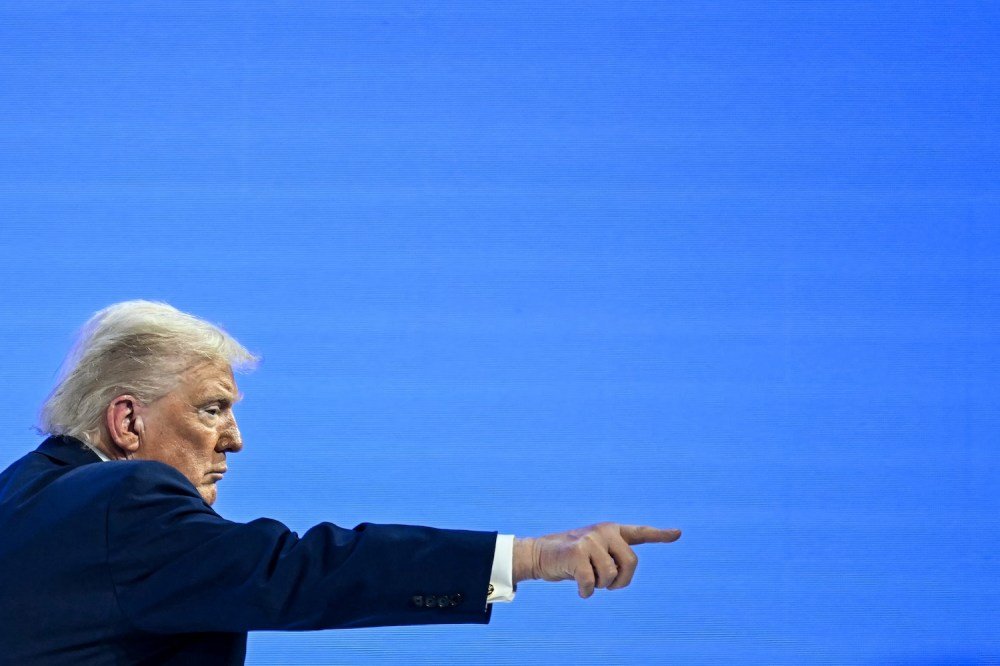
A day after U.S.-Israeli strikes killed Iranian Supreme Leader Ayatollah Ali Khamenei, launching a war in the Middle East, U.S. President Donald Trump claimed that his administration had been approached by Iranians wanting to talk. Iran has denied any such overture, but it is reasonable to assume that an opening may eventually come—already, certain Middle Eastern countries are pushing the parties to move toward some form of negotiated settlement. This raises the question of how Trump would approach such make-or-break discussions.
High-stakes diplomatic negotiations typically happen behind closed doors. Deliberating in private makes it possible to freely indulge thought experiments, contemplate concessions without losing face, and nurture delicate compromises while keeping public opprobrium at bay. The world is eventually presented with a well-packaged product, not the messy sausage-making of statecraft. U.S. President Joe Biden embraced this orthodoxy: Top officials in his administration treated media queries about ongoing talks as almost impertinent, judging the mobilization of public opinion as a lever in active negotiations to be more risk than reward.
To date, Trump has torn up this playbook with characteristic abandon. From Gaza to Ukraine to trade talks, Trump’s White House conducts diplomacy as performance art—tweeting terms, issuing and revising multipoint plans, and giving the world a ring-side seat for the dealmaking. The strategy is unconventional and, when it comes to ending wars, its results are uneven: While Trump achieved a breakthrough on a first-phase peace deal for the war in Gaza, an accord on Ukraine remains stubbornly elusive. As Russia’s war grinds through a fourth year, Trump’s vow to deliver a peace settlement upon entering office is now deep in the dustbin of broken campaign promises.
Trump’s stark break from precedent offers an opportunity to weigh the benefits of negotiating out loud, and to understand when and why such tactics tend to pay off. Whether Trump can bring that strategy to bear in ending the war on Iran remains an open question.
During the Biden administration, White House officials used variants of “I’m not going to negotiate in public” to skirt questions about parleys over Iran’s nuclear program, Mexico’s energy needs, and wars in the Middle East and Ukraine. Biden launched one public gambit aiming to jump-start an Israel-Hamas cease-fire in May 2024, offering a three-phase plan that was welcomed by a United Nations Security Council resolution. But the overture quickly fizzled, with curtains coming down again to shroud future rounds of mediation.
With Trump’s return to office, the protocol changed. Rather than relying on diplomats trained to keep things close to the vest, Trump has empowered a personal envoy—real estate magnate Steve Witkoff—to represent him in a range of high-stakes deliberations. Last May, the White House confirmed that it had sent to Hamas a U.S. cease-fire proposal for Gaza. June and July saw blow-by-blow official commentary on the talks. In September, Trump splashily announced a 20-point peace plan, releasing the full text before Hamas had accepted it. When Trump’s son-in-law, Jared Kushner, and Witkoff flew to Egypt for peace talks in early October, the world’s eyes were glued.
The open nature of the process was catalytic. The global public became a party to the talks, uniting behind compromise. Israeli demonstrators shifted from expressing grief and frustration to demanding that their government accept the deal and bring home the remaining hostages. In the Palestinian territories, provisions for humanitarian aid and reconstruction created pressure on Hamas to agree to a hostage release. Having a concrete deal on offer gave those populations something tangible to fight for. Secret negotiations and nebulous deal terms, by contrast, leave publics in the dark, reckoning with possible settlements they cannot see and are prone to fear.
The transparency also activated the international community. When Trump rolled out his plan during the U.N. General Assembly in September, several governments and the Palestinian Authority immediately welcomed the move. Open, multilateral diplomacy repositioned the plan from the work of a controversial U.S. president and ally of Israel to an overture with wide regional backing. Turkey, Qatar, and Egypt put heat on Hamas to accept the terms. The European Union fell in line, seeking to position itself as a player in its implementation.
By engaging multiple governments along the way, the Trump administration mustered the powerful visual of dozens of nations gathering in Sharm el-Sheikh, Egypt, for a peace summit in October. That growing support culminated in a mid-November U.N. Security Council resolution in support of Trump’s peace plan that, in a remarkable reversal of Washington’s habitual isolation on Israel, won the votes of every council member with the exception of abstentions from Russia and China.
The public and diplomatic momentum helped surmount Israeli Prime Minister Benjamin Netanyahu’s previous rejection of terms that might crack his fragile governing alliance, including provisions banning annexation, permanent occupation, and forced displacement in the Palestinian territories. Because these elements had won backing all over the world—and Israeli opposition leader Yair Lapid signaled his readiness to step in if necessary to sustain the ruling coalition—it became impossible for Netanyahu’s hard-line partners to kill the deal.
The public nature of the process also burnished the Trump administration’s credibility and its power over Israeli leadership. Trump’s televised browbeating of Netanyahu into an Oval Office public apology to Qatari Prime Minister Mohammed bin Abdulrahman Al Thani for Israel’s strike on Doha in September showed that the president was willing to be visibly tough on Israel, helping solidify international support for a plan generally seen as favorable to Israel.
Trump’s Ukraine negotiations have not fared nearly as well. Beginning in the fall, the Trump administration was explicit about hoping to implement its Gaza playbook in Ukraine. A 28-point plan, primarily drafted by Witkoff, treated Moscow somewhat like Israel, giving the more powerful party much of what it wanted. When the confidential plan was unexpectedly leaked in November, Trump leaned in rather than disavowing it, turning a working draft into a formal U.S. proposal. He announced a tight deadline, initially insisting that Ukrainian President Volodymyr Zelensky respond to the terms in just a week.
The parallels ended once the text dropped. Kyiv and the Ukrainian people deemed the proposal, which included significant territorial concessions and a permanent ban on NATO membership, an unacceptable capitulation and stark betrayal. Meanwhile, the EU resented being cut out of the plan’s formulation. Although European leaders voiced nominal support for the overture to avoid angering Trump, they did not conceal umbrage at points seen to reward Moscow’s aggression. They immediately put forward a counterproposal involving stronger security guarantees for Ukraine and a larger European role in any peacekeeping arrangements.
Confronting mutiny, U.S. Secretary of State Marco Rubio, who was not involved in the initial Russia negotiations, made a hasty trip to Geneva to conciliate Ukraine and the Europeans. Many leaders are hesitant to negotiate in public because they do not want to be held to proposals they have floated openly. But such qualms hardly inhibit Trump, whose brand is synonymous with erratic caprice. And sure enough, an alternative 19-point plan emerged from the Geneva discussions.
That proposal prompted a five-hour Kremlin meeting between Russian and U.S. interlocutors that ended in deadlock. The back-and-forth was marked by repeated high-profile leaks seemingly seeking to discredit Witkoff as a Russian lackey. Several of the unauthorized disclosures were suspected to have come from U.S. officials, likely proponents of Washington’s long-standing support for Ukraine who saw the original plan as made-in-Moscow perfidy.
The talks’ derailment points to a downside of non-secret negotiations: Once the public becomes, in effect, a party to talks, a wide range of actors can step in to exert influence, including disgruntled bureaucrats, foreign governments, or private actors.
Taken together, the Trump administration’s approaches to Gaza and Ukraine offer a natural experiment in when public negotiations pay off. The answer hinges, unsurprisingly, on whether making the public a party to talks is likely to help or hinder compromise.
By mid-2025, opinion in both Israel and Gaza had shifted toward wanting a political end to the war. Israeli polls showed solid majorities willing to end the fighting and withdraw forces from Gaza as part of a hostage-and-prisoner deal. Public support in Israel overwhelmed hard-liners who argued that nothing short of eliminating Hamas would suffice. On the Palestinian side, surveys indicated a significant decrease in support for armed struggle and rising support for negotiations. The war’s brutal toll on civilians in Gaza also raised hopes for a cease-fire, helping negate opposition from rights activists and global supporters of the Palestinian cause who sought deal terms that were more punitive for Israel and gave greater assurances to Palestinians.
By going public when it did, the Trump administration judged that the parties were at a tipping point, where a public reveal would trigger outpourings of popular and diplomatic support that could push a long-elusive deal over the finish line. Geopolitically, the stars also aligned, with no major player strongly opposed to the deal. The public rollout tantalized the world with the promise of freed captives and a cease-fire, marginalizing those who raised thorny questions over whether Hamas would truly disarm (it would not), whether Palestinian self-determination was guaranteed (it wasn’t), or how postwar governance of Gaza would take hold (it still hasn’t). The momentum was such that legitimate objections and concerns fell by the wayside.
In Ukraine, by contrast, there were no majorities to galvanize against holdouts—neither party was ready for major concessions. Despite devastating casualties, throughout 2025, polling consistently showed that most Ukrainians were unwilling to accept territorial concessions or abandon the country’s EU or NATO aspirations, even as many favored compromise to end the war. Across the EU, Eurobarometer surveys recorded strong support for continued financial, humanitarian, and military aid to Kyiv and sanctions on Russia, while late 2025 polling found that large majorities in European states reject a deal that would make Ukraine cede territory or drastically reduce its armed forces. Inside Russia, political repression has blunted popular opposition to the war and driven critics into silence or exile.
It may be that the insularity of Trump’s approach, which sidelined trained diplomats and even Rubio in favor of presidential envoys, helped obscure these intractable realities. Moreover, unlike in the Middle East, neither Kushner nor Witkoff had personal relationships in Europe or Ukraine that could inform tactical judgments on what the parties might accept. For now, Ukraine and Russia seem grimly determined to continue a grinding war of attrition.
Exposing sensitive negotiations on a public stage can bring risks and rewards. If a tipping point has been reached, rousing popular and diplomatic support for a deal can create a snowball effect and flatten opposition. If the timing is off, it can backfire, stoking resentments and distrust, emboldening diehards, and sowing a sense of futility about resolution. In Iran, the viability of an open approach may hinge on whether the Iranian people and the country’s regional neighbors conclude that, with scores of top leaders eliminated, they must push the Iranian government to moderate and pull back the country’s nuclear and geopolitical ambitions. That turn of events might make it possible to rally public and global opinion in favor of compromise.
Ultimately, taking negotiations public is like setting sail in a squall: You’re betting you can harness the popular and geopolitical winds to make way, rather than get blown off course. For Trump, an incorrigible exhibitionist, the impulse to flaunt negotiation processes is less a matter of finely tuned strategy than a generalized desire to showboat. But as in a race on the water, if conditions are just right, the biggest, flashiest sail can cross the finish line first.



