
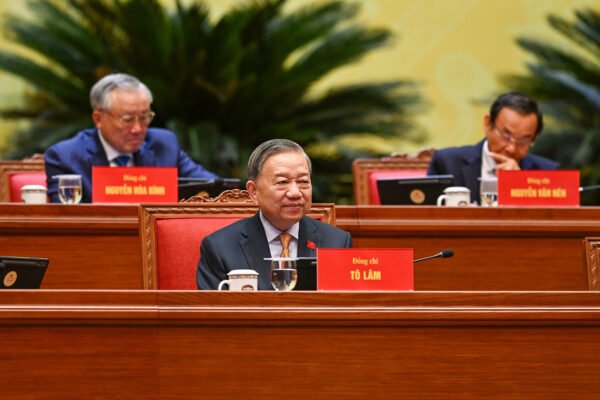
The Communist Party of Vietnam (CPV) yesterday voted to cut short its National Congress, in a possible sign of unanimity about the reappointment of party chief To Lam for the coming five-year term.
The CPV’s 14th National Congress opened in Hanoi on Sunday under tight security. The five-yearly event, which this year involves around 1,600 delegates representing some 5 million Party members across the nation, selects the country’s top leadership and sets its strategic direction for the coming five-year term.
According to a statement posted on the official Congress website, delegates yesterday approved a revision to the program, “shortening the Congress by 1.5 days compared to the original plan.”
The change was made due to the fact that “many tasks were completed ahead of schedule,” the statement said. The event is now expected to conclude on January 23.
According to a report by Reuters, the decision to shorten the Congress was likely a “sign of broad consensus” within the Party about personnel decisions, including the reappointment of current CPV General Secretary To Lam.
Today, delegates began voting for a new 200-member CPV Central Committee, which would then vote to choose 17 or 19 members to sit on the Politburo, the Party’s highest decision-making body. This, in turn, will appoint senior party leaders, including the general secretary.
Lam, 68, took over the leadership of the Party after the death of his predecessor Nguyen Phu Trong in 2024, and has led a major restructuring of Vietnam’s administrative apparatus. The major decisions announced at the National Congress are usually agreed ahead of time, and Lam has been widely expected to be appointed for a second term. But the curtailment of the Congress, the most important event in the Vietnamese political calendar, is a striking sign of unanimity.
As Reuters reported, the shortened schedule “likely indicates no divisions have emerged within the party about leadership positions and a smooth reappointment of Mr Lam.”
Much of the pre-Congress speculation centered around the possibility that Lam could also be appointed as state president, which he held simultaneously while party chief for a few months after Trong’s death. Similar arrangements are in place in Laos and China, but some observers fear that such a move in Vietnam would begin to erode its model of “collective leadership,” which spreads power among five key leadership positions: CPV general secretary, state president, prime minister, National Assembly chairman, and standing member of the Party Secretariat.
However, the foreshortening of the Congress is a strong indication that this will not happen, at least not this year. Such a dual appointment would require a rewriting of CPV rules, something that the impending close of the Congress does not appear to permit. This has been supported by some reports that have come out of the Congress.
The decision came a day after Lam addressed the Congress, reiterated that the Party would target annual economic growth of more than 10 percent for the remainder of the decade, despite the “many overlapping difficulties and challenges” facing Vietnam. These ranged “from natural disasters, storms and floods to epidemics, security risks, fierce strategic competition, and major disruptions in energy and food supply chains,” he said.



