
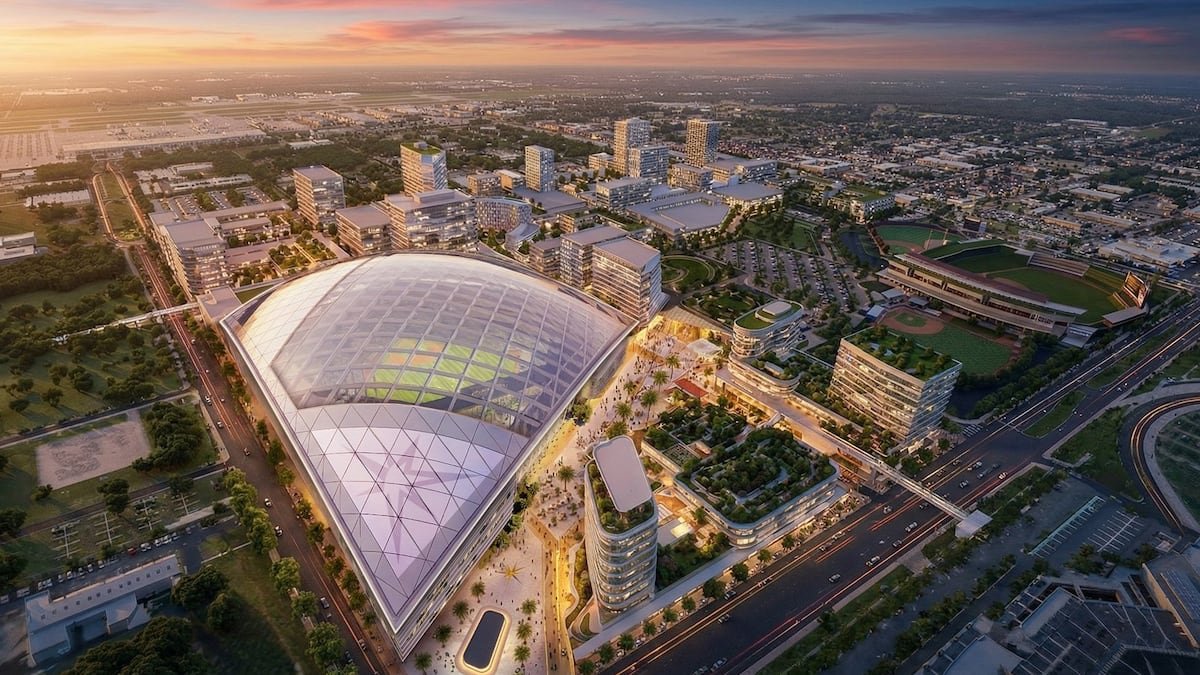
A majority of Hillsborough voters say they want a Tampa Bay Rays stadium in Tampa — but they oppose by a similar margin using money from the county’s half-percent sales tax to help pay for it.
That’s according to a March poll of “likely voters” commissioned by Tampa Sports Authority board member Andy Scaglione and obtained by the Tampa Bay Times this week.
Scaglione, who has questioned whether money from the county’s Community Investment Tax can be put toward the stadium, hired Gainesville-based political consulting firm Data Targeting Inc. for the 16-question survey. It probed 530 respondents — out of more than 806,600 registered voters in Hillsborough County as of February — between March 26 and March 29.
The poll comes as some residents and local officials urge the Rays to slow down as they negotiate with the city and county to build a $2.3 billion stadium at the Dale Mabry campus of Hillsborough College. The team has yet to release the terms of a deal ahead of votes that could come in early May.
Still, roughly 60% of the poll’s respondents said they support a Rays ballpark across from Raymond James Stadium and that they believe the project would drive economic impact.
The Times has reported that the project’s financing proposal is built around $467 million from the county’s slice of the half-percent sales tax. The tax pays for roads, public buildings and upgrades to existing professional stadiums.
A majority of Hillsborough County commissioners said in 2024 it should be off-limits to new sports stadiums while considering asking voters to extend the tax past 2026.
According to the survey, 64% of respondents said they oppose “using $467 million of the half-cent sales tax dollars to build a new baseball stadium in Tampa,” with 31% in support. And 59% said they don’t think “any of the half-cent sales tax dollars” should go toward the project, with 34% saying they would support “any” of that money being used for a stadium.
“When voters approved the Community Investment Tax in 2024, they were promised that these funds would not be used for a new stadium,” Scaglione wrote in a statement attached to the survey. “Now, under pressure from the new team owners, our County Commission is poised to go back on their promise. This rushed decision ignores the voices of residents and what they think about redirecting CIT funds to build a new Rays stadium.”
Rays chief executive Ken Babby has said the team is eyeing revenue from the tax that exceeds what it was projected to raise.
“This new mixed-use district which includes the Forever Home of the Tampa Bay Rays presents a generational opportunity for Hillsborough College and the broader community it serves,” Babby in a written statement. ”We know this effort will strengthen the region by creating jobs, encouraging economic investment, and supporting long-term growth. We have confidence in our public officials and will continue to work together on this transformational moment for Tampa Bay’s future.”
County commissioners are now awaiting an outside legal opinion on whether they can use the sales tax to help pay for the ballpark.
According to the poll, 85% of respondents said they support “requiring voter approval before using half-cent sales tax dollars to build a new baseball stadium in Tampa.”
An earlier question probed respondents’ top priority for the sales tax money and listed public works, transportation, safety, facilities, utilities and schools as options. Schools and transportation were the most popular choices, though funding for schools was cut significantly when the tax was renewed two years ago.
Before questions about funding, the survey asked respondents whether they “support or oppose a plan by the new Tampa Bay Rays baseball team owners to leave Tropicana Field in St. Petersburg and build a new stadium in Tampa across the street from Raymond James Stadium.” The poll found 58% support it, and 29% were opposed.
Just under two-thirds of respondents said they think building a Rays stadium in Tampa is “critical to keeping the team in the Tampa Bay area.” The same share said they believe a “new professional sports stadium for the Tampa Bay Rays is important” for driving economic activity and growth in Tampa.
Women, younger voters and people not affiliated with a political party were generally less likely to support the plan, while older respondents were more supportive of using the Community Investment Tax, according to the report.
Scaglione, who previously supported a deal to build a stadium in Ybor City, has raised concerns about the proposed stadium project several times during recent Tampa Sports Authority meetings.
“Of course, no one questions whether we want the Tampa Bay Rays to stay in the region,” Scaglione wrote in his statement. “But we cannot mortgage our future to fund it.”



