
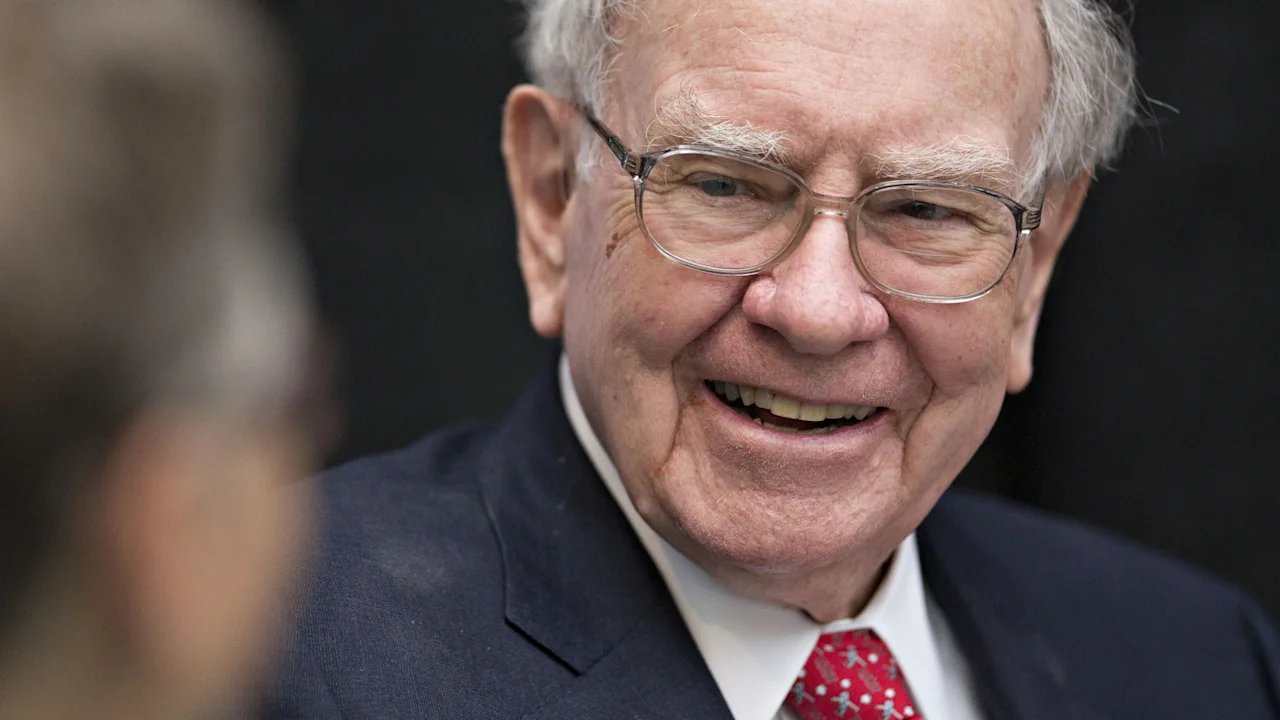
For 60 years, people have read Warren Buffett’s annual Berkshire Hathaway shareholder letters to gain insights into his investment philosophies. Every year, thousands convened at Berkshire Hathaway’s annual meeting to gain insights from Buffett and his partner, the late Charlie Munger. Buffett has also done countless interviews over the years.
Winnowing all that advice down to four items isn’t an easy task, but this is my attempt.
Here’s Buffett on leadership, focus, the best investment you can make, and the true meaning of success.
Buffett on leadership
What model does Buffett use for managing people? A baseball batboy.
As Buffett wrote in his 2002 shareholder letter:
My managerial model is Eddie Bennett, who was a batboy. In 1919, at age 19, Eddie began his work with the Chicago White Sox, who that year went to the World Series. The next year, Eddie switched to the Brooklyn Dodgers, and they, too, won their league title.
Our hero, however, smelled trouble. Changing boroughs, he joined the Yankees in 1921, and they promptly won their first pennant in history. Now Eddie settled in, shrewdly seeing what was coming. In the next seven years, the Yankees won five American League titles.
What does this have to do with management? It’s simple — to be a winner, work with winners. In 1927, for example, Eddie received $700 for the one-eighth World Series share voted him by the legendary Yankee team of Ruth and Gehrig. This sum, which Eddie earned by working only four days (because New York swept the Series) was roughly equal to the full-year pay then earned by batboys.
Eddie understood that how he lugged bats was unimportant; what counted instead was hooking up with the cream of those on the playing field.
I’ve learned from Eddie. At Berkshire, I regularly hand bats to many of the heaviest hitters in American business.
Buffett doesn’t just study companies to spot opportunities. He also works to identify companies with leaders capable of seizing, and then building on, those opportunities.
Clearly, he’s a great manager, but more important, he’s a great identifier.
Where team effectiveness is concerned, the impact ratio is roughly 90 percent team to 10 percent leader; a great team with a mediocre leader nearly always outperforms a mediocre team with a great leader. Put together a team of awesome salespeople and you can basically leave them alone. Put together a team of awesome engineers and you can basically leave them alone.
No matter how transformational, inspirational, or exceptional, even the best leaders can only produce incremental improvements.
As Buffett wrote:
Berkshire’s operating CEOs are masters of their crafts and run their businesses as if they were their own. My job is to stay out of their way and allocate whatever excess capital their businesses generate. It’s easy work.
That doesn’t mean you shouldn’t spend significant time developing the people you currently lead. You definitely should.
But you should also spend time identifying people who won’t really need to be led. Add great people to your team, and you’ll be able to spend less time managing that team and even more time identifying great people to add to the team.
Which will make it easier to attract great people, since superstars love to work with superstars.
Do that, and to paraphrase Buffett, while your work may never be easy, it will definitely be much easier.
Buffett on focus
Here’s what Buffett thinks about how to best use your time:
The difference between successful people and really successful people is that really successful people say no to almost everything.
People are going to want your time. It’s the only thing you can’t buy. I can buy anything I want, basically, but I can’t buy time.
Think about it this way. Efficient people are organized and competent. They check things off their to-do list. They complete projects. They get things done.
Effective people do all that, but they check the right items off their to-do lists. They complete the right projects. They get the right things done.
They do what makes the biggest difference for their business, and for themselves.
If you’re struggling to accomplish what you want to achieve, take a step back. Determine what really matters. Determine what really drives results. In most cases, what really drives results is you.
So stop thinking your presence is absolutely necessary in every meeting and on every call. That’s especially true if you’re a leader, because when you’re not there, your teams naturally feel a greater sense of freedom, autonomy, and, most important, responsibility.
Do what Buffett does: See an open calendar as an opportunity, not a liability.
Because a full calendar is a terrible proxy for success.
Buffett on the most important investment
Buffett doesn’t feel investing in stocks, or even businesses, is the best investment you can make.
As Buffett says:
Generally speaking, investing in yourself is the best thing you can do. Anything that improves your own talents; nobody can tax it or take it away from you. They can run up huge deficits and the dollar can become worth far less. You can have all kinds of things happen.
But if you’ve got talent yourself, and you’ve maximized your talent, you’ve got a tremendous asset that can return 10-fold.
You may not have the connections. You may not have the talent or skills. You may not have the experience — yet.
But what you do have is the time to invest in yourself. To build your connections. To improve your skills. To gain experience. And unlike an investment, skill doesn’t depreciate in value. Nor does inflation lessen its value.
More important, skill typically does pay off 10-fold.
Simple example. My wife and I own residential real estate properties, and we decided to learn how to install hardwood floors. Not LVT, which we can also do. But lay, sand, and finish real hardwood floors. (And, because we’ve gotten good at it, to use less expensive materials and still make the end result look great.)
Sure, it took time to learn. And takes time to do. But over the past couple of years, we’ve saved at least a total of $70,000 across a number of projects. (And we can charge slightly more in rent.)
Hardwood floor work is a skill we have, one that we can leverage for the rest of our lives.
You might not be into home renovation. But there are things you pay others to do that you could learn to do yourself. If you’re a small-business owner, bookkeeping. Social media marketing. Logistics planning and fulfillment. If you’re a homeowner, basic electrical or plumbing repairs.
Most people try to learn to be better financial investors, and that’s great. But make sure you spend some of your time deciding which skills you should invest in.
Those are the best investments you can make, because the return is guaranteed.
As Buffett says, investing in yourself will produce better long-term results than any other investment you can make, if only because it’s the one investment outcome you can almost totally control.
Put in the effort, get a return. What’s not to love about that?
Warren Buffett on success
As Buffett says he tells college students:
When you get to be my age, you will be successful if the people whom you hope to have love you, do love you.
Clearly, that’s true where family and friends are concerned; for example, research shows you’ll definitely be more successful if you marry the right person.
Substitute “like” for “love,” and it’s also true in business. Skills, education, experience — where success is concerned, all those things and more matter.
But one thing matters more. True success — the kind of success that also results in happiness — isn’t possible unless you build great relationships. Granted, you can be self-serving, obnoxious, and insufferable and still get rich. But you’ll be rich and lonely.
Plus, it’s a lot easier to be successful if people like you; when your employees, your customers, your partners, and your colleagues not only hope you succeed but, without being asked, actively help you succeed. Those kinds of relationships don’t just make you successful in business.
They make you successful in life.
And make you a lot happier.
—Jeff Haden
This article originally appeared on Fast Company’s sister website, Inc.com.
Inc. is the voice of the American entrepreneur. We inspire, inform, and document the most fascinating people in business: the risk-takers, the innovators, and the ultra-driven go-getters that represent the most dynamic force in the American economy.



