
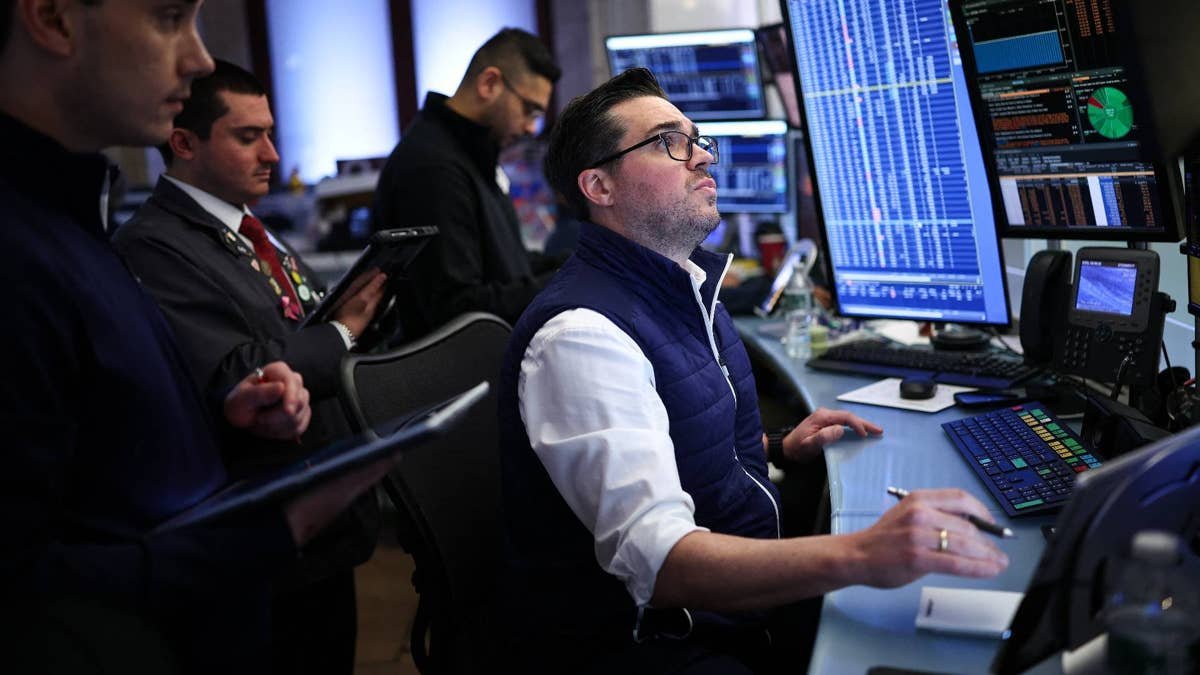
Big bank stocks have had a rough stretch. Wells Fargo thinks investors are reading it wrong.
Mike Mayo, Managing Director and Head of U.S. Large-Cap Bank Research at Wells Fargo Securities, said in a note to clients on April 8 that the year-to-date underperformance should reverse. He pointed to strong Q1 earnings, what he called “once-in-a-generation deregulation,” and a favorable capital markets backdrop.
Markets responded. The KBW Nasdaq Bank Index climbed 3.6% on April 9. Citigroup shares rose 5.1%, as GuruFocus reported.
The KBW Bank Index sank 6% in the first quarter of 2026, its worst quarterly performance since the regional banking crisis of 2023, Bloomberg reported. That followed a strong 2025 in which the same index soared 29%, outpacing both the S&P 500 and the Nasdaq 100.
The pullback was driven by a combination of factors. The U.S.-Iran war and its impact on oil prices and inflation raised concerns about the economic outlook. Private credit fears also rattled sentiment.
Together, they pushed investors away from a sector that had been trading near record highs entering the year.
Mayo’s argument is that the selloff created an opportunity rather than a warning sign. At current levels, valuations have reset to a point where earnings can do the heavy lifting.
Q1 earnings are the immediate catalyst. Goldman Sachs reports on April 13, followed by JPMorgan, Citigroup, and Wells Fargo on April 14, with Bank of America and Morgan Stanley closing out the week on April 15, according to TipRanks.
The numbers are expected to be strong. Citigroup’s Q1 earnings per share are projected to rise 34.2% year-over-year. Wells Fargo’s are expected up 23.6%. JPMorgan is forecast to earn $5.41 per share, up 6.7% from a year ago, according to Zacks.
More Wall Street
Deal activity is also supportive. Reuters reported 24 mega deals worth more than $10 billion were reached globally in Q1, alongside 40 deals valued above $5 billion, as TipRanks noted. That level of activity feeds directly into investment banking revenue for the largest lenders.
Mayo also added that banks have three years of strong earnings growth ahead. A lighter regulatory environment gives the largest lenders more flexibility on capital deployment, dealmaking, and balance sheet strategy.
Mayo highlighted Citigroup, JPMorgan Chase, Goldman Sachs, State Street, and BNY as likely “flight-to-quality” beneficiaries. He expects investors to rotate toward the largest and most liquid names.
Citigroup is his top pick for 2026. Mayo has predicted the bank will exit what he calls “regulatory purgatory” and that the stock could double by 2028, FinancialContent reported. Goldman Sachs analyst Richard Ramsden separately raised his Citigroup price target to $137 from $123 and reiterated a buy rating, citing the year-to-date pullback as creating a more attractive entry point, according to TipRanks.
Mayo also called JPMorgan “best-in-class,” noting it trades at only 60% of the market’s price-to-earnings ratio, per Fortune. On loan growth, he expects PNC Financial Services and KeyCorp to outperform peers in Q1, according to Intellectia.
Mayo is not dismissing the risks. He lowered his Q1 estimates across big banks by 4% in a March 27 note, citing “a degree of paralysis from policy uncertainty,” Fortune reported.
His view on capital markets is that the rebound is “delayed not dead.” But he acknowledged that policy uncertainty is testing his conviction and could stretch the timeline further.
The broader concern is familiar. Bank stocks often look cheap during selloffs. Cheap valuations alone do not guarantee a rally. Investors will want actual earnings evidence and clearer policy signals before committing more capital to the sector.
KBW Bank Index down 6% in Q1 2026, worst quarter since 2023
Year-to-date underperformance should reverse on Q1 earnings and deregulation
Deregulation described as a “once-in-a-generation” opportunity
Three years of strong earnings growth expected from here
Top picks: Citigroup, JPMorgan, Goldman Sachs, State Street, BNY
Citigroup Q1 EPS expected up 34.2% year-over-year
Capital markets rebound “delayed not dead”
Mayo’s call is a clear bullish signal, but it has a specific trigger attached. Q1 earnings are the test. If results confirm his thesis, the current weakness could look like the setup for the next leg higher.
If they disappoint, the valuation reset that looks attractive today may simply persist.
The deregulation story is the longer-term case. Mayo believes investors are still underestimating the structural shift underway. For those with a multi-year horizon, the sector may offer more upside than recent price action suggests. The next few weeks of earnings will be the clearest signal of whether this rebound is real or premature.
Related: Bessent and Powell send Wall Street’s biggest banks a warning
This story was originally published by TheStreet on Apr 11, 2026, where it first appeared in the Investing section. Add TheStreet as a Preferred Source by clicking here.



