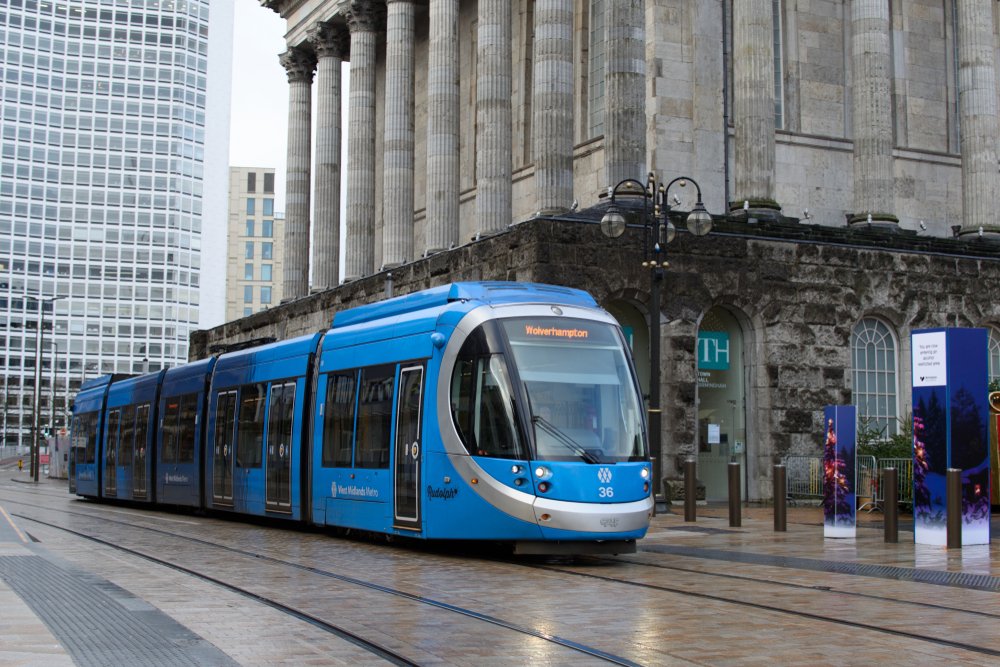
Transport for West Midlands (TfWM) has launched a preliminary market engagement initiative to explore progressive and collaborative contracting approaches for a significant Metro and Rail Works Pipeline projected through to 2032.
This forward-looking engagement aims to shape the delivery strategy for an ambitious transport infrastructure programme estimated at over £1bn, encompassing major projects and renewals across the West Midlands region.
At the heart of this pipeline are several key projects designed to enhance connectivity and support urban regeneration. The Birmingham Sports Quarter Metro Extension will add 1.5km of track from Digbeth to the new Powerhouse Stadium for Birmingham City FC and the adjacent Sports Quarter. Meanwhile, the Wednesbury to Brierley Hill Extension Phase 2C will complete the final 0.5km reach into Brierley Hill town centre, enhancing access to this vital urban area.
Further strategic development is outlined in the East Birmingham and North Solihull Metro Extension, which is currently in a preliminary feasibility and Transport and Works Act Order (TWAO) consent phase. This future route will connect the Sports Quarter with the HS2 Interchange/Arden Cross, aligning with national rail improvements and supporting broader transport integration.
Map showing the proposed route of the East Birmingham and North Solihull tram extension
The engagement also addresses a Metro Renewals Programme involving the replacement and upgrading of key assets such as track, overhead lines, structural elements, civils and systems, alongside a Rail Programme with potential for extensive station redevelopments linked to the Sports Quarter’s transport initiatives.
TfWM’s outreach event, scheduled for 16 February at The Station, Millennium Point in Birmingham, seeks wide participation from main contractors, design consultancies, joint ventures, systems integrators, specialist subcontractors and SMEs with relevant urban transport experience. These sessions are designed as two-way dialogues, incorporating market stalls, live polling, and thematic breakout discussions to foster insight-sharing and collaborative thinking on delivery models.
The central objective of this engagement is to identify delivery models that offer greater certainty and speed to market for these complex infrastructure projects. TfWM is keen to discuss the applicability of emerging commercial and contractual frameworks, such as the Project 13 outcome-based and enterprise-led approaches, alongside traditional NEC and Early Contractor Involvement (ECI) contracts. The authority said it is open to innovative uses of conventional contracting, reflecting a flexible, pragmatic approach to project delivery.
This strategic market engagement is positioned as a precursor to formal tender activity anticipated in 2026, with target contract starts as early as the first quarter of 2027. TfWM invites feedback on a range of topics including phased delivery benefits, risk and reward alignment, lessons from comparable projects, supply chain capability, packaging strategies, and the integration of rail and metro projects within a cohesive pipeline.
Participants will have the opportunity to submit detailed written feedback post-engagement, allowing TfWM to refine its commercial and procurement strategy in preparation for what promises to be one of the largest and most complex urban transit infrastructure programmes in the UK.
This initiative underscores the West Midlands Combined Authority’s (WMCA’s) commitment to delivering transformative transport solutions that not only improve mobility but also catalyse economic growth and urban renewal across the region. With the convergence of major projects, including links to HS2 and significant urban regeneration zones, the Metro and Rail Works Pipeline represents a pivotal opportunity for industry suppliers and stakeholders to shape the future of sustainable transport in the heart of England.
The West Midlands Metro is already undergoing significant expansion. A £50M extension to Wolverhampton opened in 2023, the £295M extension from Wednesbury to Brierly Hill kicked off in early 2025 and testing of the initial Eastside extension started last summer.
Works to date have been delivered by the Midlands Metro Alliance, featuring Barhale, Bouygues UK, Colas, Egis, Pell Frischmann, Tony Gee and Auctus Management Group, alongside WMCA.
Like what you’ve read? To receive New Civil Engineer’s daily and weekly newsletters click here.
Source: www.newcivilengineer.com