
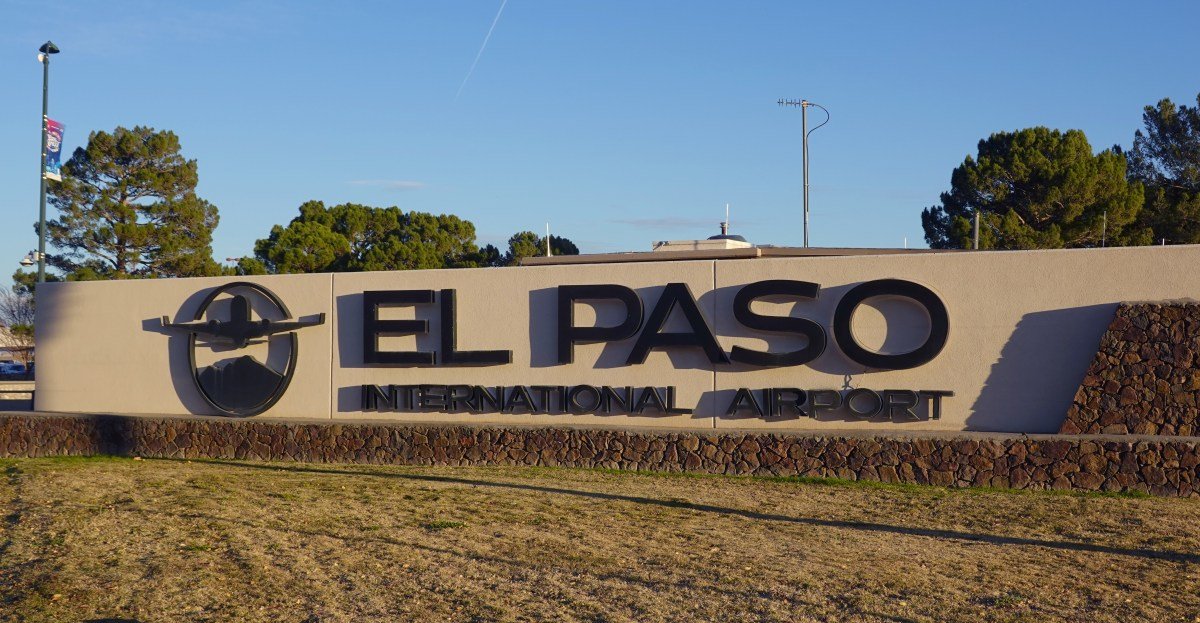
The El Paso International Airport will apparently not be closed for 10 days, despite an earlier announcement that set off an overnight panic. But the reasons why the closure was announced in the first place are still not quite clear, nor is whether this was a fluke or the prelude to a national security crisis.
What happened in El Paso?
On Tuesday night, the Federal Aviation Authority announced the closure of the airspace over El Paso, Texas, and a pause to all operations at the city’s airport starting at 11:30 pm.
According to the initial announcement, which took local and state authorities by surprise, the closure was to have lasted until February 20. But in a tweet on Wednesday morning, the FAA announced that the “temporary closure” had been lifted and that there was “no threat to commercial aviation.”
Early reports on what went wrong seemed to agree that drones were a part of the explanation, but exactly what role they played was a matter of confusion.
Transportation Secretary Sean Duffy tweeted on Wednesday that “the FAA and DOW [Department of War] acted swiftly to address a cartel drone incursion.”
However, Rep. Veronica Escobar, a Democrat who represents the El Paso area in Congress, told reporters on Wednesday morning that an incursion by Mexican drones was “not the information that we in Congress have been told” and that the current explanations were still muddled.
“There’s no threat. There was not a threat, which is why the F.A.A. lifted this restriction so quickly,” she said, according to the New York Times. “The information coming from the administration does not add up.”
But another source also told the New York Times that it was “a test of new counter-drone technology by the military at Fort Bliss, a nearby Army base.” Ft. Bliss is home to a major drone base.
The Texas Tribune suggested a different angle: The military botched its communication with other agencies, triggering the shutdown. Citing an industry source, it reported that the Department of Defense had “been operating unmanned aircrafts, or drones, against drug cartel operations from a base near El Paso’s airport without sharing information with the FAA.”
A report from CNN synthesizes these explanations to a degree. According to their sources, the Pentagon had been testing a new high-energy, counter-drone laser in remote areas and had been planning to test it around El Paso. But for unclear reasons, perhaps due to a cartel drone incursion, it sought to deploy the system in the area sooner without coordinating with the FAA, prompting the agency to shut down airspace. February 21, the day the shutdown was supposed to end, is one day after a planned meeting between the two agencies. The White House and Pentagon were reportedly unaware of ahead of time of what would have been the longest security interruption to a major city’s air service since 9/11.
CBS adds the bizarre detail that the technology was used earlier this week to take down what appeared to be foreign balloons at the border but turned out to be party balloons.
Congressional Democrats are calling for a more credible explanation from the administration that addresses this reported tension between civil and military operations. Even Sen. Ted Cruz (R-TX) suggested more cautiously on X that more details would be “shared in the coming days on interagency coordination,” which would seem to suggest he believes there were issues with that coordination.
The backdrop for the incident: Trump’s threats against Mexican cartels
A drone incursion from Mexico is not something that would normally prompt such a drastic response. US Northern Command has reported around 1,000 drones crossing the US-Mexico border per month.
Henry Ziemer, an associate fellow with the Americas Program at the Center for Strategic and International Studies, told Vox that cartels use drones both for surveillance of US security personnel on the border and — in more limited instances — to actually smuggle drugs into the US. There has been extensive reporting on cartels using weaponized drones loaded with explosives against law enforcement and rivals, but that’s within Mexico itself, not at the border.
“I would say the level of the magnitude of the response is disproportionate, even if the drones were on sort of a concerning trajectory,” said Ziemer, commenting on the initial airspace closure. Ziemer added that, given the push by the defense department to deploy new counter-drone technology, it’s likely that this airspace closure was “not a one-off,” even if one would hope future ones are handled with a little less confusion.
The mysterious incident comes at a time of heightened speculation that the US will take direct military action against Mexican drug cartels. It’s an idea that President Trump has repeatedly suggested since his first term, but that he threatened again in the wake of January’s Venezuela raid. Mexican President Claudia Sheinbaum has repeatedly said that while Mexico will continue to work with the US to combat the cartels, US military operations within Mexico are “not on the table.“
Last summer, Trump signed an order directing the US military to take action against several drug cartels. The US military regularly conducts surveillance flights along the US-Mexico border without entering Mexican airspace. The CIA has reportedly stepped up secret drone flights over Mexico itself.
There was previously speculation that some sort of action was about to begin in mid-January, when the FAA warned aircraft flying over the eastern Pacific to “exercise caution” due to US military facilities.
The El Paso operation, whatever it turns out to have been, exactly, is likely to “continue fanning anxiety in Mexican government and political circles, and speculation amongst those in Mexico who think that US military unilateral action is the recipe to confront transnational criminal organizations operating on either side of the border,” Arturo Sarukhan, former Mexican ambassador to the United States, told Vox.
If this is not, in fact, the prelude to a new military operation, but simply the result of miscommunication between the Pentagon and the FAA, it will call to mind the January 29 crash in Washington, DC, between an Army Black Hawk helicopter on a training mission and an American Airlines jet that killed 67 people. A National Transportation Safety Board investigation that concluded last month blamed that incident on “deep, underlying systemic failures” in regulation and communications.
Update, February 11, 2026, 3:20 pm ET: This post was originally published earlier on February 11 and has been updated with further reporting on the reason for the closure of the airport.



