
2
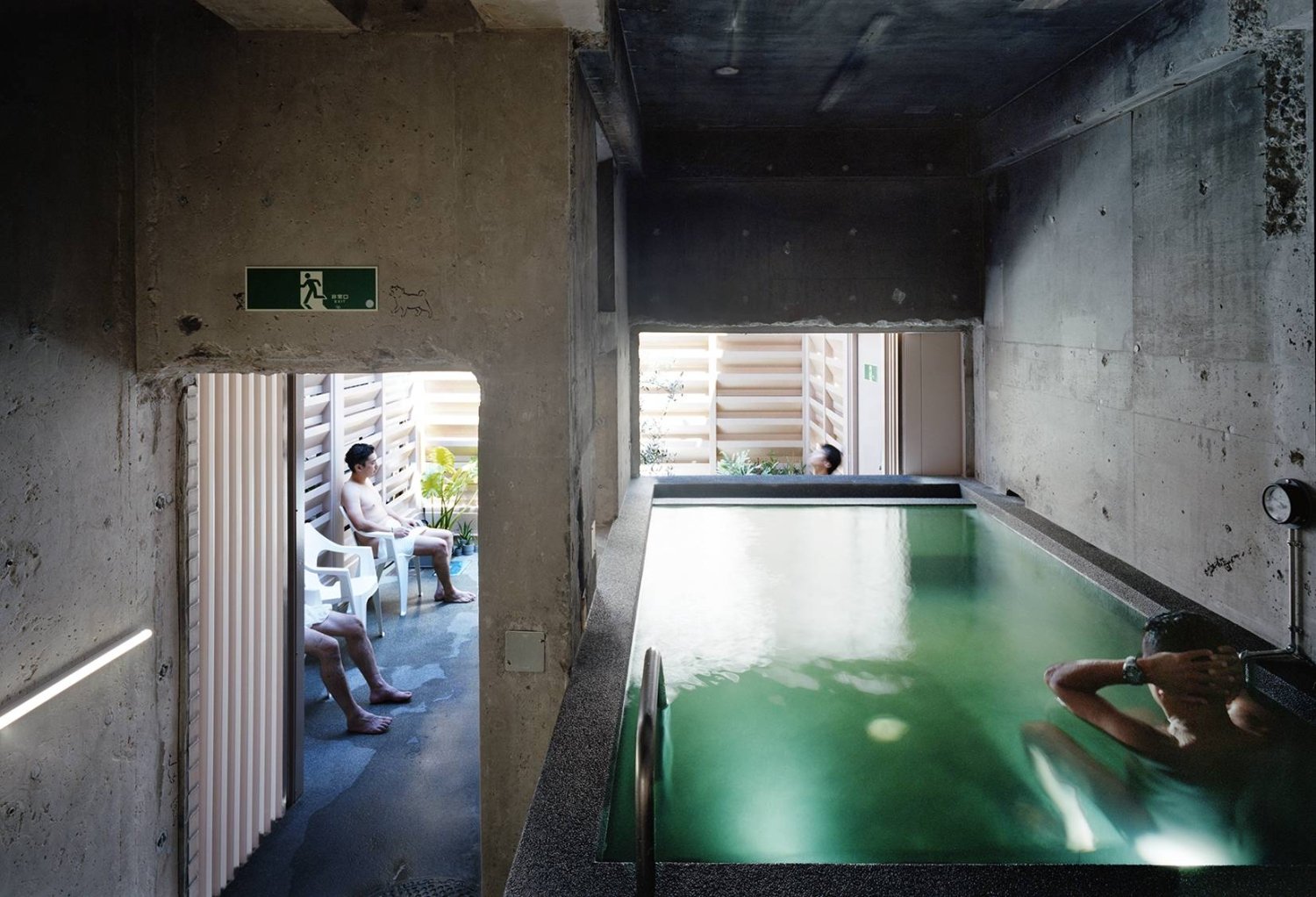
In the eastern Tokyo hub of Kinshicho, an evening at Koganeyu feels less like a bathhouse and more like a small experiment in the city’s shifting urbanity.
At street level, the sentō (public bathhouse) is framed by smooth grey concrete walls and a wide glass frontage, revealing a tiled reception counter. Towels are stacked overhead in a suspended metal rack, and pricing is printed directly onto the concrete surface, as if part of the architecture itself.
Despite opening in 1932, Koganeyu departs from the aesthetic of weary grandeur that has come to define the sentō of that age. Instead, an increasing number of bathhouses are translating the long history of community soaks into something cleaner, contemporary and more intentionally cool.



