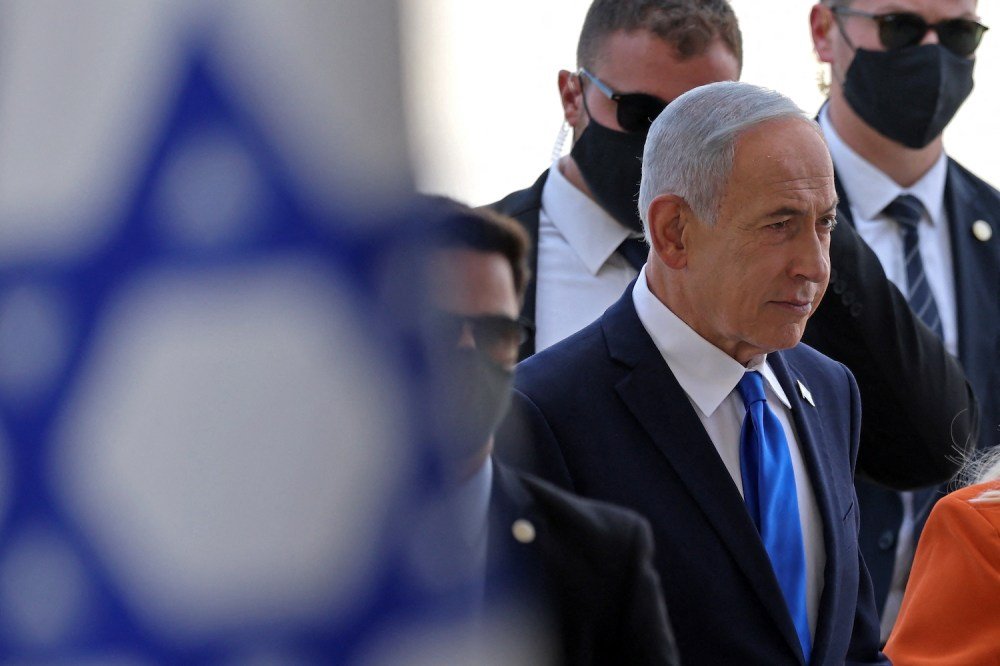
As U.S. and Israeli bombs fell over Tehran on March 1, Israeli Prime Minister Benjamin Netanyahu mused that war with Iran is something he has “longed to do for 40 years.” That admission raises the question of why he chose to wait until now to initiate such a conflict.
Every few years for the past three decades, Netanyahu has almost comically preached that the window to prevent Iran from obtaining a nuclear weapon was closing. Yet just last summer, at the end of the so-called 12-day war, U.S. President Donald Trump said that unprecedented U.S. strikes “obliterated” Iran’s nuclear program. No evidence suggests that Tehran has been anywhere close to building a nuclear weapon since then.
As U.S. and Israeli bombs fell over Tehran on March 1, Israeli Prime Minister Benjamin Netanyahu mused that war with Iran is something he has “longed to do for 40 years.” That admission raises the question of why he chose to wait until now to initiate such a conflict.
Every few years for the past three decades, Netanyahu has almost comically preached that the window to prevent Iran from obtaining a nuclear weapon was closing. Yet just last summer, at the end of the so-called 12-day war, U.S. President Donald Trump said that unprecedented U.S. strikes “obliterated” Iran’s nuclear program. No evidence suggests that Tehran has been anywhere close to building a nuclear weapon since then.
This time around, Netanyahu was correct that a window was closing—several windows, in fact. But none of them had to do with Iranian nuclear ambitions. They had much more to do with Israeli and U.S. politics.
Netanyahu has visited the White House a record-breaking six times in the last year. No foreign leader has ever had such consistent access to the Oval Office. In the history of the U.S.-Israel relationship, which is itself unique, the Trump-Netanyahu sub-relationship stands out for its closeness.
There are many reasons to speculate about why. Maybe it is due to the personal ties between Netanyahu’s and Trump’s inner circles. Or, perhaps, as U.S. Sen. Chris Van Hollen put it, Netanyahu “finally found a president stupid enough to attack Iran.” What we know for sure is that Trump has been willing to do more for Netanyahu than any president before him.
But this duo has an expiration date—and it could come as early as this year, thanks to elections in both countries.
Israel has elections scheduled for the fall. It will be the first such vote since Netanyahu presided over the biggest security catastrophe in recent Israeli history: the Hamas-led attacks of Oct. 7, 2023, that killed nearly 1,200 people. The Israeli public has not yet had an opportunity to hold him accountable for this failure. (Netanyahu himself has never accepted responsibility.) It is also the first Israeli election in a few cycles where the country’s Arab parties will run together. The so-called Joint List can complicate the coalition math for any Israeli government.
Netanyahu’s chances in the contest are far from clear. He has struggled to build large coalitions in recent elections in part because of his legal troubles: He faces a raft of charges in an ongoing corruption trial and could be sentenced to years in prison if convicted. Netanyahu will likely attempt to rally the Israeli public around his Iran campaign in a bid to stay in office. An overwhelming majority of Jewish Israelis support the war effort, while just a quarter of Palestinian citizens of Israel do, according to a survey by the Israel Democracy Institute.
Trump, meanwhile, is set to confront midterm elections in the United States. The midterms rarely go well for incumbents, and polling suggests they could be a particularly bad blow to Trump. The president had low favorability ratings even before launching an unpopular war with no apparent exit plan. Just one-quarter of Americans back the Iran conflict, according to a Reuters/Ipsos survey. A significant change in Congress, which is currently controlled by Republicans, could limit Trump’s options when it comes to Iran and other issues.
If Netanyahu and Trump’s objective was to fit an Iran war into a window of time where they could operate mostly unchecked, the safest bet was the spring and summer of 2026, if only for electoral reasons.
But another window is closing, too—that of public opinion. Israel is losing the American public. A Gallup poll last month found that, for the first time, more Americans sympathize with Palestinians over Israelis. This trend started well before the Gaza genocide but was very much accelerated by it. It is very likely that the Iran war will lead public opinion to dip even further. Importantly, Israel is also starting to lose Republicans, particularly those of younger generations. The American right has been the foundation of U.S. support for Israel over the past two decades.
A third window has to do with the changing nature of warfare. While covert operations and proxy conflicts have long been the norm between Israel and Iran, conventional war dynamics have shifted in recent years. Israel and Iran exchanged direct attacks for the first time in 2024, when Israel struck an Iranian consulate in Syria and killed a Hamas official in Tehran; Iran then retaliated. They also fought last year during the 12-day war.
Both sides learned lessons about their own vulnerabilities during these exchanges. Iran was increasingly exposed to aerial attacks. Israel, when challenged with a certain combination of projectiles, was also vulnerable to Iranian strikes. Crucially, U.S. and Israeli missile interceptors were far more expensive—and were in shorter supply and took longer to manufacture—than the Iranian projectiles they aimed to knock out of the sky.
This created an unfavorable balance for Israel, the United States, and its allies in the region; over time, a protracted conflict with Iran would lead to unacceptable costs. With U.S. and Israeli interceptor production and Iranian projectile production on two different timelines, any Israeli strategic gains from the 12-day war would become ephemeral.
The driving force behind the Iran war was, and has always been, Netanyahu. With several windows closing at once, Netanyahu was staring at the reality that his long-held dream to see the U.S. military bomb Iran may never happen. As the next generation of Americans turns away from Israel, he likely figured he would never see a sucker like Trump in the Oval Office again. It was now or never.
Netanyahu didn’t make six trips to the White House in one year to offer interior design suggestions for Trump’s new ballroom. He wanted the United States to make his Iran war dream come true. If the conflict ends soon, and without too many costs to Israel, Netanyahu might avoid prison—and perhaps even cling to power in Israel’s election.
The region, however, will be far worse off. U.S. interests will have been hurt in the process, too—and Americans will be stuck with the tab. Ironically, Netanyahu and Trump’s war may be what deals the fatal blow to the U.S.-Israel relationship.