
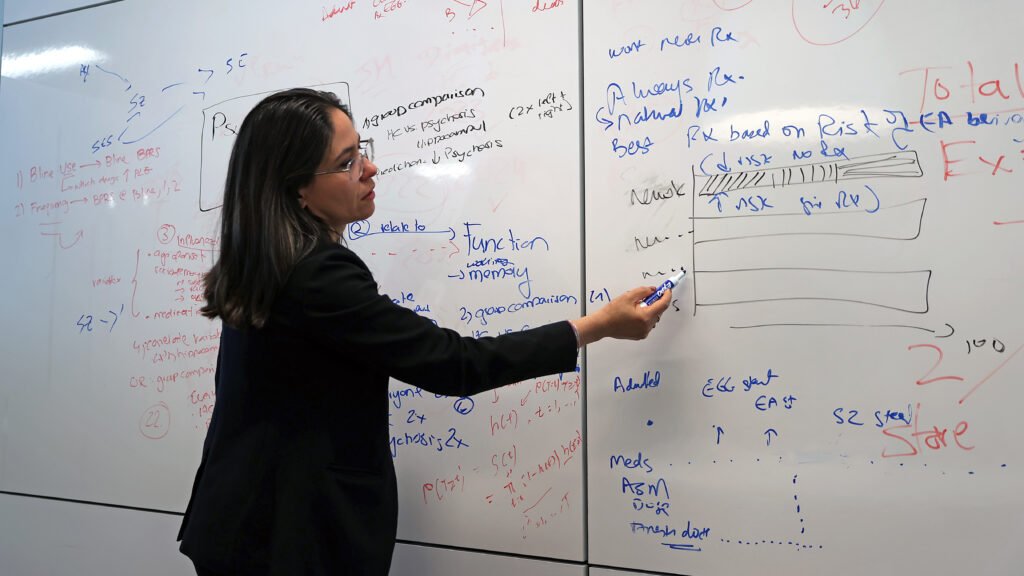
Researchers in Massachusetts are experimenting with artificial intelligence to detect signs of Alzheimer’s disease in its earliest stages, when symptoms of the dreaded illness may go unnoticed but newer drugs can modestly slow its progression.
Helping more people get diagnosed earlier could be a significant step forward in the fight against the memory-robbing disease. Currently, 90 percent of people in the earliest phase of Alzheimer’s, called mild cognitive impairment, go undiagnosed in the United States, multiple studies show.
“The biggest opportunity to improve Alzheimer’s care isn’t in a new drug — it’s in noticing the earliest signs sooner,” said Dr. Lidia Moura, director of population health in the neurology department at Mass General Brigham.

This article is exclusive to STAT+ subscribers
Unlock this article — and get additional analysis of the technologies disrupting health care — by subscribing to STAT+.
Already have an account? Log in
View All Plans



