
On March 16, two weeks into his Iran war, President Trump assured reporters that he had the Strait of Hormuz problem well in hand. “And we’re hammering their capacity to threaten commercial shipping in the Strait of Hormuz, with more than 30 mine-laying ships destroyed,” he said. “We hit, to the best of our knowledge, all of their mine-laying ships.”
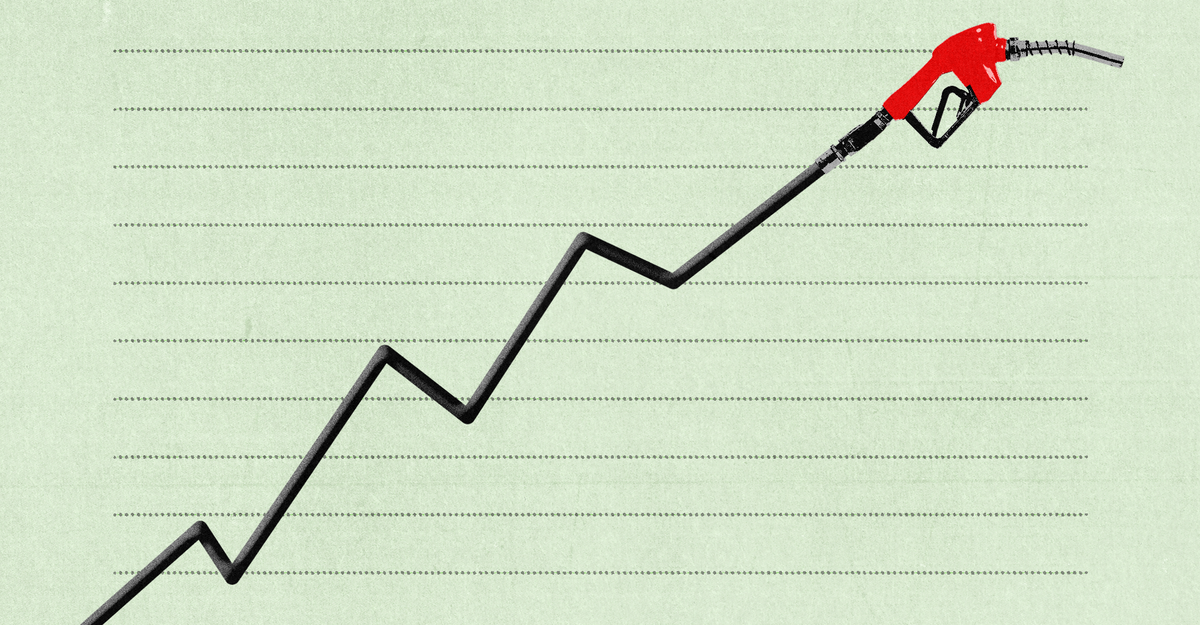
On March 31, the national average price of gasoline at the pump surpassed $4, the highest level since the post-pandemic shocks of 2022. One-fifth of the world’s oil and liquefied natural gas usually flows through the strait, but hasn’t since Iran began impeding the waterway in early March. Yet Trump continues to insist that Iran’s partial closure of the strait isn’t a problem. Markets don’t agree with Trump, and neither do his poll numbers.
How did Trump get Hormuz so wrong? The answer reveals one of Trump’s most characteristic and most fateful mistakes: his steadfast refusal to acknowledge that Americans live in a world economy.
Here he is on March 16 again: “You know, we get less than 1 percent of our oil from the strait. And, uh, some countries get much more. Japan gets 95 percent. China gets 90 percent. Many of the Europeans get quite a—quite a bit.” These specific numbers are, as you might suspect, wrong. China gets about 40 percent of its oil from the Persian Gulf. Still, the general point is correct. Gulf oil flows mostly to Asia, and vanishingly little goes to North America. But what Trump fails to understand is that these geographic details matter little to world energy markets.
Trump wishes for a United States economy walled off from the rest of the world. That’s why he loves tariffs so much—and why he refuses to think about what they mean to American producers, who now must pay more for inputs such as aluminum.
But with energy, there is no walling off. Most of America’s oil and gas is produced in the United States. American imports come overwhelmingly from Canada and Mexico. But American oil can be put on a tanker and sent to Japan or the European Union if the price across the ocean rises. The global process of buying and selling equalizes prices worldwide. Walling off the U.S. would mean America would have to stop exporting and importing oil. Trump does not want to do that. In fact, he endlessly urges other countries to buy more American oil and gas. As he said in his March 31 comments: “Buy from the U.S.; we have plenty.”
Trump’s inability to comprehend the relevance of Persian Gulf supplies to American motorists may explain how he stumbled into his Iran war in the first place. A threat to the Strait of Hormuz may be the most war-gamed problem in the whole U.S. military inventory. It’s thorny enough to have deterred American presidents from attacking Iran for nearly 50 years, no matter how provocatively Iran behaved.
“No president was willing to do what I am willing to do tonight,” Trump announced as the first bombs dropped on February 28. But why did Trump go where every other leader had declined to tread? Maybe he was the first president to see this war as an answer because he was the first who did not understand the question.



