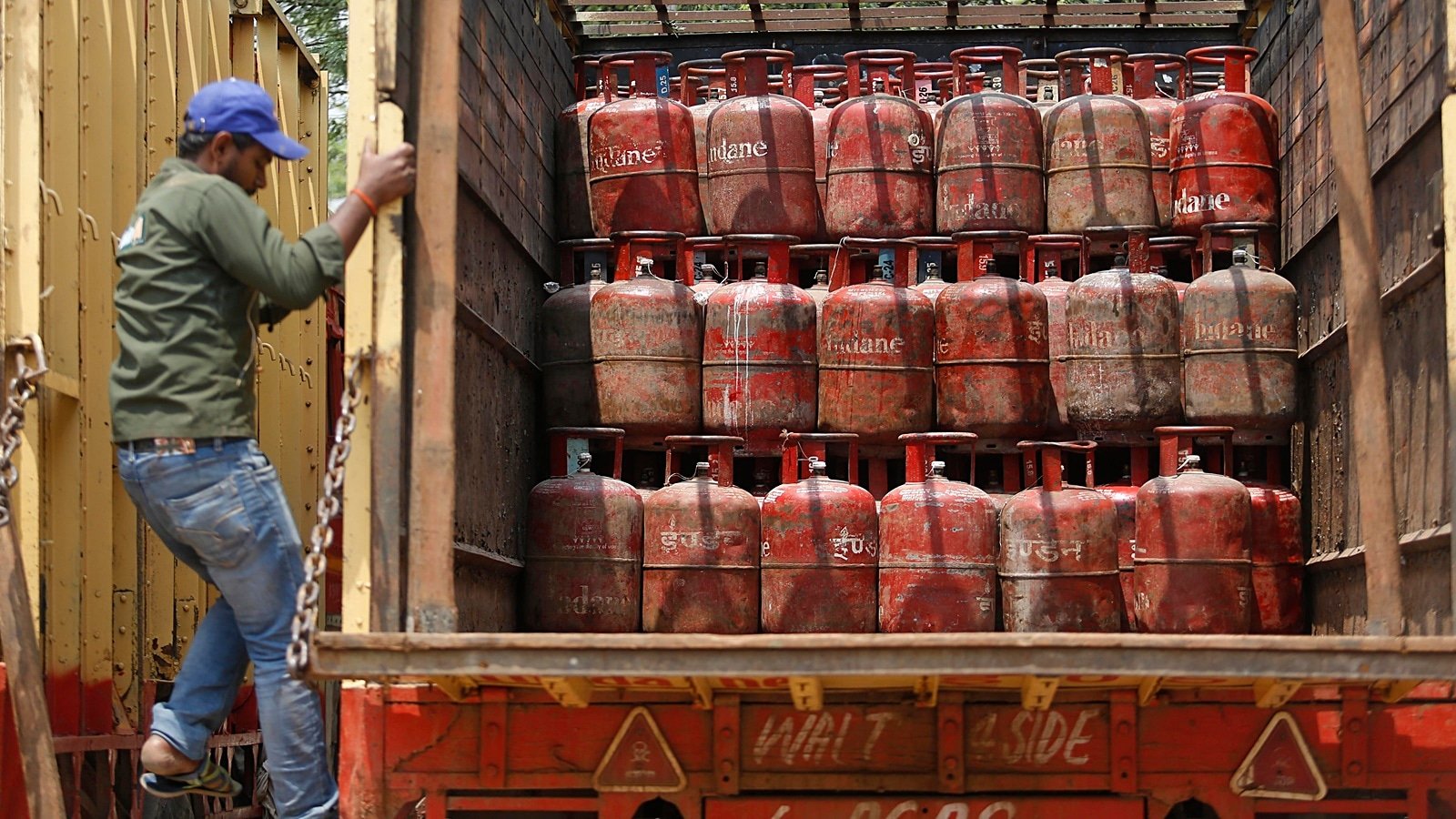
The hike in liquefied petroleum gas (LPG), or cooking gas, for domestic consumers by Rs 60 per cylinder was done in view of the West Asia conflict-induced surge in international prices, which are weighing on public sector oil marketing companies (OMC) that have been retailing the fuel to households at a loss on a sustained basis, according to top government sources. They also said that currently there isn’t any expectation of a hike in retail prices of petrol and diesel despite a jump in global prices as the OMCs—Indian Oil Corporation (IOC), Bharat Petroleum Corporation (BPCL), and Hindustan Petroleum Corporation (HPCL)—are financially well-positioned in respect of these fuels. Moreover, they also assured that sufficient fuel stocks are available in the country and the consumers need not panic about supply.
Domestic LPG price was hiked by Rs 60 per 14.2-kg cylinder on Saturday to Rs 913 in Delhi, with corresponding changes in other parts of the country; for poor households covered under the Ujjwala scheme, the effective price will be Rs 613 after accounting for the Rs 300 cash subsidy. India has over 33 crore domestic LPG consumers; this is the second hike in domestic LPG prices in 11 months. In addition to domestic LPG prices, commercial LPG prices were hiked by Rs 114.5 per 19-kg cylinder to Rs 1,883 in Delhi, with corresponding changes in other parts of India. Commercial LPG is mostly used by restaurants and hotels.
According to a senior government official, despite the price increase, LPG for households continues to be sold below market-linked price levels in India, and is significantly cheaper than neighbouring countries like Pakistan, Sri Lanka, and Nepal. The pricing calculations indicated that the required increase would have been around Rs 134 per cylinder, as per government sources. They also said that price increase effectively translates to a hike of just around 20 paise per person per day for a family of four based on current household LPG consumption levels in the country.
According to industry sources, even before the West Asian conflict, the three OMCs had accumulated losses worth roughly Rs 20,000 crore in the first three quarters of the current financial year. In 2024-25, they had initially absorbed Rs 40,000 crore worth of losses on sale of LPG to households below market prices; the government later approved Rs 30,000 crore as compensation support. Prior to that, in 2022-23, the government provided the OMCs with Rs 22,000 crore in compensation support for their accumulated losses worth Rs 28,000 crore on LPG sales.
India imports more than half of its LPG requirement, and domestic prices are linked to international benchmarks such as the Saudi Contract Price (CP). According to industry data, the average Saudi CP has jumped from $466 per tonne in November 2025 to over $542 this month. “Domestic LPG prices are consciously moderated by the government to shield households from international volatility. This targeted approach ensures that while market signals are visible through commercial LPG pricing, household cooking fuel remains protected and affordable…the modest price adjustment must be seen as part of a calibrated approach balancing consumer protection, financial sustainability of OMCs, and uninterrupted LPG supply for households across India,” said a senior government official.
The conflict in West Asia has effectively halted vessel movement through the critical chokepoint of the Strait of Hormuz—the narrow waterway between Iran and Oman that connects the Persian Gulf with the Gulf of Oman and the Arabian Sea—from where over 80% of India’s LPG imports transit. Around 40% of India’s oil imports and over half of its liquefied natural gas (LNG) imports also come through this chokepoint. The disruption in maritime traffic through Hormuz has led to a surge in international prices of crude oil, petroleum fuels, and natural gas. Since the start of the conflict on February 28, benchmark Brent crude has risen over 27% to $92.69 per barrel, the highest level since end-September 2023. India depends on imports to meet over 88% of its oil needs, and around half of its natural gas requirement.
Despite the spurt in international oil and fuel prices, there are no immediate plans for hiking petrol and diesel prices, which is in line with the government’s policy of the past few years to keep pump prices stable despite the volatility in international energy markets, according to sources. Petrol and diesel prices have effectively been flat since April 2022, with the OMCs taking losses when global prices jump, and recouping them when they fall.
Story continues below this ad
In order to ensure continued availability of cooking gas to crores of Indian households amid the West Asia crisis, the government invoked emergency powers derived from the Essential Commodities Act to direct Indian refiners to maximise LPG production and ensure that all the gas is supplied solely to domestic LPG consumers and not used to produce petrochemicals.
According to sources in the know, the government and Indian oil and gas companies are in touch with all international suppliers, including national oil companies and even large traders like Vitol, Trafigura, and ADNOC Trading, to source additional volumes of crude oil and LPG from their international portfolios in view of the West Asia conflict, even as the country is in a “comfortable” position to prevent any near-term shortage of major fuels like petrol, diesel, and LPG. Some LPG volumes under the recently-inked import contract with the US have also started coming in. The sources also assured that there was no need at present to ration fuels.
As for crude, Indian refiners are ramping up purchases from non-Hormuz sources, including Russia. According to government sources, the country’s stocks of crude oil and major fuels derived from it—like diesel and petrol—are increasing as oil cargoes from other regions, including Russian crude already in tankers on water, are coming in. On Tuesday, government sources had indicated that the country had six-eight weeks of crude and fuel stocks, which would be replenished on an ongoing basis with supplies from other regions being increased. As refineries continue to process crude, produce fuels, and get more oil from regions other than West Asia, these stocks will keep shifting, and the effective coverage would be extended, they had said.