
[Some spoilers follow for the upcoming seasons of The Comeback and Paradise]
The new season of The Comeback, in addition to heralding the return of one of the great annoying-watchable characters in premium cable television, also introduces an element we’ve yet to see dramatized in comedies: AI as plot device.
Kudrow’s Valerie Cherish returns after many years away to find that television, or at least a certain kind of commoditized fast-streaming television, can now be written largely by machine. The show’s cringe-comedy dystopia dances on satire’s edge; are we to laugh at the replacement of human slop or fear what else could be taken over? Either way, Kudrow and her fellow executive producer Michael Patrick King leave one truth unchallenged: computers can already do plenty of creative jobs.
As the season progresses this sends human writers into a tailspin (“I am just trying to get me and my kids out of this town before it explodes,” Abbi Jacobson’s showrunner character says in an epic rant) and a whole industry into a precarious state. Of course whether said industry actually faces mass machine disruption or just Chicken Little doomerism, the (human) writers also leave deliciously vague.
The ambiguity provides a good metaphor for the entertainment business as it stands, or perhaps wobbles, right now. An industry feels on the verge of great change. But whether toward implosion or a needed rebirth remains anyone’s guess, and its many players’ holy crusade.
All with access to a laptop or first-look deal are warrioring, from Gullermo del Toro’s lusty award-season anti pronouncements to Darren Aronofsky’s earnest tinkering curiosities, from the rise of virtual influencers to Pamela Anderson’s AI-model ban — and, further downstream, on every WhatsApp thread and lunchtime yap session — onward endlessly and without resolution. In the finale of the new season of Hulu’s Paradise, out Monday, March 30, Dan Fogelman instead throws up his hands on the question entirely, if craftily: he makes the whole episode turn on whether AI will be our doom or our savior. The characters don’t know, and the real-life writing staff, Fogelman seems to suggest, won’t insult our intelligence by pretending to.
A battle is unfolding through much of creative culture — unseen to the naked eye, yet everywhere once you start discerning its patterns. It’s the fight over whether to welcome this new digital door-knocker or keep the analogue safe and secure, and it plays all the way up to c-suite decisions and all the way down to cultural moments. Volkswagen attempted an anti-tech pro-human message during the Super Bowl with an ad that showed earthy pleasures like dancing in the rain and chasing an ice-cream truck. Not long after OpenAI offered its own automotive retort: it has been airing a spot during March Madness in which young-adult brothers fix and take ownership of an old family truck only with the help of ChatGPT.
This spectrum provides a lens through which to view so many moves — it explains what the Guilds do when they fight AI changes in contract negotiations and filmmakers do when they use the tech in their work; what awards bodies seek with guidelines for AI and what entrepreneurs attempt when they deploy it on masterpieces. And it casts a light into the existentially jangly mind of so many creatives. As the comic performer Jenny Slate recently told THR‘s Chris Gardner, “I just want to be an actor. Please let me keep being an actor, please. Computers, don’t take my job.”
All of this even while the real-world creative impact of AI lags. For the many VC dollars spent on it, machine intelligence has not yet taken charge of writers rooms or recording studios; it has thus far refrained from storming the castles of news-production meetings and film-production crews. This, of course, only causes more heel-digging — nothing spurs divisiveness like a lack of clarity. Will AI take over development and production or just cheerfully help like a P.A. R2-D2? No one knows. Will studios abandon new work for memeslop or nobly resist a descent into IP-management nothingness? Ditto. Everyone sure has an opinion, though.
The shocking retreat of Sam Altman and OpenAI from Hollywood last week, with the axing of Sora and its we-hardly-knew-ye Disney deal, underlines the nobody-knows-anything point. Writers exulted at the walkback of shame from a memeslop king who so badly wanted to rule Hollywood, but it probably just means another company will take its place, and don’t those writers all use ChatGPT anyway?
The moment is an odd one. The very holiness that the creative class — a group led by the firecracker-hurling del Toro but composed of a great majority of working writers, actors and directors, not to mention costume designers, drivers and caterers — comes to defend is one they derided just moments ago. Movies and television for years have been getting more corporate, more algorithmic, less exciting, less relevant (the writers et al.), as well as less numerous, less shot in America, less financed, less of an opportunity (the production and supporting people). Such realities would hardly seem worth protecting — it’s 3:30 in the morning and I’m at a cockfight, what am I clinging to?
Then again, AI can be seen as part of this same threat that brought about all the previous badness, the possibility of machines doing all the work simply the latest and most bruising broadside of a long technocapitalist encroachment. Such an ideology animates Justine Bateman and her No AI Film Festival and many others in their camp. As Clint Bentley, director of the very human Train Dreams, also told Gardner, “It’s weird to be in a time where we are having this conversation and asking ourselves these questions of whether people matter.”
On the other hand, in such a blighted landscape, AI could, perhaps, come not as a vulture to pick over the remains but a new life force to resuscitate them. By handing shotmaking ability to pretty much anyone, advocates argue, we pry control of moviemaking from the very corporate overlords who have been bleeding it of originality. By allowing shoots to happen so easily we lower the stakes on runaway production and make movies abound everywhere (albeit with a diminished need for supporting services), like lab diamonds overrunning DeBeers. The cartel is dead; gems for everyone.
Then again, says the anti-AI camp, such a thought experiment only proves the point: it would make diamonds so common as to render them worthless. The slop would take over. If anyone can make a movie, has anyone really made anything, and how will we find it if they do? The barriers to production ensure that mainly the talented do it and holds back a torrent of slop; with the gatekeepers gone, it comes rushing forth.
And on it goes, a debate without answer, and, sometimes, without consistency. A creative class often dedicated to equity now argues for elites, while a techno-oligarchy claims it acts for the people. And through it all, too, a fight over soul: people should be doing the work because only they understand what they’re doing. Or they should make room for machine help and the rush to efficiency, as they always have, as they inevitably will.
The lack of resolution makes each side emboldened — who doesn’t love an argument that can’t be disproven? — and also makes listening to either side frustrating; who loves an argument that can’t be resolved?
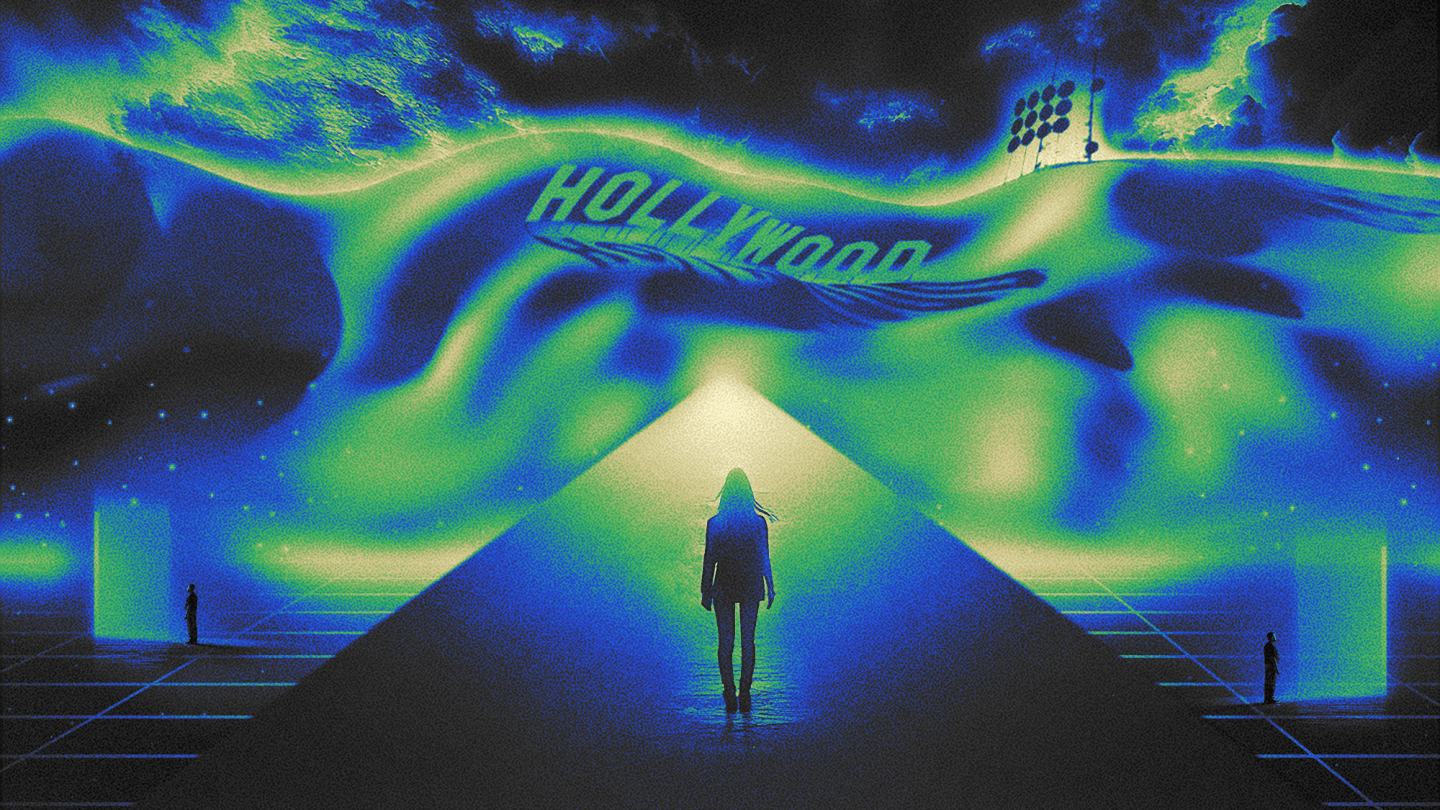
The great irony of this Hollywood AI moment lies with its core contradiction: a revolution based on predicting the next word can’t seem to know what happens tomorrow. In such a darkness what can we do but seek signal and move forward, one megadeal and its cheered collapse at a time.
This story appears in The Hollywood Reporter’s upcoming AI Issue, out in April.



