
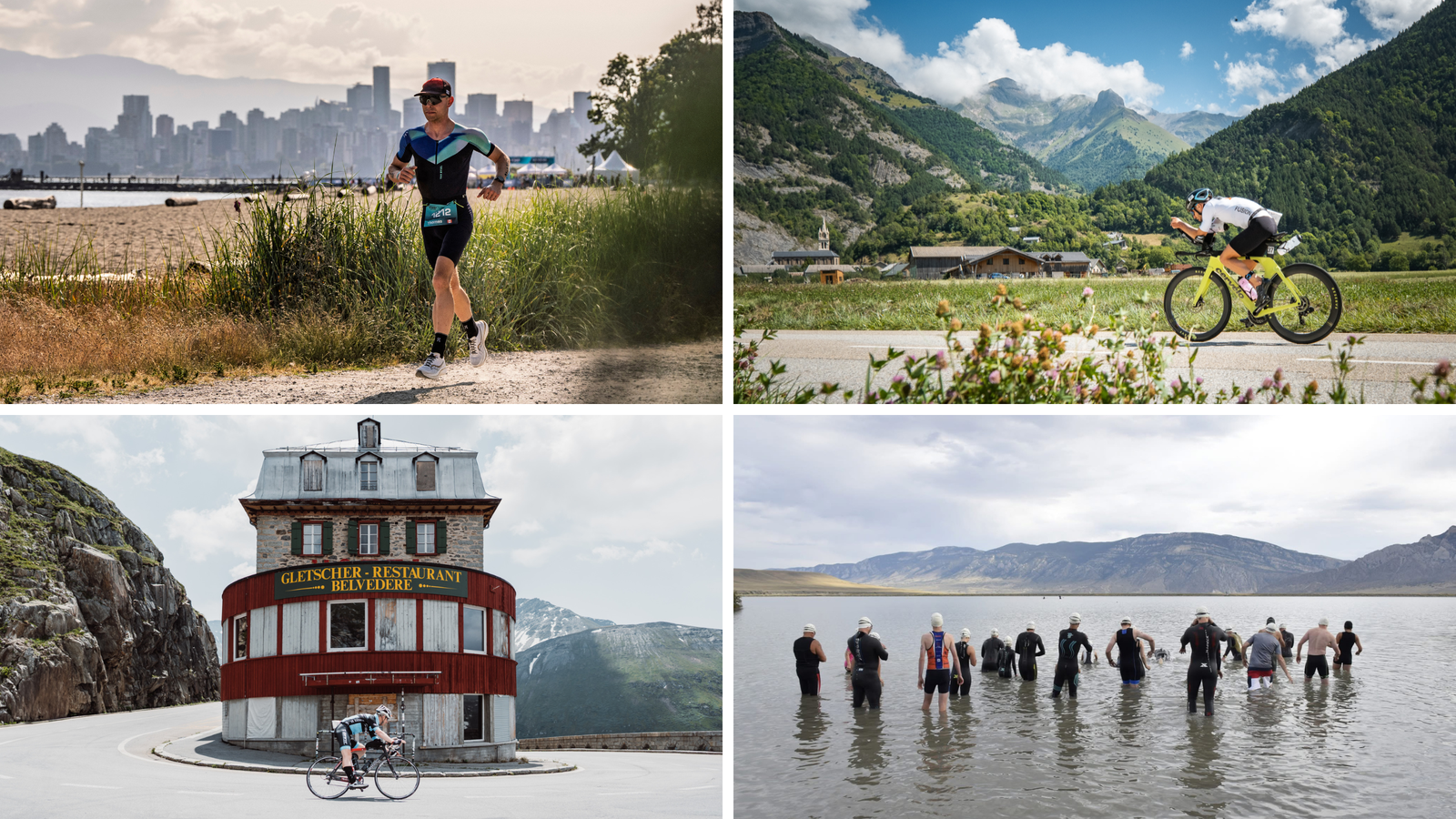
Beat the summer heat by planning a vacation around these destination triathlons, all set in cool-weather locales.
(Photo: Clockwise from top left: Vancouver T100, Alpe d’Huez/@uniti_bcn, Gates of Yellowstone, @benjamin_savary)
Published June 11, 2026 06:00AM
Summer has arrived! Over the next few months (if it hasn’t happened already), crisp mornings will be replaced by sweltering heat and humidity, which can make triathlon training and racing) a challenge.
Luckily, there are certain regions of the U.S. (and the globe) that are known for their cool summer temperatures. We’ve rounded up a list of 10 anti-summer races that provide a much-needed respite from the heat, making them the perfect choice for a triathlon cool-cation.
Lofoten Triathlon
August
Svolvær, Norway
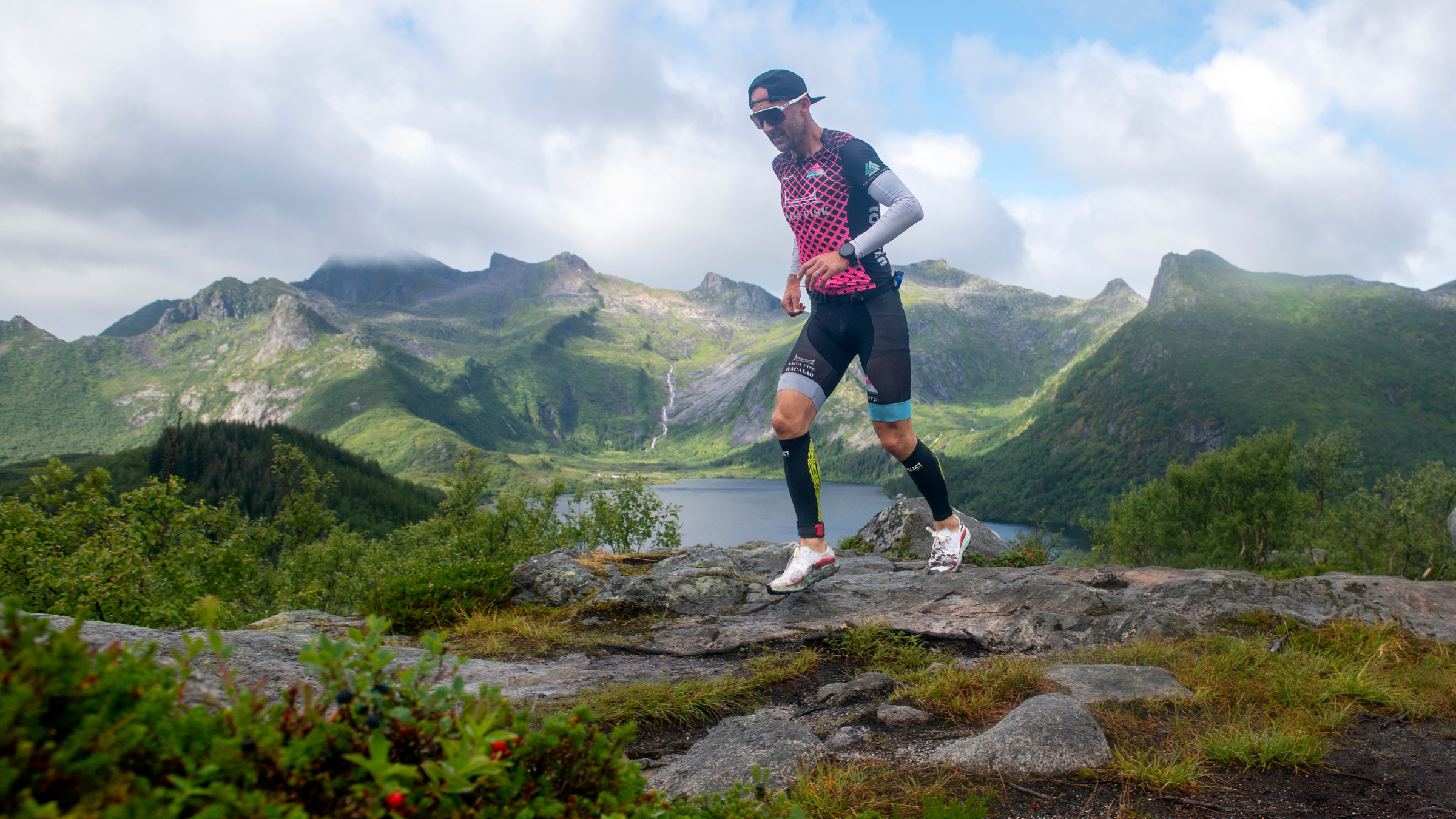
The full name of this race is the Arctic Circle’s Lofoten Triathlon, to give you any idea of how chilly this race is. Lofoten Triathlon is traditionally held the 33rd week of the year (August) and is part of a three-race series. You can complete the Arctic Triple by doing the triathlon in addition to the Lofoten Skimo 4000 (Week 11) and Lofoten Ultra-Trail 100 or 50 mile trail run (Week 22).
Lofoten Triathlon has three distances: Extreme, Half Extreme, and Olympic, as well as a kid’s triathlon. This time of year in Norway, there’s almost 24 hours of daylight, so there’s no need for an early morning start. Transition opens at 10 a.m. and the race start is at 12 noon!
Due to the water temperature (average 59 degrees Fahrenheit), the swim is wetsuit mandatory, and it’s recommended that athletes use a neoprene cap and socks. The Half Extreme consists of a 1.9K swim in the harbor, a 100K bike that goes around Fiskebøl and Laukvik, and a challenging 21K mountain run to the top of Tjeldbergtind Mountain overlooking Svolvær. The Extreme has a 4K swim, 181K bike, and 42K run.
Vancouver T100 Triathlon
August
Vancouver, British Columbia, Canada
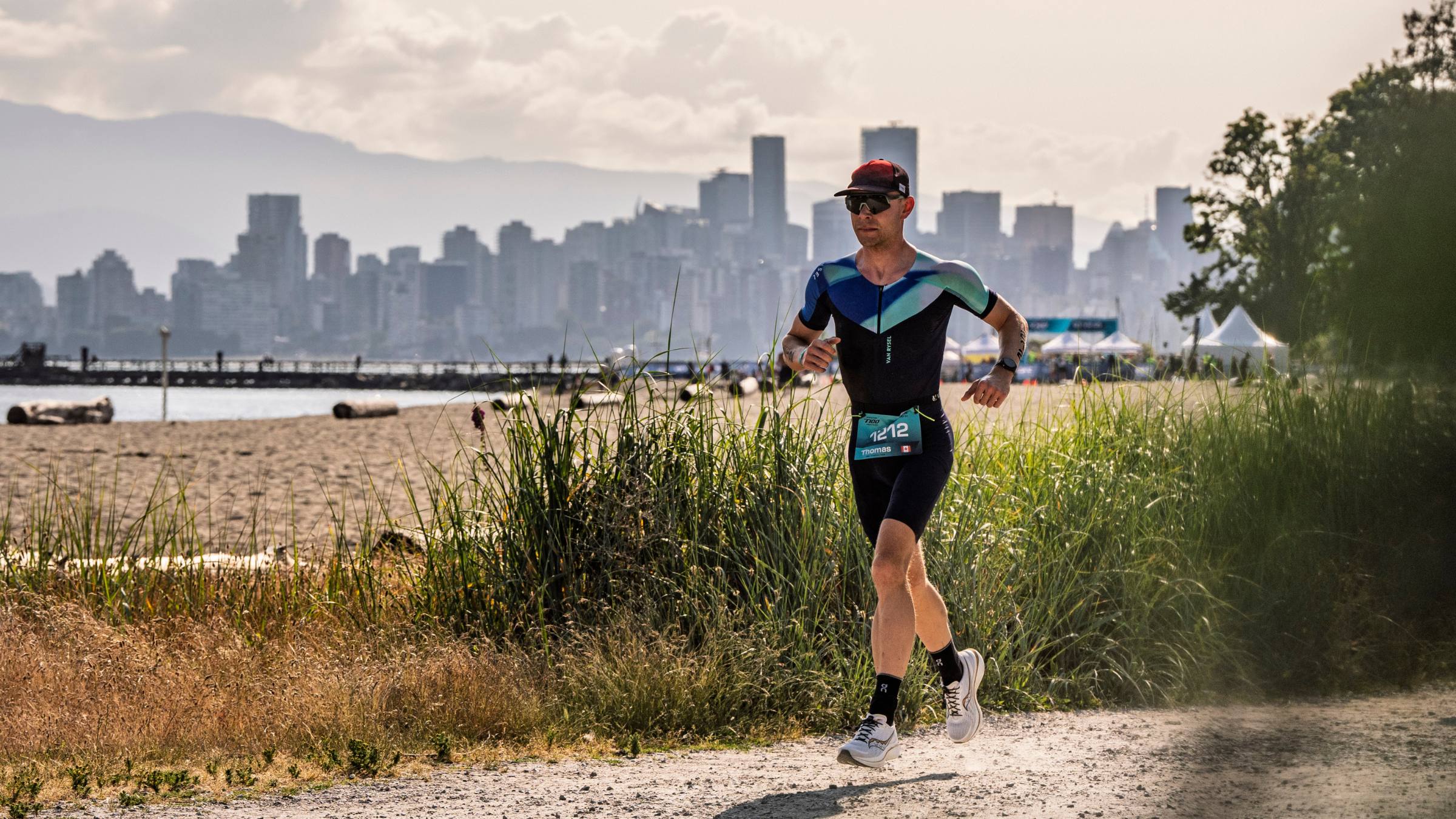
Head to the cool Pacific Northwest and the Vancouver T100 for a brisk ocean swim and beautiful coastal scenery. Athletes can race the trademark T100 distance of 100K, consisting of a 2K swim, 80K bike, and 18K run. Or race a short-course tri (Olympic or sprint distances).
Vancouver is a unique setting for a triathlon, as it’s situated where the Coast Mountains meet the Pacific Ocean. Athletes will enjoy magnificent mountain views, coastal scenery, and the Vancouver skyline. The weather is pretty ideal with average air temperatures of 59-73 degrees Fahrenheit and water temperatures of 57-64 degrees.
The T100 swim is two laps in the Pacific Ocean. The rolling bike course consists of four laps along the Spanish Banks toward the University of British Columbia. The three-lap run takes athletes along beach pathways with a sea breeze and incredible views.
Ironman 70.3 Calgary
July
Calgary, Alberta, Canada
Ironman 70.3 Calgary has moved to a new location near Cochrane that shows serious promise as a cool-weather contender. The race begins with a cold swim in Ghost Lake. With an average water temperature of 65 degrees Fahrenheit in this freshwater lake, you should definitely bring your wetsuit. With average air temperatures of 53-69 degrees, the weather looks pretty perfect for the bike and run too.
This race features a split transition race with T1 located by the swim and T2 at Cochrane’s Historic Ranche, a public park that commemorates Alberta’s first large-scale cattle ranch established in 1881. The rolling bike is said to have spectacular views of the Canadian Rockies with 1,651 feet of gain. The two-loop run takes athletes along the Bow River with 528 feet of gain before returning to a red carpet finish at the Ranche.
Ironman Lake Placid
July
Lake Placid, New York
This historic summer Ironman is as well known for its challenging course and spectacular scenery as it is for the cool (and sometimes wet) weather conditions. Average temperatures in Lake Placid in July range from 44-75 degrees Fahrenheit, and it has been known to rain on race day. However, this isn’t a very cold swim; it has an average water temperature of 75 degrees.
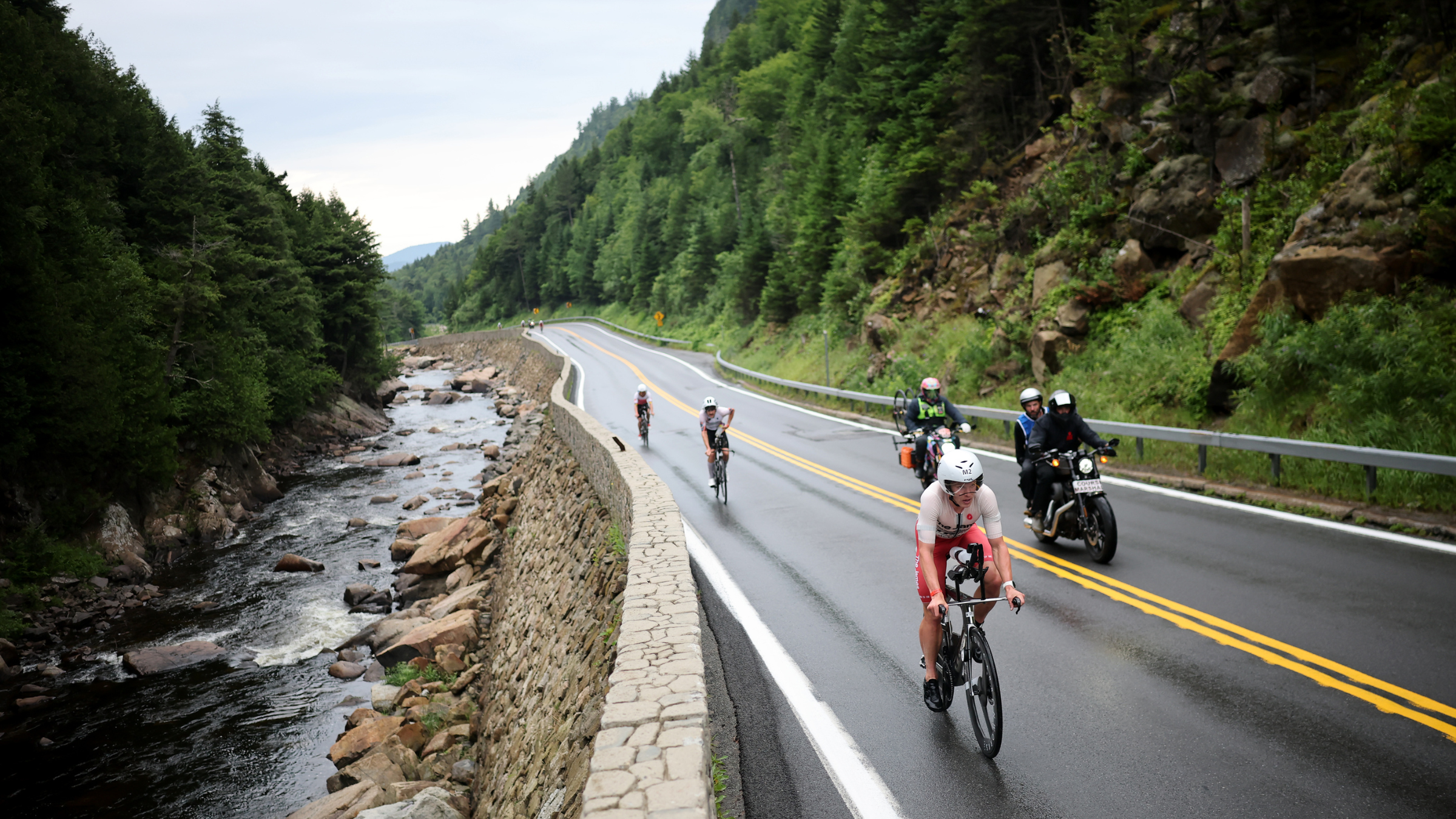
The race begins with a two-lap swim in beautiful Mirror Lake, followed by a hilly, two-loop bike course through the Adirondack Mountains with epic climbs and fast descents. Capping off the day, a two-loop, hilly run course awaits, including the infamous Mill Hill, before you reach the historic Olympic Oval finish line.
Swissman Xtreme Triathlon
June
Switzerland
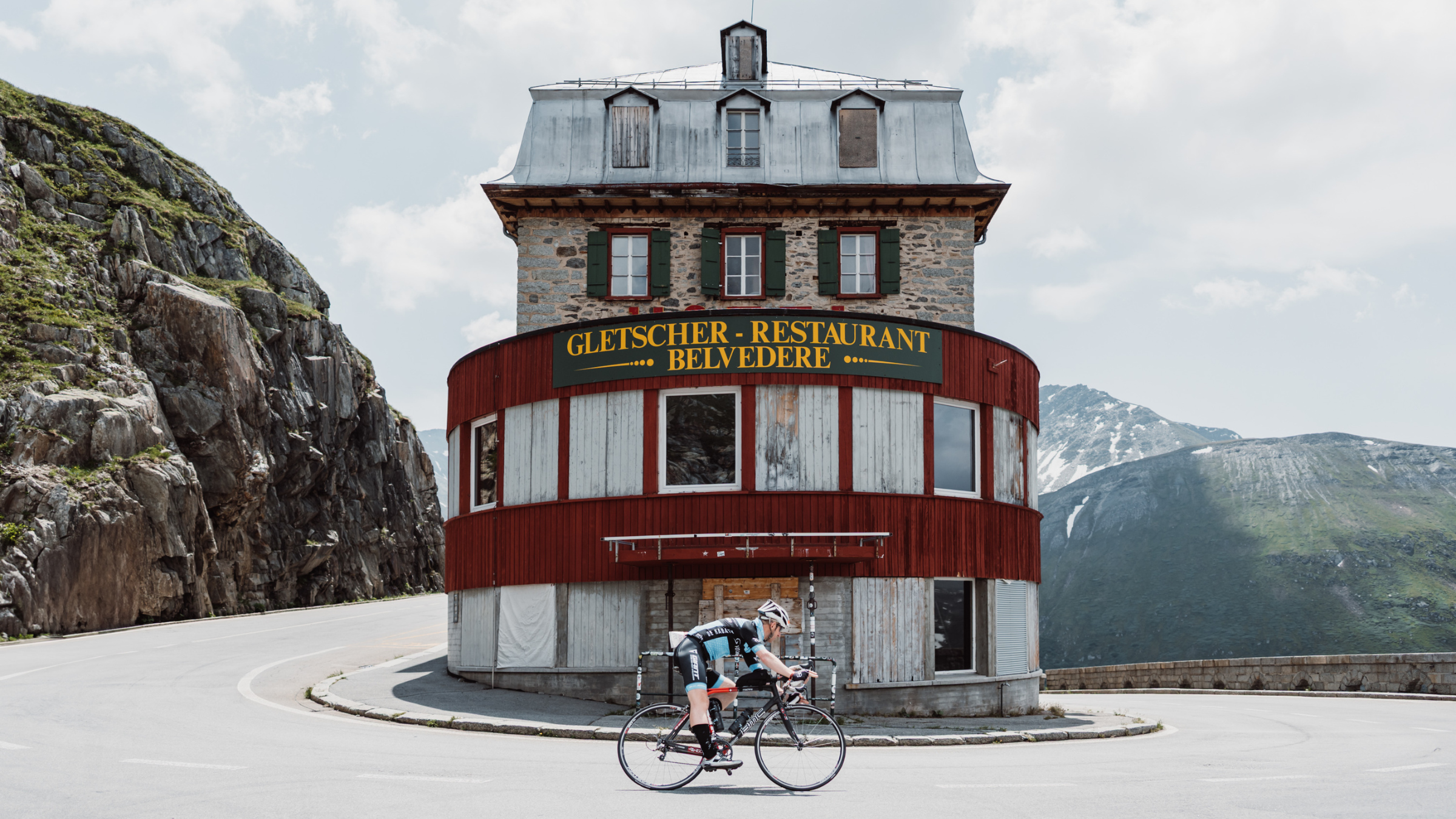
As far as extreme triathlons go, Swissman is one of the colder races. With an alpine lake swim and a bike course that traverses three mountain passes in the Swiss Alps past glaciers and snowfields, this race will require some extra cold-weather gear. Even in the summer, athletes can encounter freezing rain and cold descents.
The race starts in Ticino at 5 a.m. where athletes will swim 3.8K guided only by the light of sailboats from the Brissago Islands to Ascona. The 180K bike goes over three alpine passes – Gotthard, Furka, and Grimsel – resulting in a whopping 3,800 meters (12,467 feet) of elevation gain. Race organizers suggest athletes bring extra clothing for the alpine passes.
For the run, it’s a requirement that an athlete’s support staff carry a backpack containing long pants, sweater, jacket, hat, gloves, and emergency blanket. The final leg of the race begins with a steep climb to the Giessbach Falls and then 42K up the final climb to Kleine Scheidegg.
Alpe d’Huez Triathlon
August
France
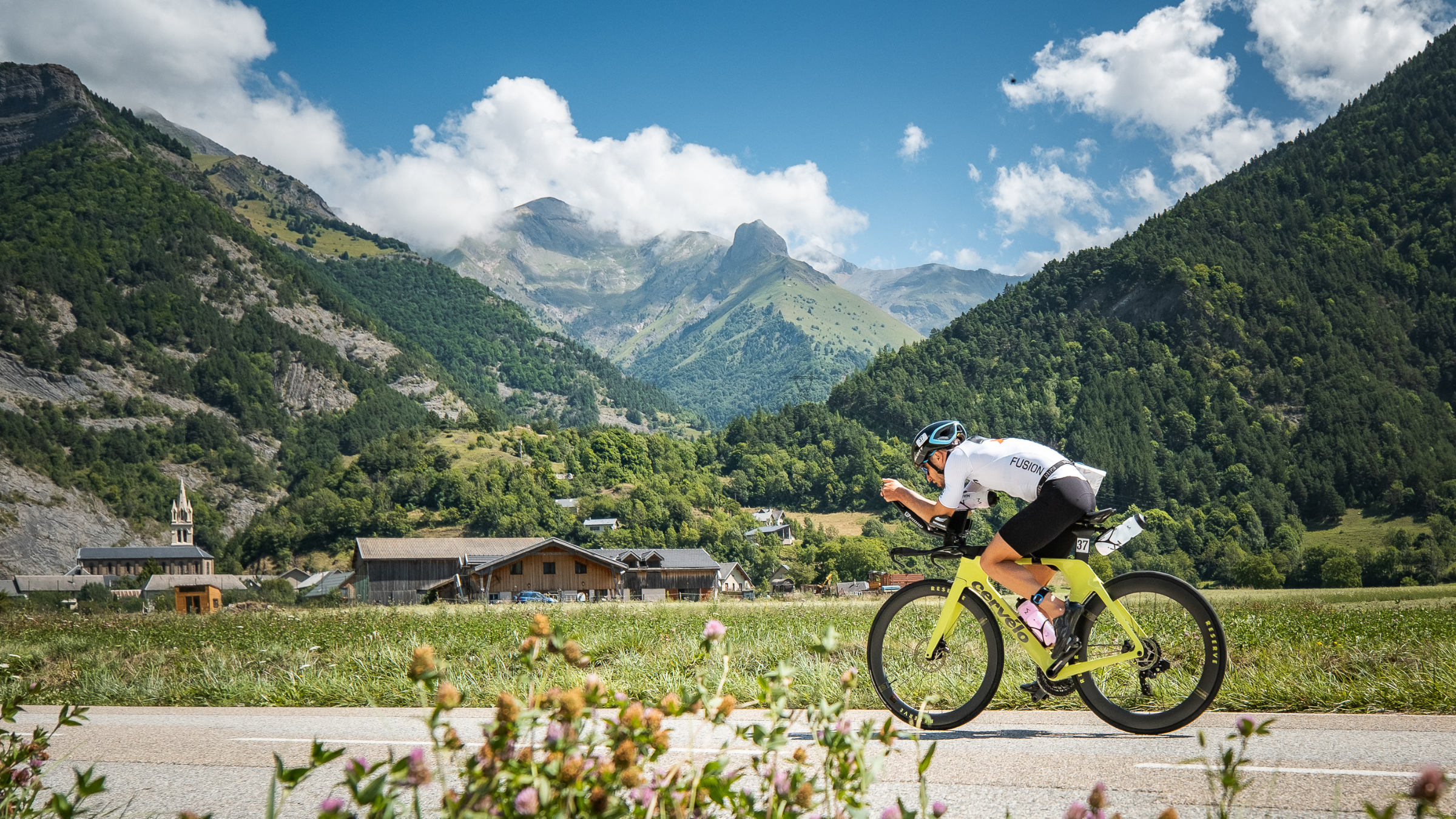
The Alpe d’Huez Triathlon is most well-known for the iconic 21 bends on the bike course, but the other two disciplines are equally challenging in their own right. Triathlon L consists of a 2.2K swim, 118K bike, and 19.2K run. The race begins with a swim in the crystal-clear, cold (59-61 degrees) water of Lac du Verney. Considered to be one of the most pristine lakes in Europe, Lac du Verney is fed by mountain streams and an underground spring, which is the reason for the spectacular, clear-emerald waters. The only time swimming is allowed in this lake is during this race.
With a 9:30 a.m. start, athletes will complete the swim then tackle the bike course with 3,200 meters (10,498 feet) of elevation gain. The longer triathlon distance takes athletes up the Alpe du Grand Serre and into the rolling hills of the Valbonnais Valley. Then, you climb up the Col du Malissol and Col d’Ornon before reaching the iconic 21 bends of the Alpe d’Huez. But that’s not all! What awaits at the top is three laps of a 6.4K loop on mixed terrain at an altitude of 1,800 meters (5,900 feet).
Sebago Lake Triathlon
June
Standish, Maine
For a cool short-course triathlon, consider a race in the easternmost state in the contiguous U.S. The Sebago Lake Triathlon has both an Olympic and a sprint on the beautiful campus of Saint Joseph’s College of Maine in the town of Standish. The Olympic course consists of a 0.9-mile swim in beautiful Lake Sebago. With average water temperatures in the mid-60s, wetsuits are highly recommended.
The bike covers 22.8 miles through the rolling countryside. The two-loop run is 6.2 miles on wooded trails. Weather conditions in Standish in June are known to be mild and cool with a high of 72 degrees and a low of 55. Also, June is the rainiest month for Maine, so maybe pack a gilet for the bike.
Ironman 70.3 Aix-en-Provence
Late May
France
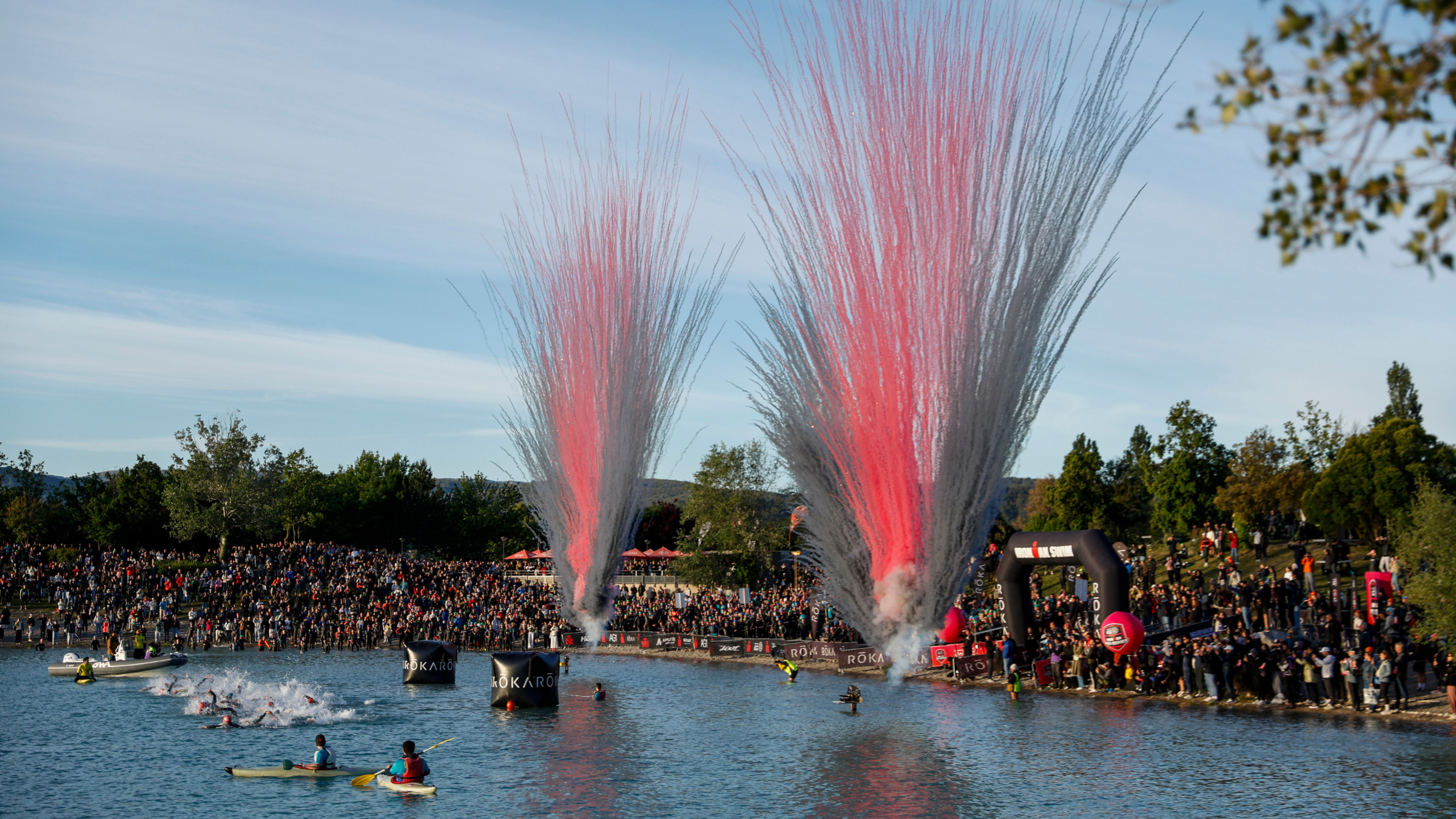
Ironman 70.3 Aix-en-Provence falls right on the edge of spring and summer and has certainly delivered cold race conditions. With average water temperatures in the low 60s, this race has been wetsuit mandatory in the past. And it isn’t much warmer when you get out of the water. Average temperatures range from 54 to 73 degrees Fahrenheit, but one particularly cold year it was in the low 40s in the morning.
Athletes will enjoy a one-lap swim in the crystal-clear waters of Lac de Peryrolles. The rolling bike course provides provençal landscapes on the way to a technical section in Mont Saint-Victoire. The three-loop run in the heart of the city goes through city parks, by the La Rotonde fountain, finishing on the Cours Mirabeau.
Aukeman Triathlon
August
Juneau, Alaska
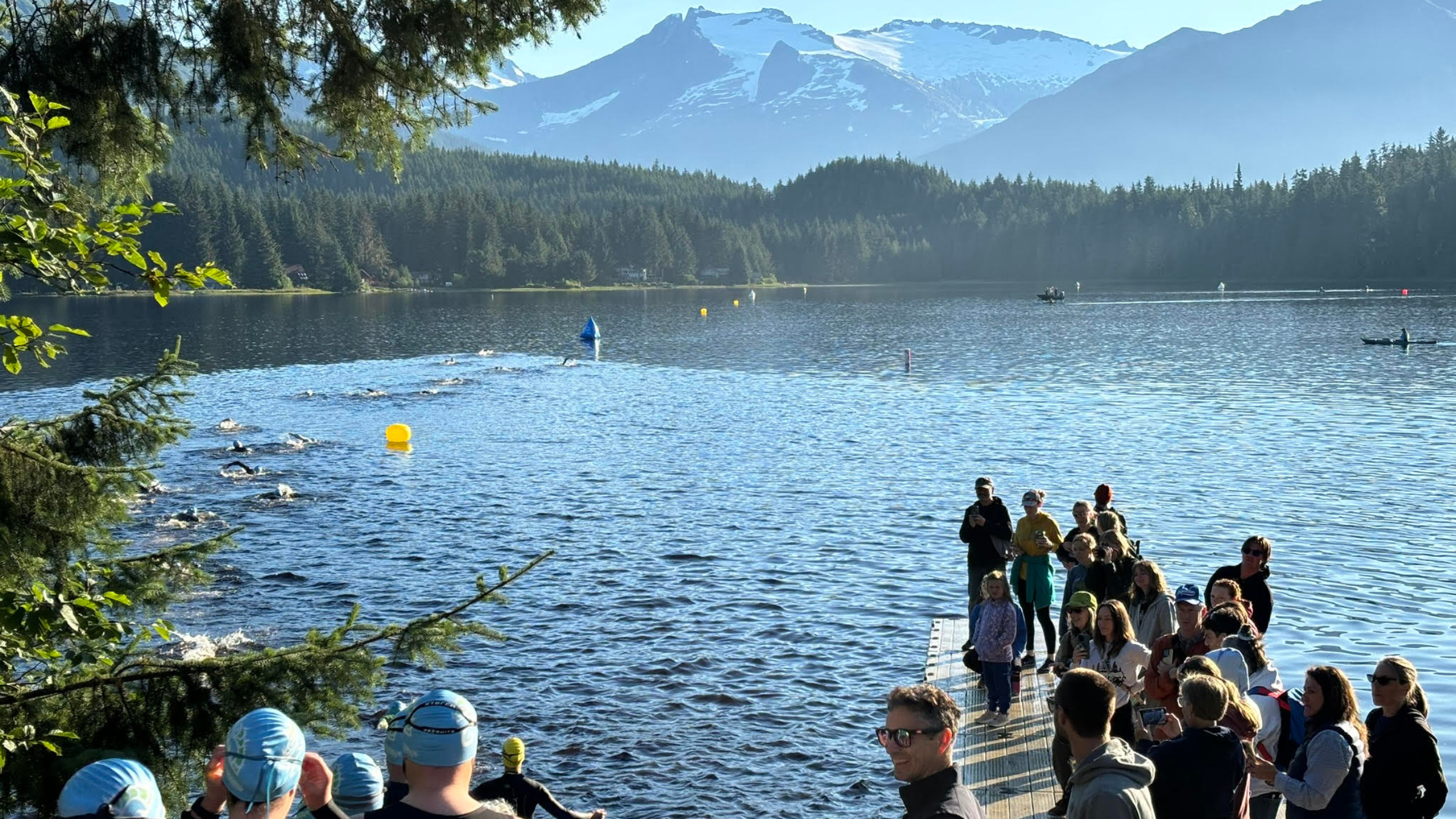
If you want a cold, summer race, you must head north, and you can’t go much farther north than Alaska! Aukeman in Juneau has a sprint, Olympic, duathlon, and aquabike to choose from. The Olympic consists of a 1.5K swim in Auke Lake with the most breathtaking views of Mendenhall Glacier. Then, you’ll ride 40K toward the glacier up to Tee Harbor and back. The 6.2-mile run is a bit hilly on local trails.
Historically, the water temperature is around 64 degrees, but it can vary based on rain or recent snowmelt. Race policy is the swim will be canceled if water temperature is below 54 degrees, or if the water temperature is below 56 degrees and the air temperature is below 50. However, the normal range for Juneau in August is a water temperature above 58 degrees and air temperature above 50, so there’s not too much to be concerned about, except for what cold-weather gear you should pack!
Gates of Yellowstone Triathlon
August
Cody, Wyoming
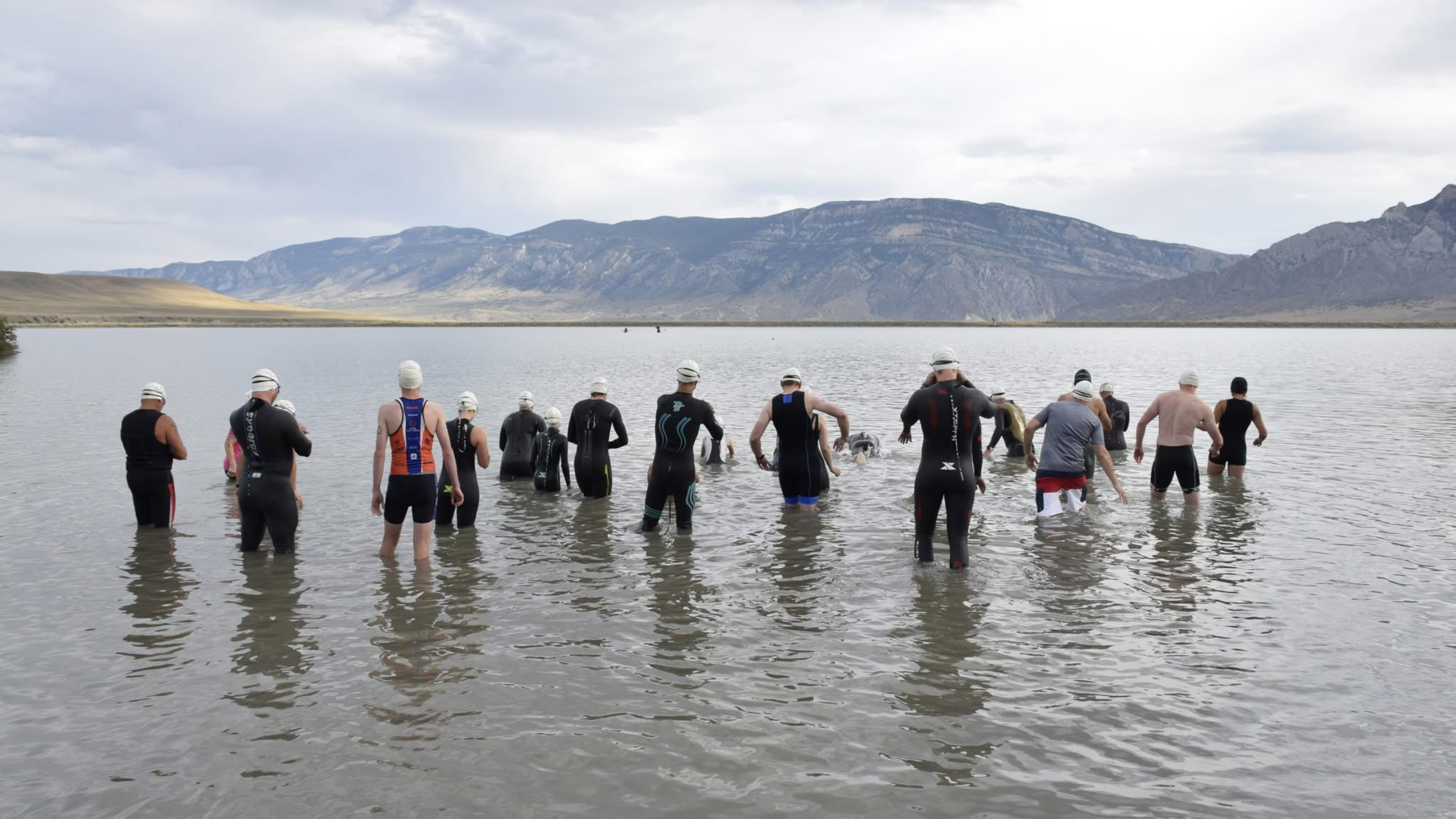
Gates of Yellowstone is the wildcard on this list, mostly because the race is only in its second year. But we felt it deserved inclusion for a few reasons: First, it’s Wyoming’s only USAT-certified triathlon. Second, the race has introduced a new half distance alongside their sprint and Olympic, and independent half-iron races are hard to come by these days. Third, Wyoming has more mild summer temperatures as compared to the rest of the U.S.
The water temperature sits in the high 60s, so it’s a wetsuit-legal race for sure. The half-distance begins with two loops of a diamond-shaped course in Shirley’s Pond against the backdrop of the Buffalo Bill Reservoir. The two-lap, rolling bike goes out into the South Fork valley with desert landscapes as far as the eye can see. The finale is a two-loop, semi-flat run with panoramic views of the reservoir alongside Shoshone National Forest. With an average high of 82 degrees and a low of 52, the higher elevation in Wyoming helps keep this race on the cooler side.



