
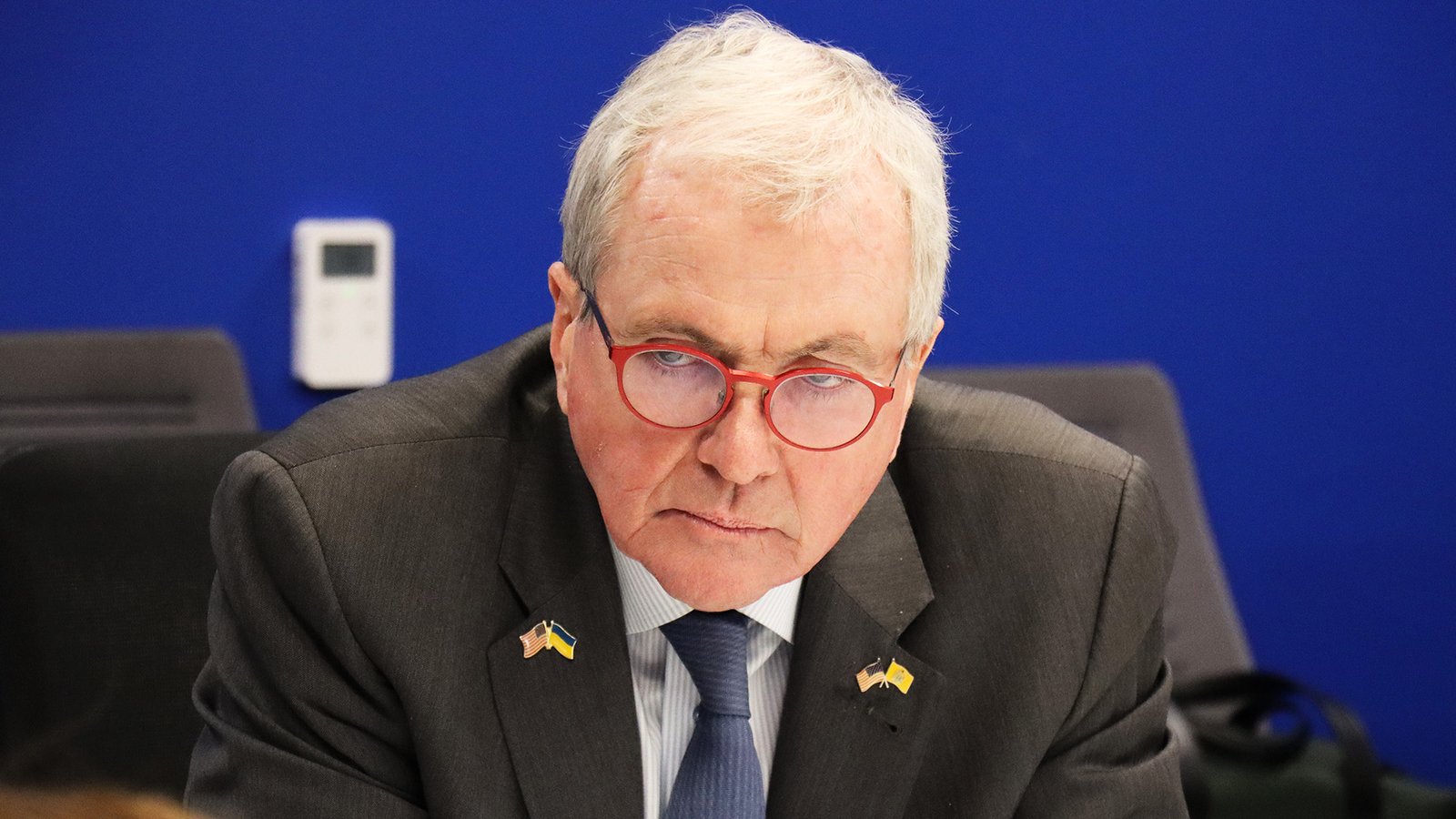
The final wave of Phil Murphy’s clemency initiative is drawing criticism from prosecutors who say the former governor extended political favors to some and allowed others to duck full punishment for particularly vile crimes. In one case, involving a fatal hit-and-run, prosecutors say “influence and power” trumped justice.
Among his last actions, Murphy on Tuesday morning commuted the sentences of 51 people and issued 97 pardons. That brought to 455 the number of people given what he has called “second chances.” Murphy granted clemency to more people than any New Jersey governor in recent history.
Among those whose sentences he commuted was Maria Montalvo, imprisoned since 1997 for killing her two children, ages 18 months and 2 years. Montalvo, 61, would have been eligible for parole in February 2054, at 89 years old. While she was not immediately released, Montalvo now is eligible for parole.

Monmouth County Prosecutor Raymond Santiago, in a statement, expressed his office’s “collective revulsion and disbelief” at Murphy’s decision. After a fight with her fiancé and the father of her children, Montalvo drove the children to the Long Branch house where he staying with his parents and set the car on fire. Santiago said the children’s final moments were “mired in unimaginable pain, terror and agony” and that commuting their killer’s sentence was an “injustice.”
Murphy’s announcement did not give specific reasons for individual commutations. Montalvo was listed as having been evaluated by The Clemency Project of ACLU-NJ, which met with incarcerated people, reviewed their cases and wrote release petitions. Montalvo has said she was innocent and her lawyer requested a new trial late last year, arguing that the scientific evidence that helped convict her is now considered to be flawed.
Of those who had their sentences commuted, or shortened, 17 were convicted of murder, two of aggravated or reckless manslaughter, seven of manslaughter and two of felony murder. Three others convicted of murder had their parole terms commuted. Two people convicted of manslaughter received pardons.
Most who received clemency were convicted of drug-related offenses. Murphy said broadly that each person given leniency “represents a story of accountability, growth, and redemption” and that his decisions were “guided by a fundamental belief that mercy and fairness are essential to a system that truly serves everyone.”
The Atlantic County Prosecutor’s Office, though, criticized Murphy’s pardon of Harris Jacobs, 28, who on Tuesday was found guilty of second-degree knowingly leaving the scene of a fatal motor vehicle accident. The jury found that in September 2022, the Atlantic City man struck and killed a 76-year-old man, got out of the car, leaned over the victim, drove away and didn’t notify police. The jury reached its verdict after Murphy issued the pardon, making its decision moot.
Jacobs is the son of politically connected Atlantic County lawyer Joe Jacobs, whom InsiderNJ reported raised more than $100,000 for former First Lady Tammy Murphy’s abandoned U.S. Senate bid in 2023.
“It must not be overlooked that the defendant’s conduct resulted in the death of an elderly gentleman who leaves behind a grieving family,” according to a statement from the prosecutor’s office. “Unfortunately, when politics pervades justice, the rule of law becomes subordinate to influence and power … a conviction can be rendered meaningless not by the verdict of a jury, but by the intervention of political power and connections. Justice must be blind to status, relationships, power, and expediency; when it is not, the community loses faith in the very system meant to protect it.”
Another politically connected man who received a pardon was Alberto Coutinho, a Democrat who represented Newark in the state Assembly for close to six years in all. He resigned in September 2013 and pleaded guilty to theft and filing a false financial disclosure. He personally spent more than $30,000 intended for a family charitable foundation.
Murphy also pardoned Eric Barrier, the hip-hop musician and actor, who spent time in jail in New Jersey in the fall of 2019 on a failure to appear warrant. In 2001, he was charged with aggravated assault and missed a March 2002 court appearance. Barrier reportedly didn’t know about the arrest warrant until he had an encounter with police in Vermont. A judge sentenced him to a year of probation instead of parole.
Murphy also pardoned Moshe Glick, whom the Essex County Prosector’s Office charged with aggravated assault and bias intimidation stemming from a 2024 protest outside a West Orange synagogue that drew national attention. In September, the Trump administration filed a civil complaint alleging that pro-Palestinian demonstrators had assaulted worshippers at the synagogue.
The New Jersey chapter of the Council on American-Islamic Relations called Glick a “pro-Israel activist” who allegedly struck a pro-Palestinian demonstrator in the head with a metal flashlight.
“Pardons should be used to correct injustice — not to obscure accountability in matters involving intimidation or violence,” the council said in a statement. “This decision sends a deeply troubling message at a time when all faith communities are facing heightened threats and deserve assurance that the law will be applied fairly and consistently.”
Yeshiva World News printed a statement issued by Glick in which he said he was “profoundly grateful and relieved to share that the baseless charges brought against me by rogue prosecutors in Essex County have been dropped in my favor. What began as an act of defending a fellow Jew from violent assault outside our synagogue has ended with the truth prevailing.”
Murphy also commuted the sentence of 24-year-old Mordechai Berkowitz, who in April pleaded guilty to driving with a blood alcohol level of almost twice the legal limit and crashing head-on into another car. The crash, in 2022, killed one woman and injured another. The Lakewood man was sentenced last month to six years in prison for vehicular homicide. Murphy effectively halved his sentence, so Berkowitz must remain in prison until 2028 and then serve three years of parole.
Murphy didn’t take clemency actions until late in his eight-year tenure. A clemency board he created in June 2024 considered more than 4,500 applications. It prioritized non-violent offenders with lengthy post-conviction records of good conduct, domestic violence survivors whose offenses were related to their victimization and those whose cases involved excessive trial penalties. Input of victims and their families was considered as well, Murphy’s office said.
ACLU-NJ issued a statement after Murphy announced the clemency actions.
“Redemption is possible,” said Jeanne LoCicero, the organization’s legal director, “and the Murphy administration’s clemency work has moved us toward a stronger, more equitable New Jersey for everyone.”



