
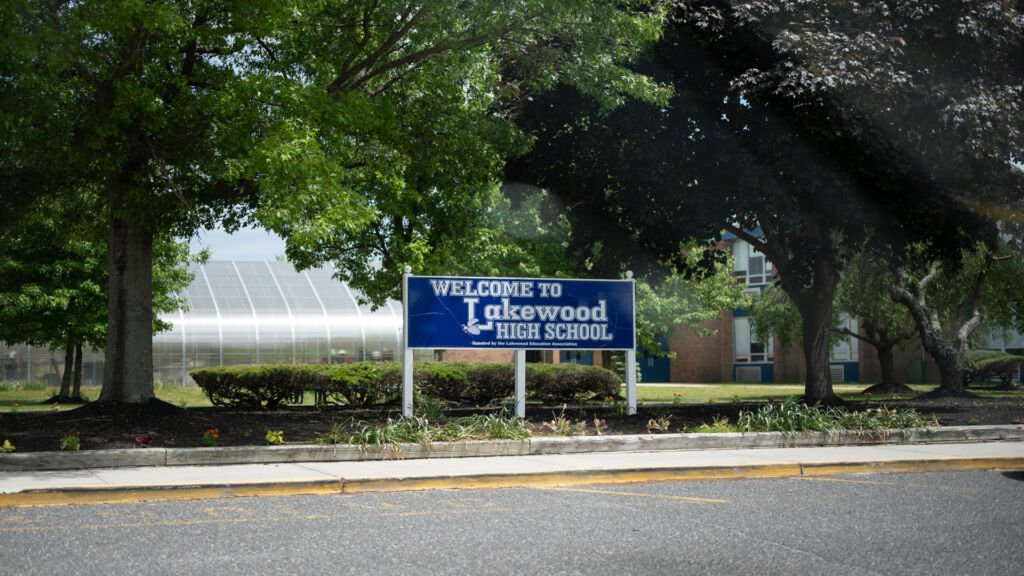
The Lakewood Board of Education vowed a legal challenge to the state’s takeover effort at the same time it announced corrective measures for exorbitant salaries and chronic student absences.
In a two-page statement, the board outlined some of its arguments against intervention, including its “extensive state oversight,” with 11 monitors over 12 years.
“The board does not believe that a full takeover is warranted and intends to protect the district’s interests through the appropriate legal process,” Board President Moshe Bender said at a meeting last week.
The state Department of Education last month announced that it would initiate a full state intervention, citing years of operational and fiscal mismanagement. The district has a March 5 deadline to answer an order to show cause, the first step for a takeover.
A full state intervention would be significant, as the state historically exercised this power in predominantly Black and Latino communities, including Jersey City, Newark, Paterson, and Camden. Among them, only Camden remains under state watch, while the others returned to local control.
The state’s takeover duties include appointing a superintendent and board; seizing control of finances, including contracts; and determining all staffing and curriculum. Lakewood’s annual school budget is around $300 million.
Most in private school
Lakewood public schools have engaged in a decade-long fight with the state over New Jersey’s funding formula, which determines districts’ education aid. School leaders argue the formula fails to account for the district’s unique structure.
State aid is calculated based on the number of students who attend a public school district. At the same time, local boards are obliged by state statute to pay for transportation and special education tuition for those in private schools. More than 50,000 students attend private schools in Lakewood, virtually all of them Orthodox Jewish, while fewer than 5,000 students are enrolled in its public school district.

More than half the district’s annual budget covers those transportation and tuition costs, as required by state and federal laws, court documents show.
After a state auditor flagged the board attorney’s excessive salary, the education department’s Office of Fiscal Accountability and Compliance ordered the district to create a corrective action plan, subject to approval by the school trustees and the education department.
The board last week approved upwards of $115,000 to challenge the state’s order to show cause, the legal document that outlines the state’s argument to take over the district.
The expenditure includes legal services by Genova Burns at $425 per hour, not to exceed $100,000, according to the board resolution.
It also includes pay for Elizabeth Keenan, an education consultant whom the board retained in the past, not to exceed $15,000; the resolution lacked an hourly rate.
$50,000 a month for attorney
In another move, the board approved policy regarding payment of its legal bills, including multiple reviews to ensure state law compliance. The district came under scrutiny after the Asbury Park Press found the board paid its general counsel, Michael Inzelbuch, around $5 million over five years.
In the corrective action plan, the board said an auditor found that Inzelbuch was paid a flat $50,000 per month rather than by billable hours.
Lakewood board members also approved a corrective action plan for chronic absenteeism, which the state defines as out of school for at least 10% of sessions. The schools appeared to have made progress: In 2023-24, the reported rate dropped to 15.6% from the 2021-22 rate of 25.1%, according to state data.
However, the Asbury Park Press last year raised questions about the decline, finding students were counted as present even when they were missing from class.
The board approved the action plans for five of its eight schools. The resolution had no mention of any issues raised in the news report.
Lakewood argues that the state fails to “fully and fairly” account for improvements made amid state monitoring since 2014.
“Importantly, no Lakewood School District school has been designated as ‘in need of improvement’ since 2018,” the board stated in a community letter.
The state cited a 2023 comprehensive review that noted “severe educational and administrative deficiencies are still pervasive in the district, depriving Lakewood’s public school students of a constitutionally sufficient education.”
Lakewood schools for the last decade have faced financial turmoil and rounds of legal battles over state funding. A September court ruling found the district’s struggles were due to poor fiscal management, failure to raise taxes and spending on transportation and special education.
“Lakewood’s severe mismanagement in each of the key areas in governance, special education, and transportation has drained valuable resources away from being used to provide [a thorough and efficient]” education, as mandated by the state constitution, the state’s order to show cause noted. The comprehensive review, it noted, also “found that Lakewood BOE is plagued by fiscal mismanagement and a lack of proper internal controls.”
‘Unique demographics’
The district over the last decade had more than $280 million in state loans to address funding gaps that it attributes to insufficient state aid.
“Throughout the years of state oversight, former state monitors have consistently acknowledged that Lakewood’s central challenge has not been mismanagement, but a structural revenue shortfall,” the board wrote in its community letter. “The board is deeply concerned that the longstanding issue of a failed state funding formula — one that does not adequately account for the district’s unique demographics, enrollment realities, and statutory obligations — has largely gone unaddressed.”
Under the state law on interventions, a hearing will take place within the education department’s Office of Administrative Law. The case will be decided by the education commissioner, who can choose whether to proceed. If so, the state Boad of Education will have the final vote, though it may be appealed in state Superior Court.
Though the takeover was initiated under Gov. Phil Murphy’s administration, the case will be heard by the education chief appointed by his successor, Mikie Sherrill, who took office on Jan. 13. Sherrill has nominated Lily Laux for that position.



