
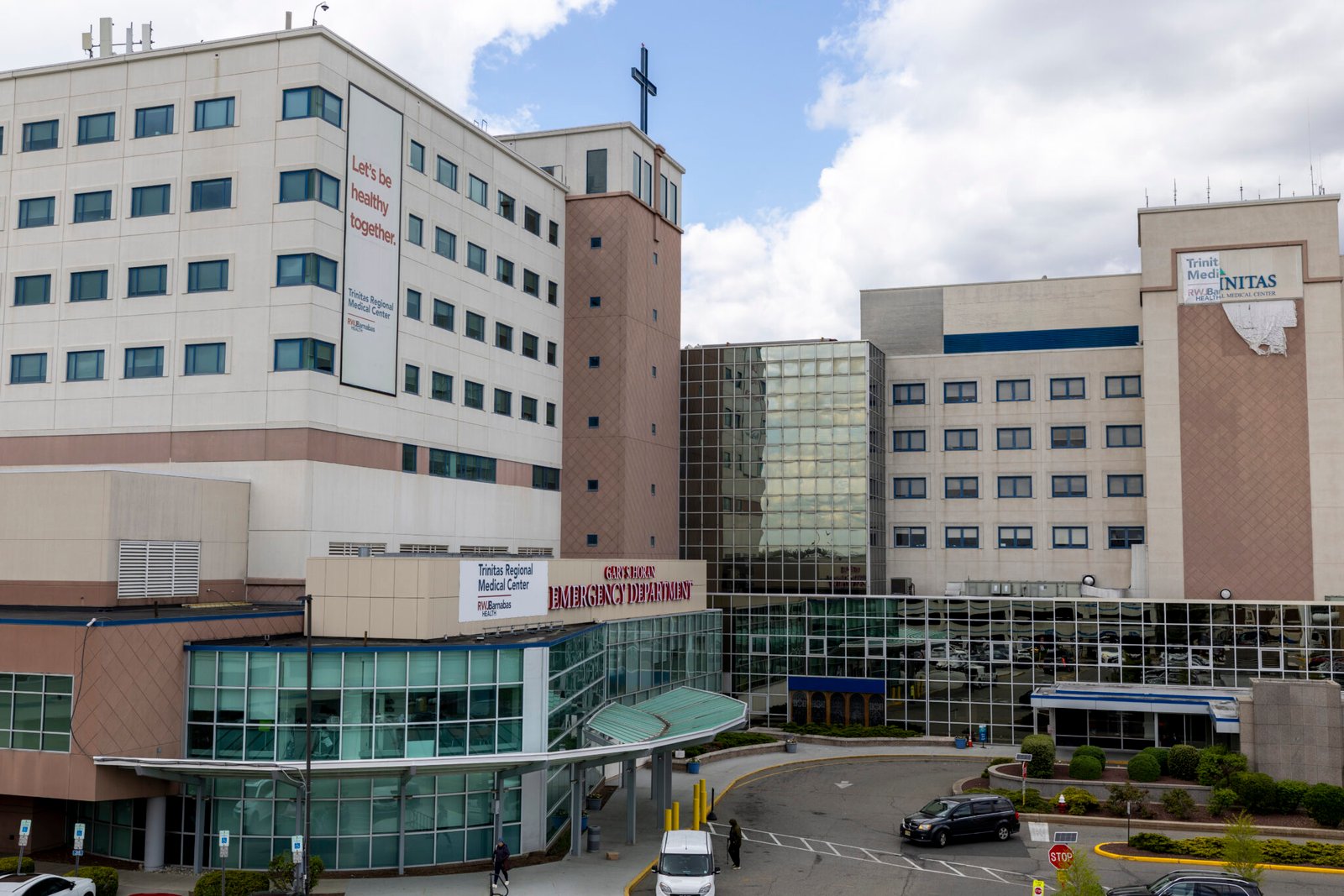
ELIZABETH — For years, the lobby of Trinitas Regional Medical Center in Elizabeth was a de facto homeless drop-in center on cold winter nights, something that did little to help that population long-term and was disconcerting for patients and frustrating for hospital staff.
That changed last winter, thanks to a state-funded program that has allowed Trinitas to immediately connect homeless visitors with overnight shelter, then support services and, for at least 11 people, permanent housing.
“It’s been a true game-changer for Trinitas,” said Nancy DiLiegro, president and CEO of the hospital, founded in 1879.
DiLiegro told the New Jersey Monitor that the shelter program has enabled hospital staff to focus on patient care, while providing a clear pathway to a wide range of services for people who are homeless. Trinitas is now building the state’s first “street medicine” program so clinicians can treat patients outside the hospital walls.
“If this falls out, then they’re back in the emergency room. That’s my biggest fear,” she said.
The shelter and street medicine programs are part of a broad initiative that RWJ Barnabas, Trinitas’ owner, has developed across its network of a dozen acute care hospitals in central and northern New Jersey counties. The “our healthy communities” initiative also includes various nutrition programs, ride-hail services, and other elements designed to connect low-income patients with what they need to live healthier lives.
RWJ Barnabas is slated to receive $60 million for its healthy communities work under Gov. Mikie Sherrill’s $60.7 billion spending proposal for the fiscal year that begins July 1, at least $20 million less than the hospital system received for this work in the current year. The Democrat’s plan calls for formula-driven state aid to hospitals to remain stable statewide, but it eliminates more than $100 million in allocations for individual hospitals, a 53% reduction from the current year, according to budget documents.
Balpreet Grewal-Virk, RWJ Barnabas’ senior vice president for community health, said the state funding is needed to build and sustain the healthy communities program.
“Trust building with the community is so difficult. To tell them, we have this today, we don’t have this tomorrow, that’s not good for anyone. Especially people who are vulnerable,” she said.
Both Democratic and Republican lawmakers, who must approve the final budget, have raised questions about Sherrill’s proposal, which would also eliminate tens of millions for nonprofit organizations that provide things like HIV/AIDS services, palliative care, and dental treatments for low-income children if it is approved by the Legislature.
Sen. Michael Testa (R-Cumberland) asked about the $60 million in line items for RWJ Barnabas during a budget committee hearing in April. Testa told the New Jersey Monitor that while the RWJ Barnabas program surely does good work, he doesn’t understand why it was chosen for state funding when other initiatives with proven benefits were not.
With programs focused on communities in north and central New Jersey, the money does little to address health needs in South Jersey, he added.
“I’m not trying to pit organizations against each other, or legislative districts against each other, but there has to be some level of fairness,” Testa told the Monitor.
Sherrill spokeswoman Maggie Garbarino declined to say exactly why the RWJ Barnabas projects were funded, but she reiterated what the governor has said about the challenge of crafting a budget when New Jersey is facing a multibillion-dollar structural deficit.
“Public health investments and access to affordable preventative care, especially in high-need areas, are key to improving outcomes while reducing long-term costs. The Governor’s proposed budget is the outcome of a difficult and disciplined process that prioritized protecting key services and preserving federal financial partnerships in New Jersey’s healthcare system,” Garbarino said.
Healthy communities
RWJ Barnabas received at least $80 million for this work this fiscal year and a similar sum in the previous budget cycle, documents show, and some of it can be leveraged to secure additional federal dollars through the Medicaid program. Trinitas is using $2.8 million this year to pay for the shelter and street medicine programs and for community health workers who connect patients with services.
Grewal-Virk said the goal is to improve health outcomes across the state, an approach that saves patients time and money and reduces healthcare costs overall. RWJ Barnabas saves $35 million for every $15 million invested in the program, she said.
“We’re trying to link them with care faster and in ways we are more confident can actually get them healthier. That’s a large part of why we do what we do,” she said.
The savings comes in reduced treatment costs, fewer uninsured patients, and more efficient use of staff time, among other things, Grewal-Virk said. The no-show rate for medical appointments has dropped from 25% to 5%, she said, reducing the lost time for doctors and nurses.
Grewal-Virk said that whether it’s access to healthy food or better managing chronic health conditions, the benefits compound over time.
“I think that’s really meaningful. Like keeping a kid healthy and seeing a pulmonologist if they had asthma — these are all the things we’re doing,” she said.

More than 175,000 patients have connected with services since the healthy communities program launched in late 2023, according to RWJ Barnabas. Potential clients are identified using a common set of questions about social determinants of health, things like housing, income level, and access to food. The majority of patients, at least in Elizabeth, say yes to these services, according to the community health workers who do this work.
The first phase focused on Newark. RWJ Barnabas used an initial state grant of $25 million to recruit maternal health, pediatric, and other specialists, upgrade patient tracking software to link multiple clinics and hospitals in Newark, and hire two dozen community health workers, specially trained patient liaisons with connections to the neighborhoods they serve.
RWJ Barnabas hospitals are spread across eight counties and serve several urban communities including Newark, Jersey City and New Brunswick, places that often have high healthcare needs. At least one-quarter of Trinitas’ patients are un- or under-insured and 60% are foreign born, DiLiegro said, adding that new arrivals are more likely to have undiagnosed health conditions in advanced stages, when compared to longtime residents.
The state funding for the healthy communities program supports hospital-based programs and staff, plus programs outside the hospital: local soup kitchens, mental health organizations, and YMCAs, according to Grewal-Virk. Money has also flowed to partner organizations like the Elizabeth Coalition to House the Homeless, which worked with Trinitas to establish the shelter program.
Quadeesha Harper, outreach coordinator for the Elizabeth group, said it has helped shelter 52 people so far. Funding now allows the work to continue year-round. She said the goal is to reduce the strain on Trinitas’ emergency department, provide people with short-term refuge, and then connect them with a drivers’ license, health insurance, and other services.
“We had clients come into the emergency department just to sit down catch their breath, and within two hours, they’re in a motel, and then by the next morning, they’re meeting with me face to face, getting hygiene products, food, gift cards, laundry cards, just getting all the basic needs and necessities that you would need as an individual and a human,” she told the New Jersey Monitor.
RWJ Barnabas is continuing to expand this work as the final budget is negotiated in Trenton. On Monday the system opened a facility it calls Harvest, a healthy food hub in the historic Hahne’s building in Newark, the latest of a growing number of sites that offers free local produce and healthy shelf-stable foods. Food insecurity remains a primary concern for many patients, hospital surveys show.
Community health workers serve as the glue that binds these various services, Grewal-Virk said, and they are a critical part of the system’s investment. RWJ Barnabas now has 85 health workers embedded in the system’s hospitals and community-based food pantries and healthcare clinics; another one works out of Newark’s Penn Station, a hub for homeless people.
The total staff cost: $17.6 million this year.

If funding is cut further, that means less people to help patients enroll in health insurance, schedule appointments or secure transportation to visit a doctor or pharmacy, according to hospital officials. More than 160,000 patients have used RWJ Barnabas ride-hail program since it launched, they said.
“We avoid having this person come into the emergency department because their need is met,” said Anthony Nuñez Fernandez, the director of the community health worker program at Trinitas and several other RWJ Barnabas hospitals and healthcare clinics.
Jonnathan Pereira is a RWJ Barnabas community health worker at Trinitas who has seen the impact firsthand. As someone who was born and raised in Elizabeth, was a father at age 19, and has diabetes, Pereira said he can identify with the challenges patients face.
When patients learn how the healthy communities program can help them, Pereira said they are excited.
They’re relieved, they’re happy. Some of them get very emotional,” he told the New Jersey Monitor. “I like to tell people we become family because they start opening up to you. They start trusting you.”
GET THE MORNING HEADLINES.



