
 WASHINGTON — New Jersey eviction rates will increase, as will the number of people experiencing homelessness, because of new and pending federal housing policies, according to state and national advocacy groups.
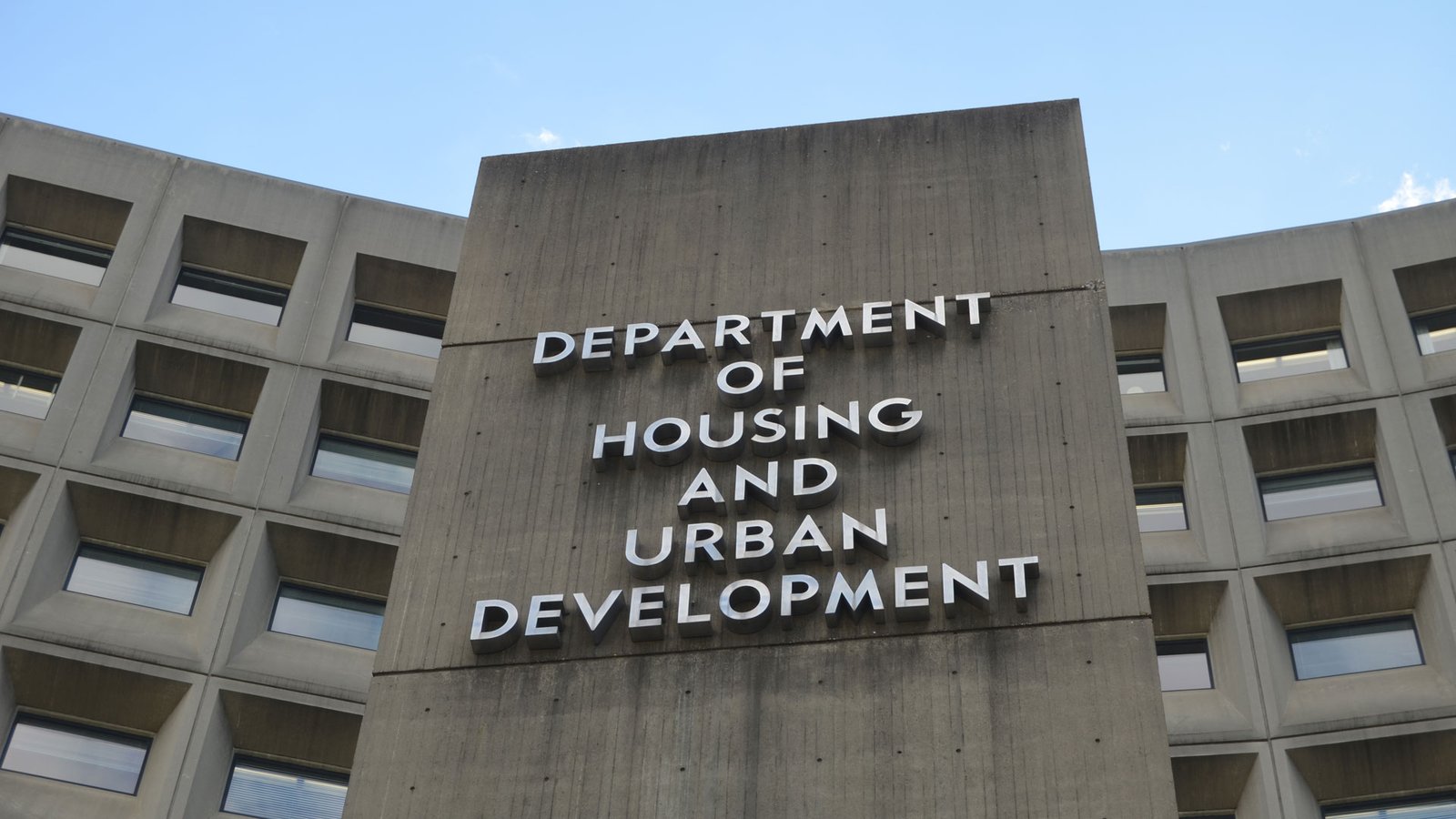
At the end of March, the Department of Housing and Urban Development moved to finalize a rule repealing the requirement that public housing agencies give 30 days’ notice before filing to evict a tenant for not paying rent.
“Revoking the 30-day notice rule will cause irreparable harm by exacerbating the ongoing housing crisis in New Jersey, and in the United States writ large,” the Rutgers Law School National Lawyers Guild said in comments to HUD opposing the change. “This hurts everyone: housing providers, tenants and the entire community.”

Nicholas Kikis, vice president of legislative and regulatory affairs for the New Jersey Apartment Association, said his trade group supports the HUD rule. “Landlord‑tenant law is appropriately the purview of state governments,” Kikis said. “New Jersey courts provide a lengthy wait between service of a summons upon a tenant and the trial.”
The new rule is one of several policies the Trump administration is pursuing to cut federal assistance for housing as Republicans and Democrats have broadly supported legislation to increase the country’s housing stock during this mid-term election year.
Congress passed one of the most transformative housing laws in decades, H.R. 6644, with wide bipartisan margins that included all but one member of the New Jersey congressional delegation.
President Donald Trump has withheld his signature from the bill, which Congress sent to the White House in March.
Slow market
Home prices and interest rates above 6% have pushed home-buying to the slowest pace since the mid-1990s, according to the Joint Center for Housing Studies of Harvard University.
Eviction and high rental costs are linked to homelessness, such as the case of a 94-year-old Newark man who recently lost his home. “He could no longer pay the escalating rent at the place where he had lived for over 30 years,” Connie Mercer, executive director of the New Jersey Coalition to End Homelessness, told members of the Senate Budget and Appropriations Committee last month.
Under HUD’s new eviction rule, tenants could be tossed for being as little as $1 behind on rent, according to the National Housing Law Project. The rule would affect as many as 3.8 million people nationally, the project found.
Instead, tenants who owe rent could receive a notice 14 days before eviction under the rule. For people living in Section 8 housing, a federal program, the notice period will drop to five working days.
The change “prevents New Jerseyans from being clearly informed of their legal rights and available remedies,” according to written comments to HUD from the Elizabeth Coalition to House the Homeless and the New Jersey Tenants Organization, which together represent about 110,400 tenants in the state. “With a 9.1% poverty rate and a shortage of more than 205,000 affordable homes for extremely low-income renters, New Jersey faces a deep and ongoing housing crisis.”
Other policies proposed by HUD in recent months include a proposal to levy time limits and apply work requirements as a condition of housing subsidies, such as Section 8, a voucher system created in the 1970s, and to prevent transgender people from using homeless shelters.
Full-time work
Under the work-requirement policy, HUD would allow local housing authorities and private landlords to impose new requirements of as much as 40 hours of labor a week for tenants.
“There was a time in my life when I depended on housing assistance to remain stable. During that time, I was not always able to work. Like many others, I was navigating challenges that made consistent employment difficult,” Victor Luna, the CEO of Collaborative Support Programs of New Jersey, based in Freehold, said in written comments in opposition to the HUD proposal.
“As reflected in both national trends and our direct service data, most individuals in assisted housing who are able to work already do, while others are engaged in caregiving, education, or managing health conditions,” Luna said. “The issue is not a lack of motivation; it is the instability created by low wages, health challenges, and systemic barriers.”
Housing Secretary Scott Turner has repeatedly maintained that he wants people using housing assistance to get off federal programs.
In a new law, the Republican-majority Congress attached work requirements to Medicaid, which provides health care coverage for low-income and the physically disabled, and food benefits.
‘God created two sexes’
A separate proposal unveiled by HUD on Thursday would direct shelters to deny transgender people shelter access.
“God created two sexes: male and female,” Turner said in a statement. “This proposed rule will bring biological truth and sanity back to HUD’s policies.”
Deborah Thrope, chief program officer of the National Housing Law Project, said the proposal would “increase costs for state and local governments, hospital systems and social services agencies by forcing more housing insecure people to live on the street rather than in shelter.”
Many of HUD’s proposals do not address factors behind housing insecurity, Renee Williams, senior adviser of public policy for the National Low Income Housing Coalition, said in an interview with NJ Spotlight News.
“We just don’t think that these policy moves are going to make housing affordable for families. They‘re not going to free up wait lists or somehow eliminate the backlog of need,” Williams said. “These policies aren’t really getting at the root causes of why people are housing insecure, why people can’t afford rent.”
About one in four U.S. households eligible for federal housing aid gets financial help, Williams said. “There’s a huge gap in terms of the number of people who actually need it and the number who actually receive it.”
Erecting barriers to federal housing programs will likely lead to people’s losing housing, she said. “What you’re going to do is just heighten the likelihood that people are going to fall into eviction or homelessness.”



