
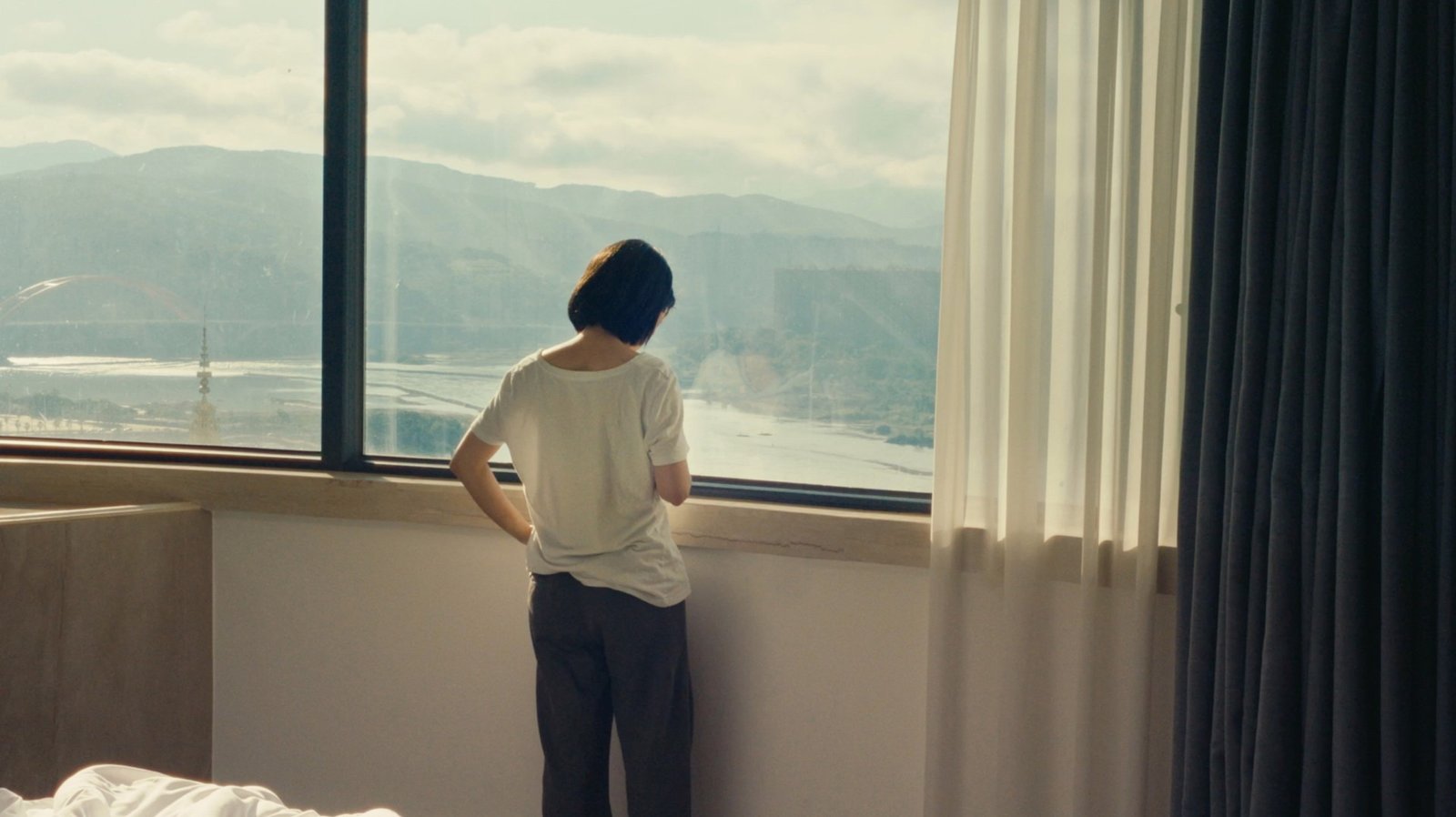
Premiering in the Panorama section of the 76th Berlin International Film Festival, “Shanghai Daughter” marks the directorial and screenwriting debut of Agnis Shen Zhongmin. After serving as executive producer on “The End of Year” (2008) and “Vegetate (2010)”, she turns her attention to the legacy of the Down to the Countryside Movement, a policy implemented in China from the mid-1950s until 1978. During the Cultural Revolution, Chairman Mao Zedong ordered that educated young people be sent from cities to rural and mountainous regions. There, they were expected to learn through manual labor and get to know the way of agrarian life. As a result, approximately 17 million young people were relocated to the countryside.
In the film, Ming (Liang Cuishan) travels alone to a rubber plantation in Xishuangbanna. Decades earlier, her late father was sent there as part of the Down to the Countryside Movement. Now, she seeks to reconnect with the past by finding someone who once knew him. At the same time, the former production team’s house faces demolition due to the mining operations taking place in the region.
Zhongmin intertwines a fictional story of a woman from Shanghai investigating her family’s past with interviews, typical for a documentary format. Along the way, Ming encounters a farm official, a doctor, a Dai elder, a rubber tapper, a young ecologist, and a mysterious woman who shares a special connection with her. Through their individual testimonies, as well as her own wandering through the jungle, Ming explores the history of her country and different perspectives of people living in it.
Despite the diversity of voices reflecting on the country’s past, and without a clearly defined dramatic objective or engaging events, the film becomes rather monotonous and challenging to follow after some time. What’s more, while it aptly presents personal experiences, it offers limited broader context of the Cultural Revolution, not examining it through a wider systemic or political lens.
Cuishan portrays Ming in a withdrawn yet warm manner. Her behaviour reminds that of a ghost — she roams unfamiliar spaces, observes them with subdued curiosity, asking questions and listening to various stories. This quality is reinforced by the lack of detailed information about her life, making her both a primary narrative force and sort of a background character.
The steady and subtle cinematography by Wei Pu enhances the contemplative atmosphere of the narrative. However, it is the sound design, supervised by Dukar Tserang, that stands out most strikingly. The careful use of silence and natural ambient sounds creates a deeply immersive experience, complementing the visual layer and the meditative tone of the whole picture.
Zhongmin’s debut reflects on one’s connection to the past — be that something simple and obvious like parents or historical events, or something more individual like… rubber trees, as one of the characters humorously admits. At times formally reminiscent of hybrid works made by Jia Zhangke, “Shanghai Daughter” functions as a poetic introduction to one of the most significant episodes in the turbulent modern history of China. The country not only went through an enormous transformation in the past but is still developing rapidly, as shown in the film through the demolition of buildings and resettlement of people.



