
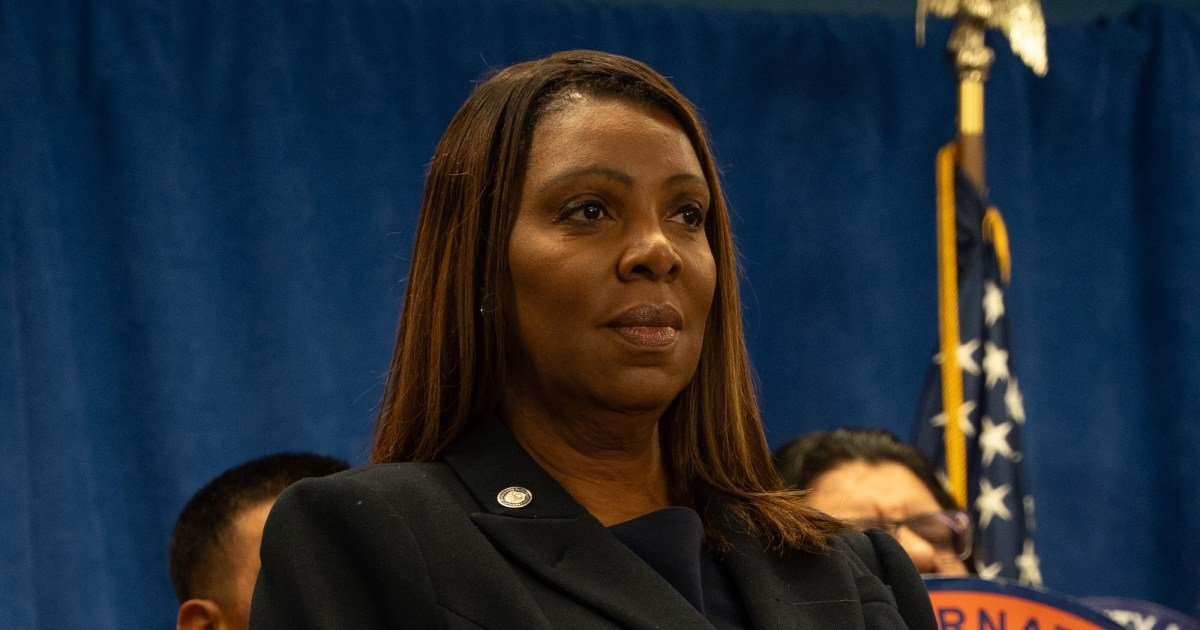
New York Attorney General Letitia James confirmed that her office is investigating Shah Alam’s death.Cristina Matuozzi/SIPA USA/AP
On Friday, the Buffalo-based Investigative Post reported that New York Attorney General Letitia James is investigating the death of Nurul Amin Shah Alam, a Blind Rohingya refugee who died in the cold streets of Buffalo days after Border Patrol dumped him without coordinating with his family or lawyers.
Shah Alam’s wife and sons waited to pick him up, but sheriff’s deputies instead turned him over to Border Patrol.
In a letter to Rep. Tim Kennedy (D-N.Y.), James wrote that her “office is continuing to gather and review facts as to any state or local involvement in this tragedy” and is prepared to coordinate with federal authorities as necessary. James also said her office is coordinating with the Buffalo Police Department to “canvass for additional witnesses and surveillance footage” that may help her office understand what happened to Shah Alam.
“The loss of life under these circumstances demands a searching and independent assessment of what occurred,” James wrote. “I also agree that a close examination of release and transfer protocols of vulnerable individuals from law enforcement custody is warranted.”
Since his death was initially reported, more information has also come out about Buffalo police officers’ initial arrest of Shah Alam, who did not speak English. Shah Alam had wandered to a woman’s home and seemed confused about his location. Viewing body cam footage, the Washington Post reported that Shah Alam apologized while slowly approaching police officers, who responded by tasing him.
At a press conference last weekend, the family of Shah Alam spoke publicly for the first time. His wife, Fatimah Abdul Roshid, and the two of their five sons who also have refugee status in the US, had waited outside the Erie County Holding Center to pick him up on his release, but Erie County sheriff’s deputies instead turned him over to Border Patrol.
“We were ready with food, clothing, everything,” Abdul Roshid said. “We thought he would be able to break fast with us. He was so close, so close to my hand.”



