
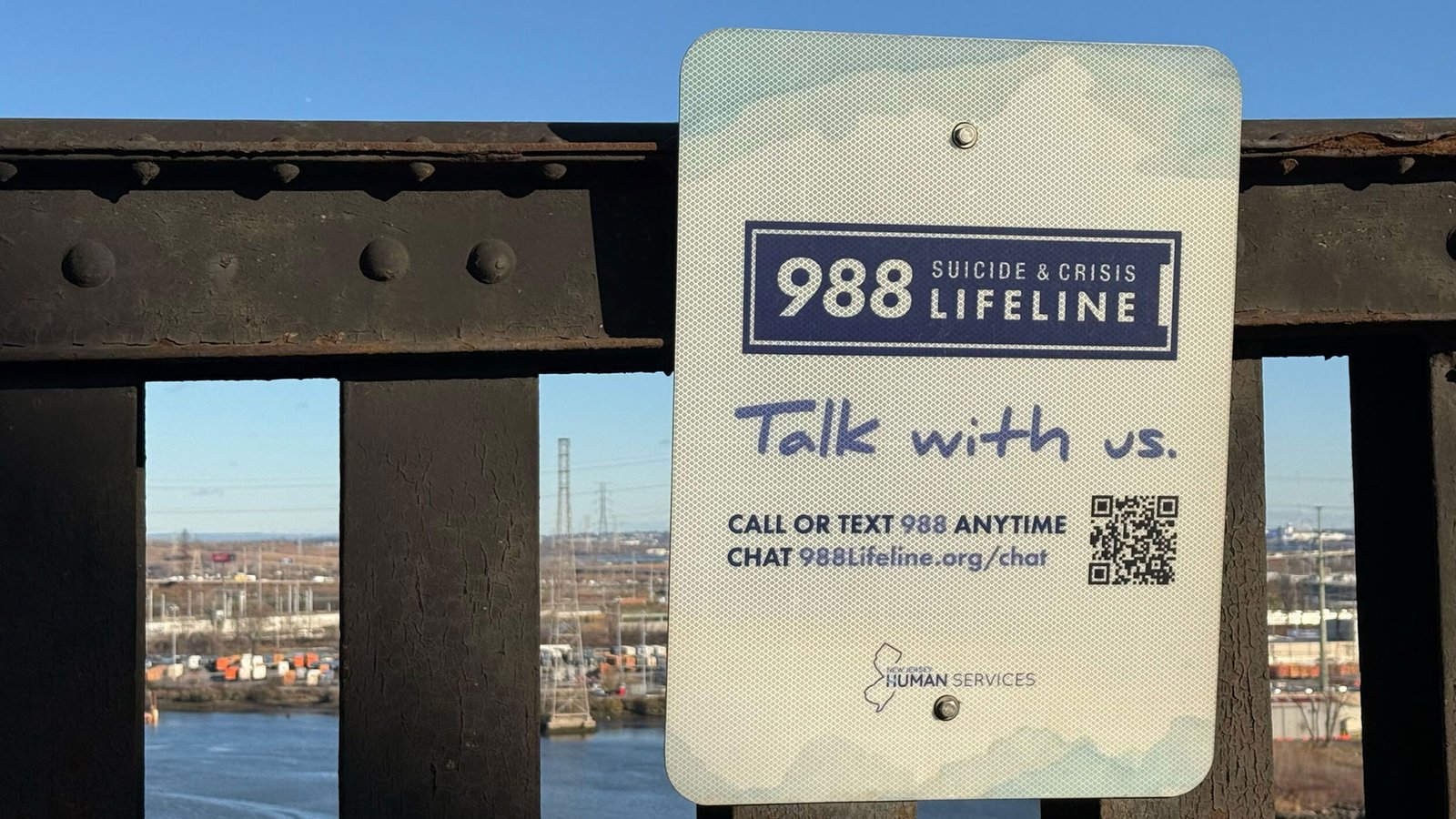
Even with mental health awareness on the rise, New Jersey bears a sad statistic: More than 650 residents took their lives in 2025. That’s at least 12 more than the previous year, and the first uptick in such deaths since 2022, according to provisional data from state Department of Health.
Lawmakers in Trenton, seeking to help those with mental health issues, are renewing their push for a permanent revenue source to operate New Jersey’s 988 Suicide & Crisis Lifeline. The money would come from a 40-cent monthly fee on telephone bills. The legislation to enact the charge stalled during the most recent lame duck session.
Mental health reporter Bobby Brier, who has followed the legislation, talks about how 988 works, and the services it offers beyond a phone call. This interview has been lightly edited.
Joanna Gagis, anchor: Help us understand what 988 is and how it operates in the state.
Bobby Brier: Sure, 988 is the state’s Suicide & Crisis Lifeline that people could call any time they’re in a mental health emergency. This was a number that came about in July of 2022 when Congress had a federal mandate, where they essentially had every state move from a 10-digit suicide hotline number to 988, in part because it’s easier to remember.
When a call comes in to 988, a trained crisis counselor will answer the phone. They’ll stay on the phone with the person and talk through what they’re experiencing. Most of those calls are resolved over the phone, not just here in New Jersey but nationally, it’s about 80%.
In those 10-20% of calls that maybe need an additional mental health response, they could then dispatch mobile crisis response teams, known as MCORTs here in the state. That would be two folks — oftentimes a licensed clinical social worker or a licensed social worker with somebody with lived experience — going out to that person’s house, oftentimes to follow up and check in on them. Usually, those are dispatched within the hour of being called.
JG: Like all things, it costs money to run this program. This doesn’t have a dedicated source of revenue. Can you tell us about the bill that was proposed and sponsored by Sen. Joe Vitale (D-Middlesex) and Sen. Vin Gopal (D-Monmouth)?

BB: This bill is essentially looking to tax cell phone lines here in the state 40 cents per month. What that would do is create a source of revenue — $67.3 million, according to the state Office of Legislative Services — and allow for the state to generate that revenue to keep that funding going year-over-year.
What’s interesting about the bill is that it’s separate from the budget itself, and this is why a lot of lawmakers are in favor of it. Essentially, it would not be subject to the whims of a lot of other line items.
JG: It wouldn’t go into the general fund.
BB: That’s correct. It would go into a separate 988 trust fund. That’s why this is so appealing to so many folks. And it would also follow many other models that about a dozen other states have done to fund their own 988 lines.
JG: Who are some of those other states?
BB: Right now it’s California, Nevada, Oregon, Washington. We also, on the East Coast, have Delaware, Maryland and Virginia. A few in the Midwest as well.
There’s a handful of other states that are also considering legislation like this. According to the National Alliance on Mental Illness, New Jersey, if they were able to get this passed, would become the 13th state to have some sort of funding like this.
JG: Under the current plan for 998 right now, there is an expansion planned for some treatment centers. Can you just explain what those would look like?
BB: Those are two separate things. There are crisis receiving and stabilization centers and then there’s diversion homes. Crisis receiving stabilization centers are essentially an alternative to hospital emergency rooms. These would be more “living room settings,” as it’s been described — a more holistic approach to helping somebody in a mental health crisis.
If they need additional care, there’s these diversionary homes. These are monthlong transitional housing. The goal here is really to keep people out of hospital emergency rooms and the jail system in a way that would be more community-based and often evidence-based as well.
JG: What can you tell us about the bill and where it stands in the Legislature?
BB: Right now it’s past the Senate Health, Human Services and Senior Citizens Committee. It’s going to be interesting to see how far this will go. Right now, the state is facing an issue where a lot of the federal funding for 988 is kind of falling off and they’re going to have to find a way to create a dedicated and permanent source of funding. Many folks feel that this bill, if signed into law, is the best way to do that.
JG: Have you heard anything from Gov. Mikie Sherrill’s administration in terms of whether the governor would sign if it reached her desk?
BB: I reached out several times to the Sherrill administration; they said they could not comment on pending legislation. I had spoken to Sen. Joe Vitale about this and he said he’s hopeful that the Sherrill administration would be able to put this funding in place.
But it should be noted that this is a bill that came up in the previous lame duck session of the Legislature and stalled before Gov. Murphy left office. The state is going to have to make a decision here sooner rather than later and as many advocates have said, oftentimes lives are on the line in these decisions.
JG: Gov. Sherrill has said no new taxes. Are Republicans or the public looking at this as a tax?
BB: They are. There’s at least two vocal Republicans, Sen. Robert Singer (R-Monmouth) and Sen. Owen Henry (R-Middlesex), who have said they’re not against the number, they’re not against putting this permanently in the budget, but they are against a new tax. And they called out this point of affordability, saying that things in the state — property taxes, education, housing — are already so high, and we don’t need another new tax on our residents.



