
Refresh
There are “no guarantees” oil prices will fall soon, says Trump’s energy secretary
Oil prices have spiked to their highest level in four years as a result of the Iran war. Both West Texas Intermediate crude futures – the U.S. benchmark for oil prices – and Brent crude futures, the international benchmark, are up more than 40% for the month to date.
And according to AAA, the average price for a gallon of gas in the U.S. is 27% higher than it was a month ago. Rising gas prices are having a direct impact on consumer sentiment, too, as seen in the University of Michigan’s preliminary Consumer Sentiment Index for March, which was released last Friday.
The index was down 1.9% vs February, with gasoline prices having “the most immediate impact felt by consumers,” says Surveys of Consumers Director Joanne Hsu.
Hsu notes that the survey, which was conducted between February 17 and March 9, also showed that “a broad swath of consumers across incomes, age, and political affiliation all reported declines in expectations for their personal finances, down 7.5% nationally.”
And gas prices could stay elevated for the time being. Speaking on ABC’s “This Week” on Sunday, Energy Secretary Chris Wright said there are “no guarantees” that oil prices will come down in the near term.
“Right now, our focus is destroying their military capabilities, including those that are used specifically to threaten the straits,” Wright noted. “But we need to finish those tasks first, and you will see the straits open again in the not-too-distant future.”
He added that the administration is aware the conflict “would cause a little bit of increased prices on Americans,” but said, “this is short-term pain to get through to a much better place.”
– Karee Venema
Related: War in Iran Threatens Higher Fuel Prices, Renewed Inflation
Oil prices, inflation expectations are likely to keep the Fed sidelined this week
Expectations for Wednesday’s Federal Open Market Committee (FOMC) meeting are that the Fed will stand pat on interest rates.
The central bank is not going to want to make a move on short-term rates, either up or down, until they see what is going to happen with oil prices and the resulting impact on inflation expectations.
– David Payne
David Payne
David is both staff economist and reporter for The Kiplinger Letter, overseeing Kiplinger forecasts for the U.S. and world economies. Previously, he was senior principal economist in the Center for Forecasting and Modeling at IHS/Global Insight, and an economist in the Chief Economist’s Office of the U.S. Department of Commerce.
Who gets to vote at the March Fed meeting?
The Federal Open Market Committee (FOMC) has 12 total members, eight permanent and four who rotate each year.
The eight permanent voting committee members include the Fed chair and vice chair, the five Fed governors and the president of the New York Fed.
Four regional Fed presidents are rotated in each calendar year.
The 2026 FOMC voting committee consists of:
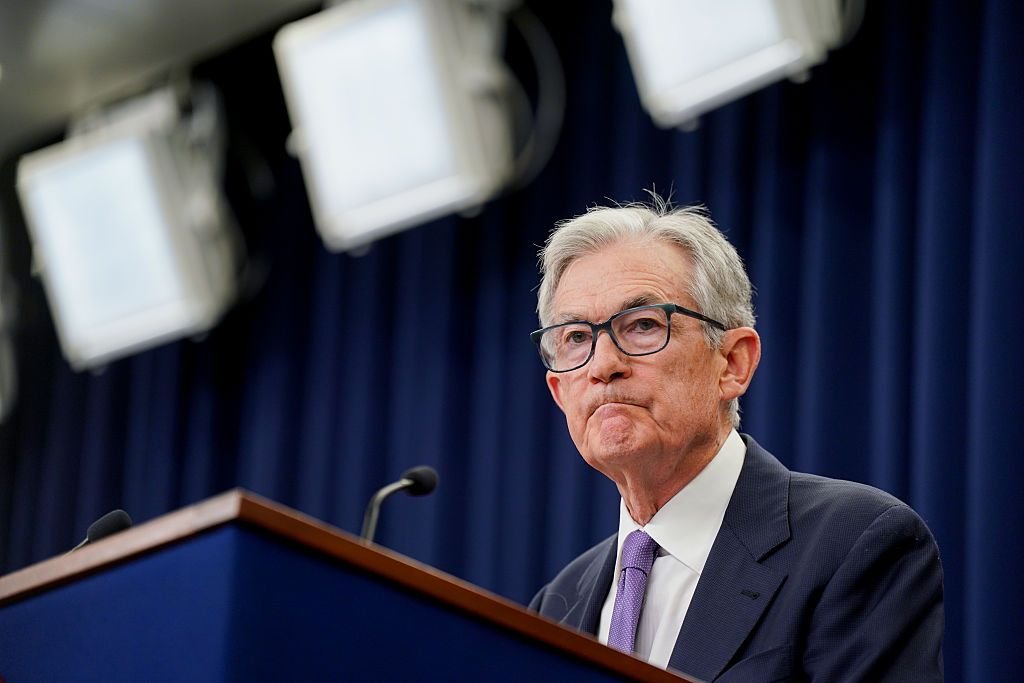
Fed Chair Jerome Powell*
Vice Chair Philip Jefferson
Fed Governor Michael Barr
Fed Governor Michelle Bowman
Fed Governor Lisa Cook
Fed Governor Stephen Miran**
Fed Governor Christopher Waller
New York Fed President John Williams
Cleveland Fed President Beth Hammack
Minneapolis Fed President Neel Kashkari
Dallas Fed President Lorie Logan
Philadelphia Fed President Anna Paulson
In 2027, the presidents from Chicago, Richmond, Atlanta and San Francisco will rotate in as FOMC voting members, according to the Federal Reserve.
* Jerome Powell’s term as Fed chair is up in May 15, 2026
** Stephen Miran’s term as Fed governor was up on January 31, 2026, but he will continue to serve in the role until a successor is approved
– Karee Venema
The DOJ’s probe into Chair Powell gets dealt a legal blow … for now
In January, the Department of Justice served the Federal Reserve with grand jury subpoenas regarding a multi-year renovation project at the central bank’s headquarters in Washington, D.C., as part of a criminal investigation into Chair Powell.
Powell, in a historic move for a Fed chair, quickly responded to the allegations that he gave false statements to Congress regarding the renovations.
“This unprecedented action should be seen in the broader context of the administration’s threats and ongoing pressure,” Powell said in a video statement. “The threat of criminal charges is a consequence of the Federal Reserve setting interest rates based on our best assessment of what will serve the public, rather than following the preferences of the President.”
The investigation is seen as a threat to the Federal Reserve’s independence and has received criticism from around Wall Street. JPMorgan Chase (JPM) CEO Jamie Dimon, for one, said that “anything that chips away at” the Fed’s independence “is not a good idea.”
Meanwhile, Senator Thom Tillis, a Republican from North Carolina and member of the Senate Banking Committee, has threatened to block any Federal Reserve nomination until this issue is resolved.
And on Friday, March 13, it appeared the DOJ was hit with a legal blow when James Boasberg, a federal judge in Washington, tossed out the two subpoenas served to the central bank.
“There is abundant evidence that the subpoenas’ dominant (if not sole) purpose is to harass and pressure Powell either to yield to the president or to resign and make way for a Fed chair who will,” Boasberg wrote in his 27-page decision. “On the other side of the scale, the government has offered no evidence whatsoever that Powell committed any crime other than displeasing the president.”
However, this is not the end of the road for the investigation. Jeanine Pirro, U.S. attorney for the District of Columbia, said she will appeal the decision and file a motion asking Judge Boasberg to reconsider.
– Karee Venema
When does Jerome Powell’s term as Fed chair end?
President Donald Trump has not been subtle in his dislike of Fed Chair Powell. But the question of whether or not Trump can fire Powell has quieted down in recent months, given that the Fed chair’s term is up on May 15, 2026.
In January, President Trump nominated Kevin Warsh to replace Chair Powell once his term is up. “Warsh was Fed Chair Ben Bernanke’s right-hand man during the 2008-09 global financial crisis and was his primary liaison to Wall Street, which earned him credibility he still retains,” writes Kiplinger investing editor David Dittman. “Markets see Warsh as a source of stability should Trump continue to pressure the central bank. He served on the Federal Reserve Board from February 2006 through March 2011.”
However, Warsh’s path to Fed chair is not guaranteed at this point. Indeed, Republican Senator Thom Tillis from North Carolina, a member of the Senate Banking Committee, has vowed to block any Federal Reserve nomination until a Department of Justice probe into Powell is resolved.
“This is about this is bedrock principle of Fed independence,” Tillis told reporters earlier this month, according to CNBC. “The reason why I came out so strong so early is I believe that we, I, have no earthly idea what the market reaction would have been if suddenly the perception is that the Fed chair serves at the pleasure of the President, right?”
Tillis also called the administration’s efforts to fire Fed Governor Lisa Cook are “sophomoric.” However, the senator said he is “already impressed” with Warsh.
For what it’s worth, Powell’s term as a member of the Board of Governors of the Federal Reserve ends on January 31, 2028.
– Karee Venema
It’s a big week for global central bank meetings
It’s a big week for central bank meetings around the world. In addition to the Federal Reserve, the European Central Bank (ECB), Bank of Japan (BoJ) and Bank of England (BoE) will be meeting to issue their latest policy decisions.
According to Jim Reid, global head of Macro Research and Thematic Strategy at Deutsche Bank, this marks the first time the four central banks have held their gatherings in the same week since December 2021.
“All of them will have a very complex backdrop to deal with, shaped by geopolitical risk, volatile energy prices, and unsettled inflation dynamics,” Reid says. “Clearly, the Middle East is the center of attention for markets right now.”
It’s widely expected that all four central banks will leave interest rates unchanged this time around, says Derren Nathan, head of equity research at Hargreaves Lansdown, but he expects the Fed and the Bank of England to resume rate cuts later this year.
Nathan doesn’t expect rate cuts from the ECB until next year, while the BoJ will likely raise rates at some point down the road. “However, if the current spike in oil prices persists, we may need to revise these views as policymakers grapple with the conflicting inflationary pressure and brakes on economic growth that come with higher energy costs,” he adds.
– Karee Venema
Stocks are higher to start Fed week
Stocks are trading higher to start Fed week as bargain hunters swoop in following last week’s third straight weekly loss for U.S. markets.
The blue-chip Dow Jones Industrial Average is up 1.1% at 47,045, the broader S&P 500 is 1.2% higher at 6,708, and the tech-heavy Nasdaq Composite has gained 1.3% to 22,390.
Mega-cap stocks are creating tailwinds for the broader market. Meta Platforms (META), for one, is 3% higher on unconfirmed reports that the Facebook parent is planning to lay off 20% of its workforce.
And chipmaker Nvidia (NVDA) is up 2.3% ahead of GTC, its annual artificial intelligence conference.
As for oil, West Texas Intermediate (WTI) crude futures are down 3.7% at $95.06 per barrel, but remain more than 40% higher month to date.
– Karee Venema
Housing market could keep inflation anchored, say Manulife John Hancock co-chief investment strategists
Recent inflation data has been mixed. The February Consumer Price Index (CPI) report was lower on an annual basis compared to January – 2.4% vs 2.7% to start the year.
But the January Personal Consumption Expenditures (PCE) Price Index – the Fed’s preferred measure of inflation – came in at its highest level since March 2024.
Part of this difference, say Emily Roland and Matt Miskin, co-chief investment strategists at Manulife John Hancock Investments, is that the CPI gives greater weight to shelter costs, which have been slowly trending down.
And while markets now consider the most recently reported CPI and PCE readings dated given that spiking energy costs – including higher gas prices – have raised inflation expectations and lowered rate-cut odds, the two believe shelter costs could provide some stability.
“While we are fully aware of the risk to inflation rising due to the oil price spike, we would not forget about shelter/housing as a key reason inflationary dynamics may be anchored to some degree,” Roland and Miskin write in emailed commentary. “The 30-year fixed mortgage rate spiked last week from just over 6% to now nearly 6.5%. Higher mortgage rates, greater volatility in markets (hindering the growing wealth effect), and increased economic/policy uncertainty (likely to weigh on consumer confidence) could weigh further on the housing market as the year goes on.”
This scenario, according to the strategists, “would suggest a more anchored inflation backdrop than the market’s knee-jerk reaction to higher oil prices we have seen recently.”
– Karee Venema

Karee Venema
With over a decade of experience writing about the stock market, Karee Venema is the senior investing editor at Kiplinger.com. She joined the publication in April 2021, and oversees a wide range of investing coverage, including content focused on equities, fixed income, mutual funds, ETFs, macroeconomics and more.
Fed meeting schedule for 2026
The next Fed meeting, which runs from March 17 to March 18, marks the second gathering of 2026.
“The committee meets eight times a year, or about once every six weeks,” writes Kiplinger contributor Dan Burrows in his feature, “When Is the Next Fed Meeting?“.
The Federal Open Market Committee “is required to meet at least four times a year and may convene additional meetings if necessary,” Burrows adds, noting that “the convention of meeting eight times per year dates back to the market stresses of 1981.”
Fed meetings last two days and wrap up with the release of a policy decision at 2 pm Eastern Standard Time. This is typically followed by the Fed chair’s press conference at 2:30 pm.
Here is the full remaining Fed meeting schedule for 2026:
March 17 to 18
April 28 to 29
June 16 to 17
July 28 to 29
September 15 to 16
October 27 to 28
December 8 to 9



