
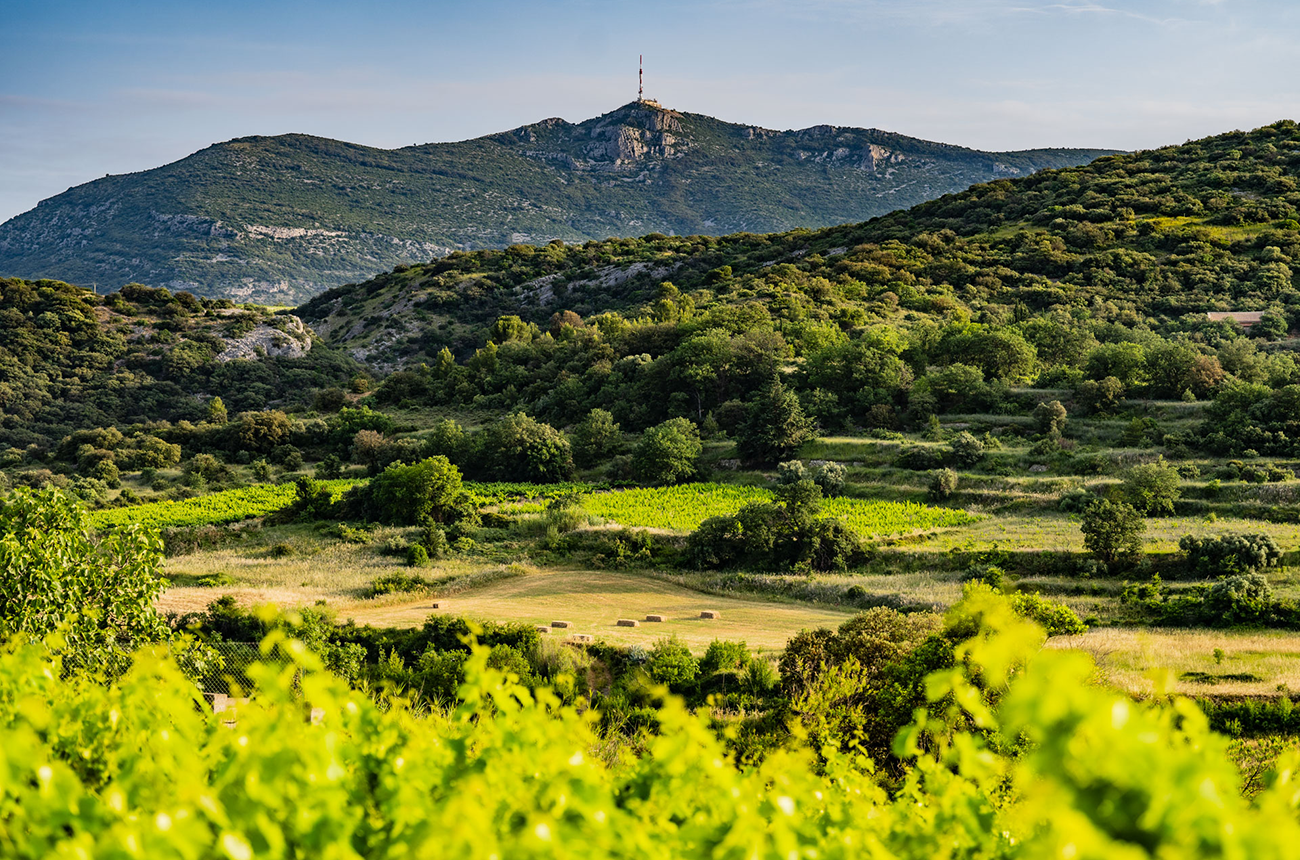
Montpeyroux has been approved as the newest Languedoc appellation following 30 years as a complementary geographic denomination under the Languedoc AP.
Confirmed by the French National Institute for Origin and Quality (INAO) in February 2026, Montpeyroux’s rise to ‘cru’ status marks a significant moment in the ongoing development and reshaping of southern France’s wine landscape.
Previously known as Languedoc-Montpeyroux, the new Montpeyroux cru joins the upper tier of the region’s appellation pyramid as a recognised communal appellation, alongside the likes of Faugères and La Livinière.
‘It’s the recognition of a terroir, but it’s also the recognition of a shared history of this group of vignerons,’ François Boudou, president of the Montpeyroux wine union and of the Castelbarry cooperative, told Decanter.
It’s one of the smallest appellations in Languedoc, and sits as an enclave within the larger Terrasses du Larzac, which gained appellation status in 2014.
The new status comes with tighter production rules, reinforcing the area’s qualitative ambitions. Yields are capped at 42hl/ha, blends must include at least three grape varieties, and maturation is extended to at least one year.
Carignan – long overlooked elsewhere – remains central to Montpeyroux’s identity, supported by Grenache, Mourvèdre and Syrah, and with Cinsault, Counoise and Morrastel as secondary varieties.
According to the appellation’s wine union, around 80% of the vineyard area is now farmed under certified sustainable or organic practices, reflecting a broader regional shift but also a strong local commitment to long-term vineyard health.



