
There is an art to politics that rarely gets taught in textbooks, debated on cable news, or even whispered about in the backrooms where deals are made. It’s not the speech, nor the handshake, not even the vote. It’s the exit.
In a profession where everyone obsesses over arrival, who walked in, who they greeted, who saw them, the truly seasoned operator understands that how you leave a room can be just as important as how you enter it. One of the most effective and efficient tools in modern political life can be found in a simple and understated maneuver: the Irish goodbye.
Now, before anyone rushes to file a cultural grievance, let me offer this: as a proud Korean-Irishman, I feel uniquely qualified to both appreciate and perfect the craft. It is less about heritage and more about discipline. And discipline is what separates the amateurs from the professionals.
The origin of the Irish goodbye is traced back by some historians to the 1840s during the Irish Potato Famine. It was at that time families were moving and the emotional strain of long and painful goodbyes wanted to be avoided. So, the long-protracted goodbyes were shortened and the sometimes awkwardness of a prolonged goodbye was eliminated. Interestingly, the practice itself may actually have its roots in 17th century France where the polite French would quietly excuse themselves from parties so as to not to disturb the overburdened host. While the French termed it the French Leave, the Germans also have their own version called the Polish Exit. It seems that many cultures have picked up this habit. Let’s get back to New Jersey.
Former Senator Joe Kyrillos was the first to introduce me to the concept of the Irish goodbye. For those born after 1997, Senator Joe served as one of the most intelligent, street savvy and dare I say charming legislators in modern time. Senator Joe was an Assemblyman from 1988 to 1992, and a Senator from 1992 to 2018. I served 10 years with him on the Senate Judiciary Committee and can unequivocally say that he is truly a genius. Senator Kyrillos also served as the State Republican Chair from 2001 to 2004, and during that time he was guest speaker at one of my annual fundraisers. Back in those days, I would host an annual event and would on occasion pack a local restaurant with over 800 or more donors. On one such occasion, State Chair Joe greeted the crowd and then to my surprise stated that “the next two hours is the only time that you will see Kevin O’Toole in one place and refrain from using his version of the Irish goodbye.” I thanked the Senator and privately asked him what in the world he meant. Senator Joe leaned in and said “Kevin, everyone knows your tricks, you show up to everything for a minute and disappear, and we know that you are back home having dinner with the family when the rest of us are out until midnight every night.” He went on to add insult to injury by stating that people in Trenton were now calling it the “O’Toole exit.” I was speechless.
With that preamble and runup, I want to provide a tutorial on the New Jersey political version of the Irish goodbye to teach some that this technique isn’t rude, it is a great public service. Here is how it works.
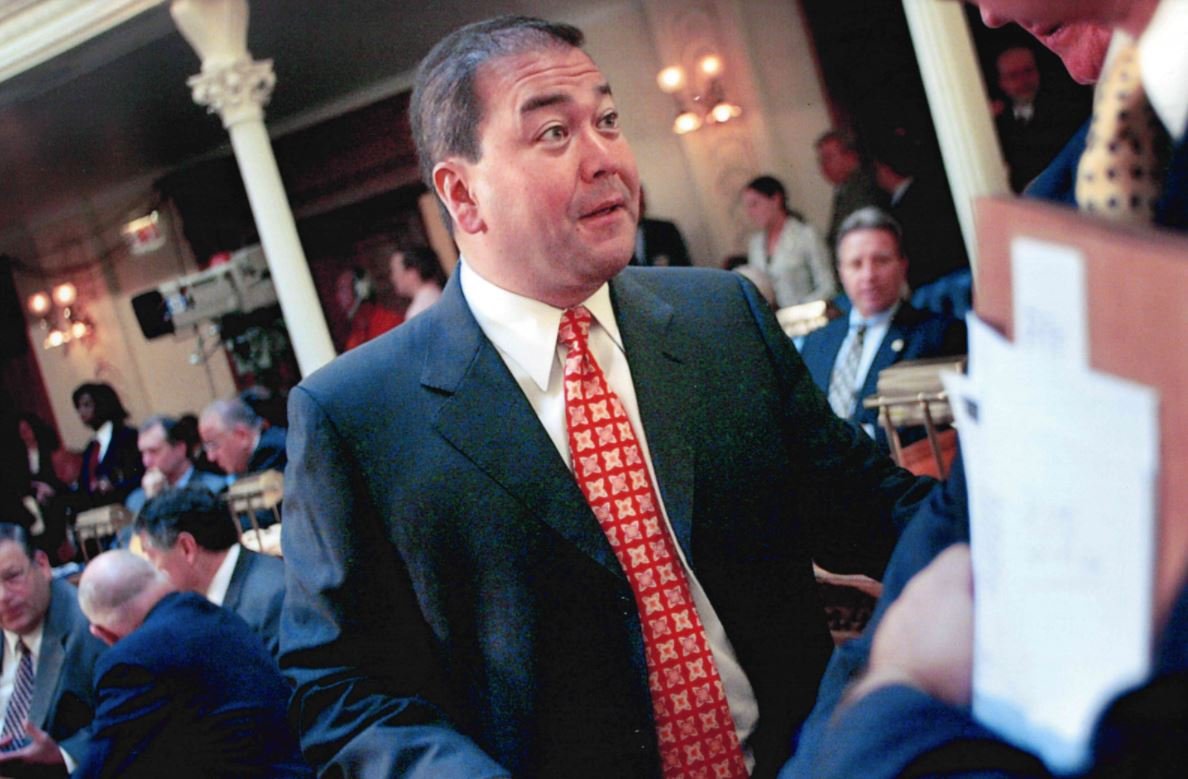
We presume that prior to attending a political event, staff has provided you with the background details of the attendees. You enter the room—never late, but never first. Timing matters. You survey the landscape like a seasoned general, identifying not just the power players but everyone in between. Identifying groups just as much as individuals. Who knows who. Who wants what. Why are you there? What’s your course of action? Once the preliminary study is done, you must get to work. Shake hands. Remember names. Tell a joke here, a quick story there. You must pay the same respect to the staffer as you do the Governor. The janitor gets a smile and a thank you—because in politics, everyone counts, and everyone remembers.
For a brief window, you are everywhere. Classic mistake: don’t grow roots at the event and expect people to flock up to you. Work every corner of that room.
And then, assuming you don’t have a speaking role (sorry Senator Gopal), you stage your ever quiet exit.
No drawn-out goodbyes. No lingering by the door. No ten-minute exit tour that somehow becomes another hour of small talk. Just a quiet, efficient departure, executed with precision. One moment you’re there, the next you’re not. As our political magicians know, the trick isn’t the flourish—it’s the timing.
Critics might call it evasive . . . but they’re wrong. It’s respectful. Because here’s the truth: people don’t actually want the long goodbye. They endure it. They suffer through the repetitive “great to see you again” exchanges that trap both parties in a polite but unnecessary loop. The Irish goodbye spares everyone that burden. It preserves the positive interaction exactly where it should be—on a high note.
In politics, that’s money. I can’t tell you how many times I have heard from attendees about the painful torture as lingering politicians wait out the last party goers. Think John Belushi in the Saturday Night Live skit—the guest from hell. Time to hit the road with a lovely and laudable Irish goodbye.
Not that additional justification is needed, but I’d like to add that the efficiency of the Irish exit would also make any good government reformist proud. Time is the one commodity no public official has enough of. Every extra minute spent lingering in a room is a minute not spent solving problems, making calls, or preparing for the next challenge. Or a novel thought—go spend time with your family. The Irish goodbye is, at its core, a time management strategy that also happens to be a social grace.
And it works.
People leave the interaction thinking, “That was great. I wish I had more time with him.” Not, “Why couldn’t he stop talking?” It creates scarcity. It builds value. It leaves an impression without overstaying your welcome. In a world where overexposure is often the downfall of public figures, knowing when to disappear is a quiet superpower.
Over the years, some have refined this into something close to an art form. It’s not abrupt, it’s seamless. It’s not rude, it’s polite and hopefully unnoticed.. You don’t flee the room; you accent it. And if you are very good, you complete it. When done right, you leave behind a trail of goodwill and just enough mystery to keep people talking.
And maybe that’s the lesson for the rest of us—not just in politics, but in life. Show up. Engage fully. Treat everyone with respect. Do the work. And when the moment is right . . . leave. No ceremony necessary.
I’d like to close by saying thanks to Senator Joe for his introduction of this version of the Irish Goodbye.



