
For many decades, the range of positions on Israel seen as acceptable in New Jersey politics was not a wide one. With a large Jewish population and a strong Zionist streak in both major parties, New Jersey consistently elected members of Congress who would defend Israel and push back on its detractors.
But ever since the events of October 7, 2023 kicked off a devastating war in Gaza, that long-held consensus has been starting to fray – especially in the Democratic Party, where many voters have turned sharply against Israel. In New Jersey, no one has symbolized that shift more than Rep. Bonnie Watson Coleman (D-Ewing), who has become an increasingly emboldened Israel critic during her 12 years in Washington.
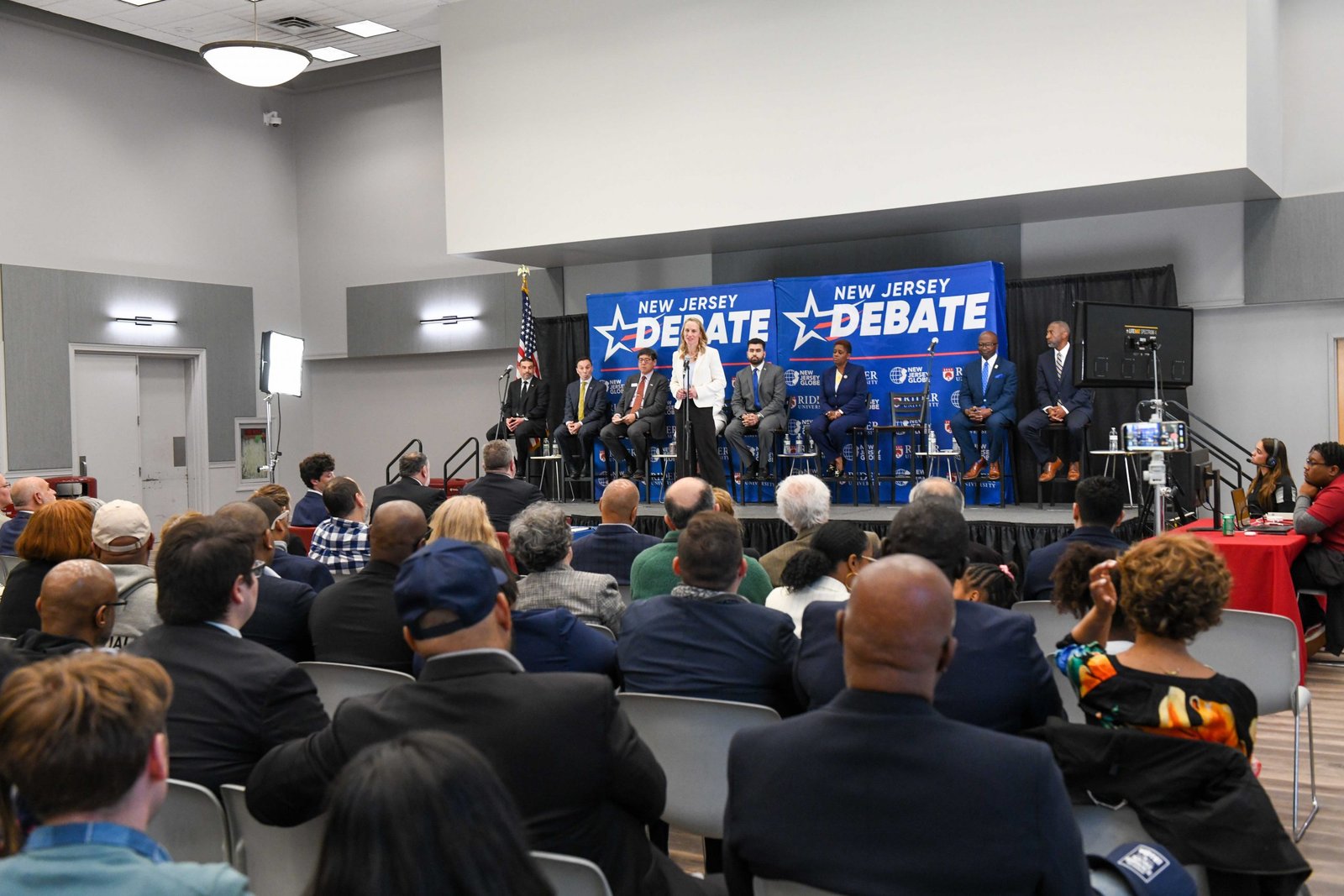
Watson Coleman is retiring from her 12th district seat this year, and the hectic primary to succeed her has thrown Democratic divisions over Israel and Palestine into full relief: the spectrum of candidates running in the district runs from a surgeon who volunteered to provide medical aid in Gaza to a local mayor who’s a longtime member of the American Israel Public Affairs Committee.
And as has happened elsewhere in the country, those contrasts are only heightened by the specter of outside money flooding into the district. One pro-Palestine super PAC has already spent $1 million supporting perhaps the most left-wing candidate running, Adam Hamawy, while AIPAC has kept everyone guessing about whether it will get involved and, if so, on whose behalf.
Even still, the number of direct attacks in the race have been few and far between; pervading the campaign is a sense that regardless of policy disagreements, Democrats should do their best to avoid a bitter war that leaves long-lasting scars.
“I think Democrats are sick and tired of folks using this issue to tear our party apart,” said Jay Vaingankar, one 12th district candidate who has taken a more progressive position on the Middle East but who has not made it a centerpiece of his campaign. “There is broad consensus, in my opinion – contrary to what folks online or what folks in these super PACs will say – and I think Democrats are tired of our party being torn away from that mainstream.”
On a few issues, the many Democrats running for the 12th district – which spans from Trenton to Plainfield and which includes large white, Black, Hispanic, Asian, Jewish, and Muslim populations – are in agreement.
The long-term goal, they say, is peace and stability for all residents of the Middle East, regardless of their nationality or religion. That extends to the United States, too, where the conflict in Israel and Gaza has led to increased anti-Jewish and anti-Muslim hate, something all 12th district Democrats said they condemn.
“There’s no place for Islamophobia or anti-Muslim hate; New Jersey has a thriving Muslim population, a thriving Jewish population, and there are great contributors on both sides that make New Jersey great,” Somerset County Commissioner Shanel Robinson said.
There’s also a widespread conviction, both in the 12th district and among Democrats around the country, that the ongoing war with Iran is an abuse of presidential power and a catastrophic waste of money. Supporting a war powers resolution to rein the president in has become something of a no-brainer for most Democrats.
“The war in Iran is illegal,” said Sue Altman, a longtime progressive activist and until recently the state director for Senator Andy Kim. “Trump doesn’t know what he’s doing, he’s in way over his head. It’s created price increases for consumers here in the U.S., it’s led to all kinds of confusion and disarray here and around the world.”
When it comes to Israel and Palestine, however, views among the candidates start to diverge. The predominant position among Democrats is that Israel and Palestine deserve to exist as separate, independent states, but Hamawy, a plastic surgeon and Army veteran, has a different stance.
“I think that Israel should exist as a state with equal rights and equal opportunities to all people living there,” he said. “Like we have in the United States, where we have one state where everyone lives together and respects each other… One state, equal rights for everyone.”
Hamawy has leaned into the issue more than anyone else on the campaign, saying that voters want a candidate who will stand unequivocally against what he calls a genocide: “Healthcare, Not Bombs,” reads the slogan that will appear beneath him on June 2 primary ballots. And as someone who both served as a combat surgeon in Iraq and as a volunteer medic in Gaza, he said he has a perspective on the issue that no one else in Congress can match.
“Even though I’m a freshman congressman, I will be in there, my voice will be present, and this is exactly what the pro-Israeli lobby does not want,” Hamawy said. “I’m the last voice they want to have in Congress, because I’ve actually been there and witnessed the atrocities and the destruction.”
Hamawy’s strongly Israel-skeptical stances have drawn national attention, as have certain elements of his own backstory. In 1995, Hamawy testified in the trial of Omar Abdel Rahman, better known as the “Blind Sheikh,” saying that he had not heard a remark the Sheikh made about assassinating the Egyptian president; the decades-old story has been making the rounds in the district, but Hamawy said it’s a non-issue, pointing out that he was still viewed as trustworthy enough by the U.S. Army that he was sent to sensitive combat zones years later.
“Every time a Muslim candidate runs, we’re always going to be attacked and demonized and made to look like terrorists,” he said. “I was in the military back then. I was asked to testify in federal court, I went, and I did my civic duty… These bad-faith attacks by association are nothing new in our politics.”
Hamawy, who would be New Jersey’s first Muslim member of Congress if elected, was also careful to note that he stands firmly against antisemitism: “My criticism of Israel and my criticism of AIPAC really has nothing to do with, and should not be taken as, criticism against Judaism or any religion, or against the Jewish people,” he said. (That’s a sentiment that’s been echoed by every other Israel-critical Democrat in the race.)
Some of Hamawy’s opponents agree with him on the broad strokes of U.S. policy towards Israel. Vaingankar, Robinson, and Altman all said that they’d support halting or winding down U.S. military aid to Israel; Vaingankar and Robinson also characterized Israel’s actions in Gaza as genocide.
Altman’s stance on Israel has been subject to particular scrutiny thanks to her prior campaign for a neighboring district in 2024. During that campaign, Altman broadly cast herself as an ally of Israel and accepted an endorsement from Democratic Majority for Israel, stances that have now become grounds for left-wing criticism – even though AIPAC supported her Republican opponent, Rep. Tom Kean Jr. (R-Westfield).
Altman said that “a lot has changed” in the Middle East since she was last on the campaign trail, and she now supports policies like the Block the Bombs Act and a phase-out of U.S. financial support for the Iron Dome, which she said Israel is wealthy enough to pay for itself.
“All of my positions are oriented around long-term peace, Israel’s existence as an ally, and the lives and safety of Palestinians,” she said. “I stand by my position then, and I stand by my position now, and I think that they’re both coherent and reflect the moment that we’re in.”
Hamawy and Altman have sparred briefly over the Iron Dome – a rare head-to-head confrontation in a race without many of those – but Altman argued that their positions aren’t so different in actuality, and that the race’s policy divides have been deliberately made to seem larger than they are.
“There is a lot of money in that debate, and there is a lot of controversy in that debate, and there are a lot of clicks in that debate,” she said. “Me and Dr. Hamawy, we have a lot of alignment here, and so I think people are making a lot out of some degree of difference, but in general we agree on a lot.”
Staking out a more explicitly pro-Israel lane, meanwhile, are two other local politicians running for the district: Assemblywoman Verlina Reynolds-Jackson (D-Trenton) and East Brunswick Mayor Brad Cohen.
Cohen, an AIPAC member, has clashed with Watson Coleman in the past over Israel, and he’s the one candidate Watson Coleman has specifically indicated she doesn’t want to see as her successor. He said that while Israel has made “mistakes” in Gaza like any other country at war, he doesn’t think that should entail an end to the U.S.-Israel alliance or to U.S. military aid.
“The country of Israel has the right, like any other country that is a U.S. ally, to defend itself by the means necessary, and as an ally of the United States we need to make sure that they are able to do that,” he said.
Cohen is also the most prominent Jewish candidate running for the district, which has a sizable Jewish population. As someone with relatives who survived Nazi concentration camps, he said he can’t abide by the use of the word “genocide” to describe what has happened in Gaza.
“These words carry deep meaning, they’re very hurtful to people who are victims of genocide,” he said. “This is a war, and any loss of life is horrible… But to call this a genocide is inaccurate, and what it has done is amplified and resulted in an unprecedented amount of antisemitism and hate and protest in this country.”
As for Reynolds-Jackson, she said she defines herself as a “pro-Israel candidate,” and she indicated she wouldn’t support restricting military aid to Israel either.
“I do believe in a two-state solution. I believe that Israel has a right to exist and to defend itself,” she said. “But then I think about where we are right now, post-October 7th – I see it, I recognize it, we have a humanitarian crisis right now.”
How much emphasis will voters put on these issues when it comes to making a decision about who to vote for on June 2? For some voters, certainly, it’s a debate of great importance, but most of the Democrats running say that they’re hearing primarily about cost-of-living issues: “When I’m out knocking on doors, they’re not bringing up the Middle East,” Reynolds-Jackson said. “They want to know why we’re sending billions of dollars to Kentucky and other states for their road projects and school projects.”
Hamawy, though, said that it’s all connected: money spent on military operations in Iran or weapons in Israel is money that’s not being spent on programs at home that help Americans.
“The establishment has always tried to say foreign policy is separate from domestic, and they’re one and the same,” he said. “We have one pot of money, and where are we spending it? Are we spending it on wars? Are we spending it on bombs and aircraft carriers and stealth bombers? Or are we spending it here at home to have a universal health care system like Medicare for All?”
Clearly, it’s a debate that’s raging well beyond the boundaries of the 12th district. Other Democratic primaries around the country have seen similar rifts over issues of Gaza, Israel, and antisemitism; just two days ago, Rep. Josh Gottheimer (D-Tenafly), a staunchly pro-Israel Democrat a few districts to the north of the 12th, penned a New York Times op-ed warning that his party has a “double standard” when it comes to antisemitism.
Election results, too, have corroborated the idea that it’s an issue that matters deeply to many voters. Left-wing Democratic candidates have struggled among Jewish voters in some recent races, including in last month’s special election for New Jersey’s 11th district, where the heavily Jewish towns of Livingston and Millburn shifted dramatically against now-Rep. Analilia Mejia (D-Glen Ridge) even as she won in a landslide. More pro-Israel Democrats, meanwhile, have found their electoral support lagging in Muslim communities, such as when a pro-Palestine “uncommitted” slate snagged two DNC delegate spots in 2024 with strong support from Muslim voters.
And even if foreign policy debates aren’t top of mind for every voter, they are for a certain constellation of outside groups – groups that have the financial resources to reshape the primary as they see fit.
One of them, in fact, already has. American Priorities, a brand-new super PAC founded to assist pro-Palestine candidates, has spent $1 million boosting Hamawy and could spend a million more by the time the primary is over. According to Hamawy’s internal polling, it’s been enough to launch him from a virtual unknown to the race’s frontrunner.
Asked whether that spending conflicted with his own personal stance against dark money in politics, Hamawy said he was glad to have a major backer on his side against a (still hypothetical) tide of money against him.
“I am for overturning Citizens United, I am for taking money out of politics,” he said. “But until we fix that system, I’m glad there are groups that support that we should not be spending on wars, and that we should be using our money to help Americans and our communities.”
The spending, though, has drawn the notice – and criticism – of some of Hamawy’s primary foes.
“Whether it’s AIPAC or American Priorities, big money interests from out of state are trying to buy out candidates and drag the debate away from the mainstream of this district,” Vaingankar said. “Imagine what that $2 million could do to help Democrats flip the House by defeating Tom Kean Jr.”
Part of the mission of American Priorities and like-minded PACs is to push back on AIPAC, which has exerted tremendous influence in other races around the country – including in New Jersey, where an AIPAC-backed ad campaign sunk former Rep. Tom Malinowski in the special election for the 11th district and inadvertently helped get Mejia, a more committed Israel critic, elected instead.
AIPAC, though, has not yet made an endorsement or spent a dime in the 12th district, and no one is quite sure if and when that will change. (If AIPAC follows the exact same schedule as it did in the 11th district race, its spending would begin sometime this week.)
Vaingankar, Robinson, and Altman all unequivocally rejected any support from AIPAC: “I don’t think they like me,” Altman said. Reynolds-Jackson and Cohen have closer relations with the group – Reynolds-Jackson said she went on an AIPAC-sponsored trip to Israel in 2018 and was in contact with them during this year’s campaign – but both discouraged AIPAC involvement in the 12th district.
“I would discourage it, but if it were to happen, it wouldn’t be because I advocated for it or asked for it,” Cohen said.
“I’ve had conversations with them, but I’m not interested in, nor do I want, any AIPAC donations. It doesn’t align with my values right now,” Reynolds-Jackson said.
Of course, AIPAC and American Priorities aren’t the only super PACs that might get involved in the race. A few lesser-known PACs have spent smaller sums already, and there’s always the possibility that industry groups tied to artificial intelligence or cryptocurrency will get involved too; in a splintered race where most candidates haven’t raised much money, super PAC spending may be what pushes a candidate over the top or sinks one of their rivals.
Robinson, who has a small PAC spending on her behalf but is unlikely to get much outside help beyond that, expressed confidence that special interests will only get so far among the voters of the 12th.
“When people are controlled by special interest groups, their judgment sometimes gets cloudy,” she said. “[But] their money does not necessarily equate to votes. Voters in the district will make the final decision, not the money.”



