
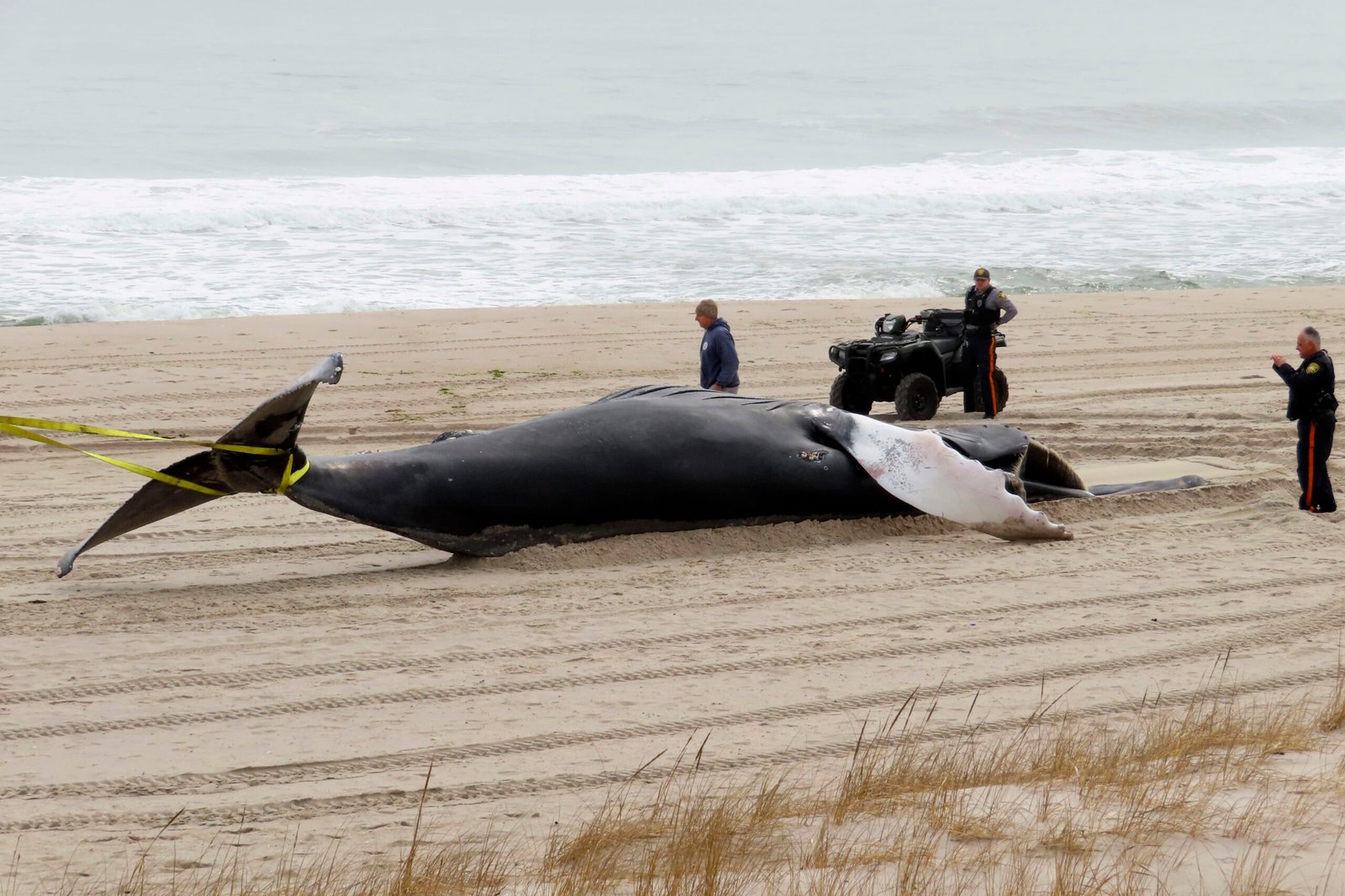
 WASHINGTON — When researchers in June 2020 inspected the carcass of the baby whale in the waters off Elberon, they found evidence two vessels had struck the animal.
A propeller cut its head and chest. Those wounds, likely weeks old, hurt but did not kill the whale, officials with the National Oceanic and Atmospheric Administration said. It was a second “vessel collision” that killed the whale calf, the offspring of North Atlantic Right whale No. 3560, NOAA said.
“The loss of every right whale is a detriment to this endangered species, but it is particularly hard when we lose a calf, given how few have been born in the last several years,” Kim Damon-Randall, a regional NOAA administrator, said at the time.
There were an estimated 400 North Atlantic Right whales alive at the time.
Six years later the population is down to an estimated 380, the species is on the brink of extinction and the Trump administration may soon eliminate a rule devised to protect the creatures from extermination.
NOAA is considering changes to “modify and modernize” a rule the agency has had on its books since 2008, when it implemented a new mandatory speed rule that requires boats and ships 65 feet or longer to travel at 10 knots, or about 12 miles per hour, in certain areas of the East Coast.

In conjunction with the 2008 rule, NOAA issues periodic “slow zone” alerts to all boaters advising them to cut their speeds to protect right whales. The sighting of a right whale triggers those slow zones.
Vessel strikes and fishing gear entanglements are the primary causes of death for the whales, which get their name from the 1800s, when the whaling industry dubbed them the “right whales” to kill because they were slow and held ample supplies of blubber.
“Speed limits on the water are needed risk reduction, not unnecessary restriction,” Gib Brogan, a senior campaign director at Oceana, an environmental advocacy group, said in a statement.
“A vessel colliding with a whale can injure or kill people, destroy vessels, and is often fatal to the whale,” Brogan said. “Vessel strikes are a top threat to this species.”
The agency this month solicited information about how it might use digital technology to help boat captains avoid whales, as well as for alternative suggestions to slow zones.
At his confirmation hearing in 2025, Howard Lutnick, secretary of the Commerce Department, which includes NOAA, criticized the boat speed rules.
“The speed restrictions seem illogical to our fishermen and to our businesses,” Lutnick told senators.
The Biden administration in 2022 proposed expanding the speed rules, which are seasonal, to smaller vessels for longer periods of time.
Fred Gamboa, a charter boat captain based in Point Pleasant, criticized the proposed rule at a congressional hearing in 2023, saying that requiring vessels like his to move slower would cut into his business.
“Its implementation would have a crushing impact on not only my livelihood but also the clients that rely on my services,” Gamboa said.
With dozens of Republican lawmakers, Rep. Jeff Van Drew (R-2nd) in 2024 urged, in a letter, the White House to withdraw its proposal.
At the end of the Biden term, the administration scrapped its proposal.
At their peak, the North Atlantic Right Whale population reached an estimated 21,000 before dwindling to fewer than 100 in the 1920s. A ban against hunting them, reached in 1935, stabilized the population.
After a recent Ocean study found federal authorities were not properly enforcing the boat speed limits, Rep. Frank Pallone (D-6th) said the U.S. Coast Guard needs more funding to pursue enforcement, often through fines, against violators.
“The idea that they just issue the rule and don’t enforce it is totally unacceptable to me,” Pallone said.



