
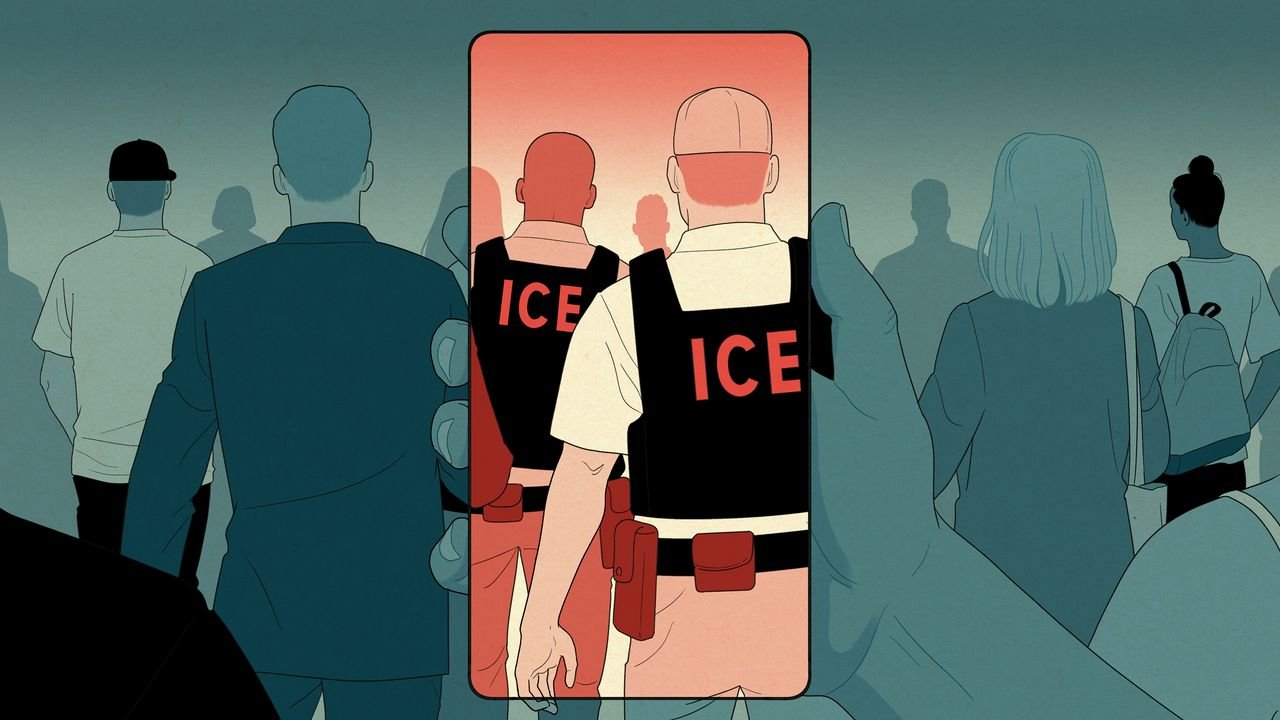
Before sunrise on September 24th, a twenty-nine-year-old gunman with a bolt-action rifle climbed onto the roof of an immigration attorney’s office in Dallas and began firing rounds at the city’s ICE headquarters, a two-story building across the street. Bullets sprayed its walls and windows and pierced a van carrying a group of shackled immigrants. Norlan Guzmán Fuentes, a landscaper from El Salvador, was fatally wounded. Miguel Ángel García, a housepainter from Mexico, was taken to a hospital, where he died five days later. His wife was about to give birth to their third child.
No law-enforcement agents were hurt, but the shooter, Joshua Jahn—who was found dead at the scene—had left behind notes indicating that the officers had been his intended targets. “Hopefully this will give ICE agents real terror,” one of the notes said. “To think, ‘is there a sniper with AP rounds on that roof?’ ” An unspent shell casing read, in dark-blue letters, “ANTI-ICE.”
Even though the shooting had occurred at a government building with a known address, officials began to claim that ICE-tracking apps had enabled Jahn’s actions. The day after the attack, Kash Patel, the F.B.I. director, wrote on X that Jahn had searched for apps that shared the locations of ICE agents. Marcos Charles, an ICE associate director, claimed that Jahn had actually used those apps, and blamed their creators and distributors for putting agents in danger. “It’s a casting call to invite bad actors to attack law-enforcement officers,” he said at a press conference that afternoon. “It’s no different than giving a hit man the location of their intended target.”
On September 30th, a few days after the attack, Loomer called out Tim Cook and Sundar Pichai, the heads of Apple and Google, for making such programs available. “The shooter who shot up ICE agents in Dallas, Texas was using an ICE tracking app,” she wrote on X. “Why are you going to very fancy dinners at the White House and kissing President Trump’s ass while also allowing for this type of lawlessness and criminal activity to take place in your App Stores?”
Two days later, Apple took down ICEBlock. A message on Aaron’s developer portal said that the company had received information from law enforcement which showed the app’s purpose was “to provide location information about law enforcement officers that can be used to harm such officers individually or as a group.” Bondi was quick to take credit. She told Fox News that the Justice Department had “reached out to Apple today demanding they remove the ICEBlock app from their App Store—and Apple did so.”
At least four similar apps were axed in the following days, including Eyes Up, a platform that archived videos of arrests, raids, and abuses by immigration agents. Its creator, Mark Hodges, received the same message as Aaron, even though Eyes Up did not provide agents’ real-time locations. In both cases, Apple cited a rule that forbids discriminatory, defamatory, and mean-spirited content directed at “targeted groups” such as racial, religious, and sexual minorities.
Around the same time, Google removed from its Android store at least three apps that tracked immigration operations. The company told 404 Media that the apps were taken down because they publicized the location of a “vulnerable group” that had recently faced a violent attack. A couple of weeks later, Meta removed a Facebook page that published ICE sightings in Chicago. A company spokesman said the page had violated the platform’s policy on coördinated harm, which bans “outing the undercover status of law enforcement.”



