
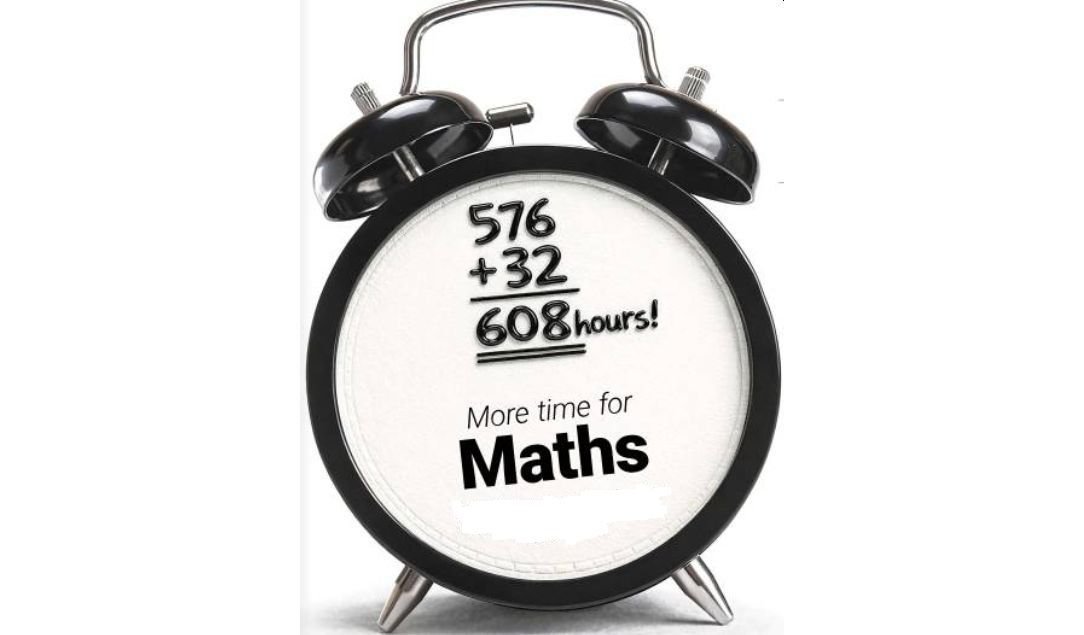
THE increase in primary school Mathematics teaching time from next year is a step towards arresting declining global scores (see infobox), but educators say changing pupils’ attitudes towards the subject is just as crucial for it to be effective.
According to National Union of the Teaching Profession secretary-general Fouzi Singon, the subject has long been perceived as difficult because some pupils struggle to master it.
“Therefore, in addition to increasing instructional time, it is equally important to ensure that learning Mathematics becomes a positive, engaging and confidence-building experience for pupils.
“Creative teaching approaches, emotional support from teachers, and opportunities for pupils to experience small successes in their learning can help transform the perception of Mathematics from a difficult subject into one that is achievable and enjoyable,” he told StarEdu.
Fouzi was responding to the Education Ministry’s announcement that teaching hours for Mathematics in primary schools would be increased from 576 hours to 608 hours under the 2027 school curriculum.

This means that weekly, there would be 3.5 hours of Mathematics for Level One pupils and three hours each for those in Levels Two and Three.
Level One comprises Years One and Two pupils, Level Two covers Years Three and Four, while Level Three includes Years Five and Six.
The overall increase of up to 32 hours is to allow pupils to gain a deeper understanding of mathematical concepts and their real-life applications, the ministry said in a parliamentary written reply on Feb 25.
For teachers to be able to cope and guide their pupils well during these additional hours, Fouzi said schools could consider reducing the number of classes a teacher teaches.
“In addition, the integration or restructuring of certain subjects can create space within the timetable to accommodate the extended Mathematics learning time,” he said, adding that this would also prevent teachers from feeling overwhelmed.
With pupils expected to have Mathematics lessons every day, he said it would provide more face-to-face learning time between teachers and pupils, allowing greater opportunities for practice, reinforcement and guided learning in the classroom.
“This will allow teachers to spend more time on topics that are often considered difficult, without the pressure of rushing to complete the syllabus,” he said, adding that more teaching strategies such as problem-based learning and gamification can be adopted.
Encouraging a more proactive approach to learning, Universiti Sains Malaysia School of Educational Studies senior lecturer Dr Muzirah Musa said pupils need to be active, focused, ask questions, and try to apply the concepts learnt in real situations.
“With active involvement, they not only understand mathematical concepts more deeply but also build confidence and problem-solving skills,” she said.
Noting that mathematics is cumulative, she said pupils need sufficient time to explore concepts, practise solving problems and meaningfully connect ideas, not just memorise steps.
“When pupils are given sufficient time to understand a concept, they are not only able to answer questions, but truly understand how and why a method is used,” she added.
Weighing in, National STEM Association president and founder Emerita Prof Datuk Dr Noraini Idris emphasised the need for teachers to be upskilled and to understand how to deliver concepts in “a more fun way that allows pupils to visualise the approach”.
Doing so, she added, will enable them to use the extra hours to teach pupils how to apply mathematical concepts in real life.
Making way for more hours for Mathematics is necessary, she said, as the current primary school system is packed with subjects.
“There are too many subjects right now for pupils when, by right, lower levels of primary school should be focusing on reading, writing and arithmetic.
“That’s why now a lot of pupils, as they go higher, are not doing well in Mathematics,” she said.
More STEM talent
Prof Noraini stressed that developing a stronger foundation in the subject at primary schools would allow pupils to be more confident when they progress to secondary school, especially when it comes to taking Additional Mathematics – a subject many students shy away from.
At the same time, they would be more confident to pursue calculation-heavy subjects such as Physics and Chemistry, she added.
As of last August, about 15.8% and 5.2% of Form Four students were enrolled in STEM A (Pure Science) and STEM B (Science and Technology) streams, respectively, Education Minister Fadhlina Sidek told Parliament on Oct 23.
Prof Noraini, who is also Universiti Malaya STEM centre adviser and honorary professor, said learning mathematics and working out sums teaches other skills such as logical thinking and problem-solving.
“Mathematics is very abstract. You need to visualise the solution, unlike in science, where through experiments or observation, you can see the solution or the result happening,” she said.
Muzirah added that mathematics plays a fundamental role in helping individuals make smart decisions in their daily lives.
“From managing personal finances and comparing prices when shopping to planning travel times and interpreting information in the news, mathematical thinking allows individuals to analyse situations logically.
“When students realise how the concepts of mathematics learnt in school can be applied in daily life, they begin to see the subject not just as a classroom lesson, but also as a practical skill that allows them to make daily decisions with confidence,” she said.
Where it leads
Increasing Mathematics teaching time in Malaysian primary schools can help reduce anxiety and build confidence in science, technology, engineering and mathematics (STEM) subjects from an early age. Additionally, investing in mathematics education at this stage is an investment in the country’s future workforce and competitiveness. Mathematics serves as the intellectual foundation of computer science, providing the logical reasoning and analytical skills indispensable for programming, algorithm design and problem-solving. When students lack mathematical preparedness, they frequently encounter difficulties with advanced computing concepts. Consequently, strengthening mathematics education across all levels of computer science is crucial for Malaysia.
– Asia Pacific University of Technology & Innovation (APU) School of Technology senior head Assoc Prof Dr Thang Ka Fei
Actuarial work relies heavily on advanced probability, statistics, calculus and financial mathematics to model risks, price insurance products and ensure financial security. A stronger foundation in mathematics fosters the analytical depth needed to interpret results critically, innovate in modelling, and provide reliable advice in high-stakes financial decisions. Superior mathematical ability directly translates to greater exam success, career progression and meaningful contributions to a data-driven, risk-resilient economy. Thus, dedicated early mathematics education predicts stronger outcomes in STEM fields and enhances overall cognitive development.
– UCSI University Faculty of Business and Management deputy dean Assistant Professor Dr Jeff Lai Wan Fei
As an engineer, mathematics is not just a subject; it is the language of engineering, technology and scientific problem-solving. Moderately increasing Mathematics teaching hours in primary schools can be beneficial, particularly if the additional time focuses on conceptual understanding, problem-solving and real-world applications, rather than rote memorisation. Allocate substantial time to mathematics in early education because numeracy skills develop most effectively during childhood cognitive development stages. When done correctly, increased teaching time strengthens students’ analytical thinking and confidence with numbers.
– INTI International University academic Prof Dr Leong Wai Yie



