
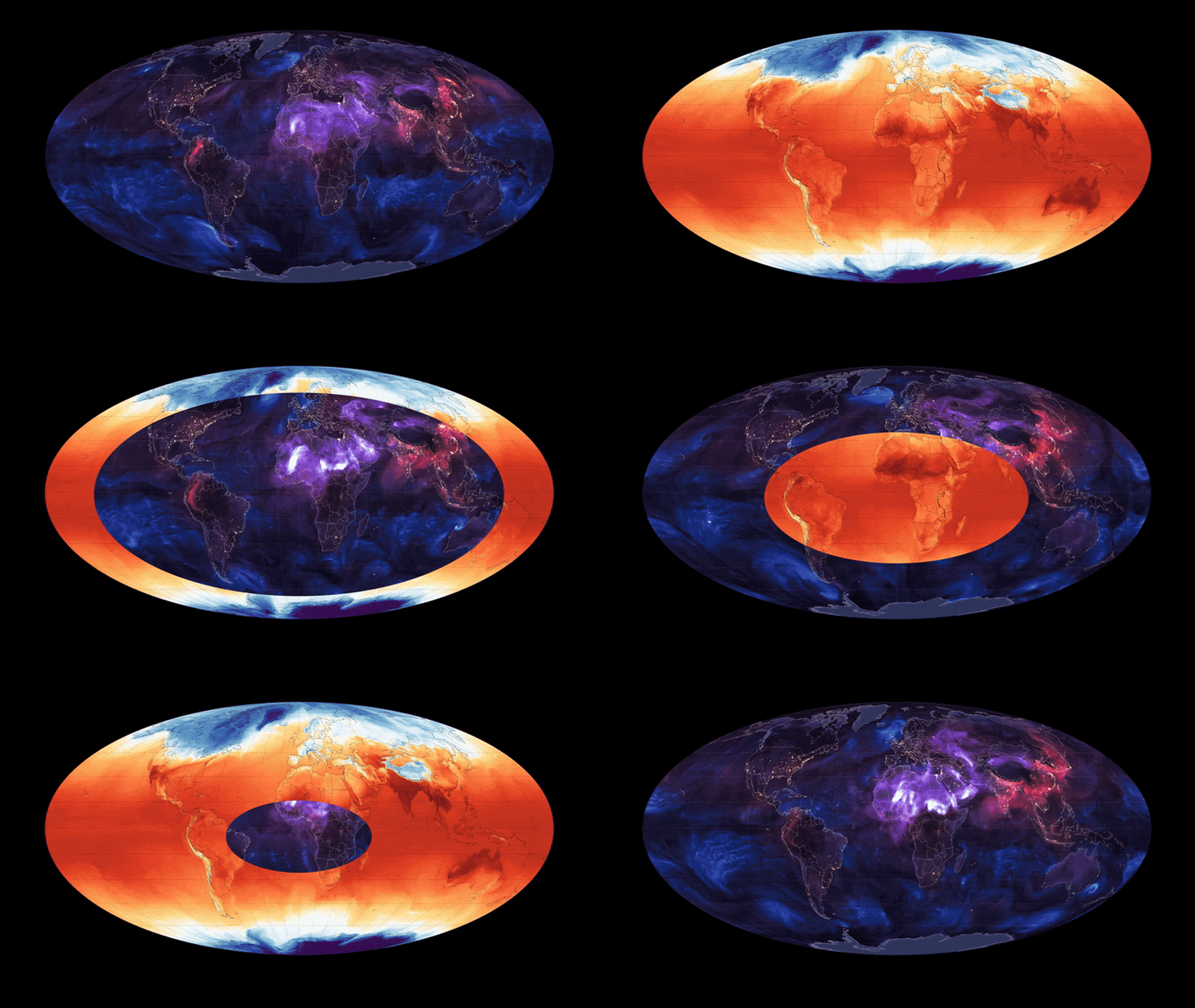
A typical map of temperatures across the planet shows just a snapshot in time, listing the day’s various highs and lows.
But temperature isn’t static; it rises and falls, and it’s influenced by all sorts of systems, from ocean currents to solar radiation.
An animated map from Maps.com shows those variations, revealing the patterns that swirl around our planet—and depicting the gradual way Earth heats up from east to west as the sun rises and sets.
The animated map is part of a new feature called Earth in Action, through which Maps.com (a platform by spatial analytics company Esri) produces daily, near real-time animated maps about Earth’s systems.
“We created Earth in Action to provide a lens into what’s happening on our planet—as it happens,” Maps.com cartographic editor and Earth in Action creator Joshua Stevens says over email.
“Whether it’s something typical, like the current air temperature, or an extreme event like a major dust storm, we wanted to provide an opportunity for people to see them,” he adds.
By turning static data into moving animations, the maps reveal how interconnected Earth is, and how what happens on one part of the planet can influence another.
“It’s one thing to tell someone that dust from the Sahara helps fertilize the soils of the Amazon rainforest,” Stevens says. “It’s another thing to show that actually happening, as dust is lofted from Africa and carried across the Atlantic Ocean. … What happens here today influences other locations later.”
That dust is depicted on the aerosols map, seen in swirls of purple that whirl above Africa and then float across the planet’s surface.
The aerosols map also shows the movement of black carbon, a dangerous pollution released by the combustion of fossil fuels, trees, and other organic materials; as well as sea salt, which enters the atmosphere via crashing waves and ocean winds, and can affect the formation of clouds and rain.
The movement of these aerosol particles “can reveal everything from wildfires to hurricanes,” Stevens says. The moving data can reveal how Earth’s climate systems transport that smoke, and how hurricanes move over oceans.
The animated maps, which show such activity over seven days, add context to these events, revealing how they emerge, evolve, and affect other locations.
Currently, Earth in Action only produces maps about temperature and aerosols; the platform plans to add maps about rain and snowfall, active wildfires, sea ice and sea surface temperatures, the ozone hole, and more in the future.
Through this feature, Stevens hopes these scientific observations of Earth become more accessible to people, no matter their scientific background or level of expertise. He encourages people to check back throughout the year and see how these systems change across seasons.
“Earth in Action is more than animated maps,” he says. “It’s a view into scientific datasets that few people know how to access, let alone process or communicate with others.”



