
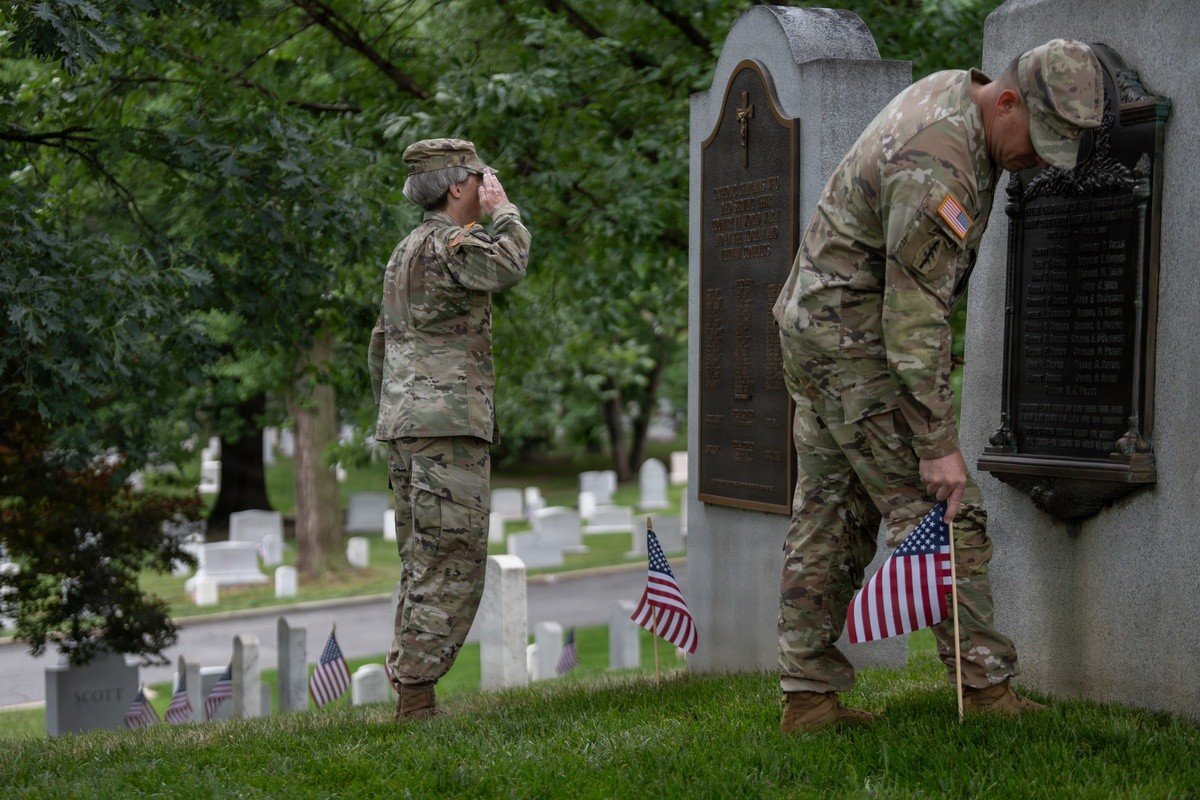
Chaplains and religious affairs specialists from across…
VIEW ORIGINAL
Memorial Day stands as one of the most solemn observances in the life of the United States Army and the Nation it serves.
Its origins trace to the aftermath of the Civil War, when communities began adorning the graves of fallen Soldiers with flowers and flags in acts of remembrance known as Decoration Day. What began as local mourning gradually became a national tradition, formally recognized in 1868 and later expanded after World War I to honor all Americans who have died in military service. In 1971, Memorial Day was established as a federal holiday observed on the last Monday in May, carrying forward a practice of remembrance that has endured across generations.
As the United States approaches 250 years since its founding in 1776, Memorial Day reflects the full arc of that history. It links the earliest formations of the Continental Army to the modern force, reminding the Nation that across every era of war and change, Americans have given their lives in defense of the Nation and its ideals.
The Army marks Memorial Day through formal observance: reading names, standing in formation, and gathering in cemeteries across the Nation where generations of Soldiers rest in honor. These rituals give structure to remembrance, ensuring that sacrifice is acknowledged publicly and deliberately. They reflect a shared commitment to remember every life lost in service as a story of duty, love of Country, and sacrifice that remains part of the living memory of the Nation.
For the Army Chaplain Corps, this observance is part of a broader and continuous ministry that surrounds loss from the moment it occurs. Chaplains are present with Soldiers, leaders, and Families in the immediate aftermath of death, offering presence when grief is most acute and words are often few. They continue that accompaniment long after formal ceremonies, into the quieter days when absence is carried within Families and units as they move forward. Within this continuity, remembrance becomes a lived practice.
Memorial Day gathers these ongoing acts into a single, solemn expression. That expression is carried through the naming of the fallen, the honoring of their stories, and the gathering of communities in shared grief and gratitude. In the reading of names, the silence of formation, and the gathering in sacred ground, memory becomes an act of offering, one that entrusts the fallen to God while affirming their place in the story of the Nation they served. In that convergence, remembrance takes on a liturgical character, where memory itself becomes an act of attention before God, and that attention naturally becomes prayer.
For the fallen, that their sacrifice is honored and their names endure.
For their Families, that they are sustained in grief and held in gratitude.
For the Soldiers who continue to serve, that they are strengthened in purpose and protected in their duty.
And for the Country and the Nation itself, that it remains worthy of the cost paid in its defense.
On this Memorial Day, the Army Chaplain Corps joins the Nation in remembrance and offers this prayer:
Almighty God, we give thanks for the men and women who gave their lives in service to this Country.
Grant them eternal rest and peace in Your presence.
Comfort their Families with the assurance that their sacrifice is not forgotten.
Strengthen those who continue to serve with courage, wisdom, and integrity.
Guide this Nation in righteousness and humility, that we may honor the cost of freedom with lives worthy of the sacrifice it required.
Memorial Day endures because remembrance must endure. As the Army enters its next century of service and the Nation approaches 250 years, the commitment remains unchanged: to honor the fallen, to care for the living, and to carry forward the weight of freedom with gratitude and resolve.



