
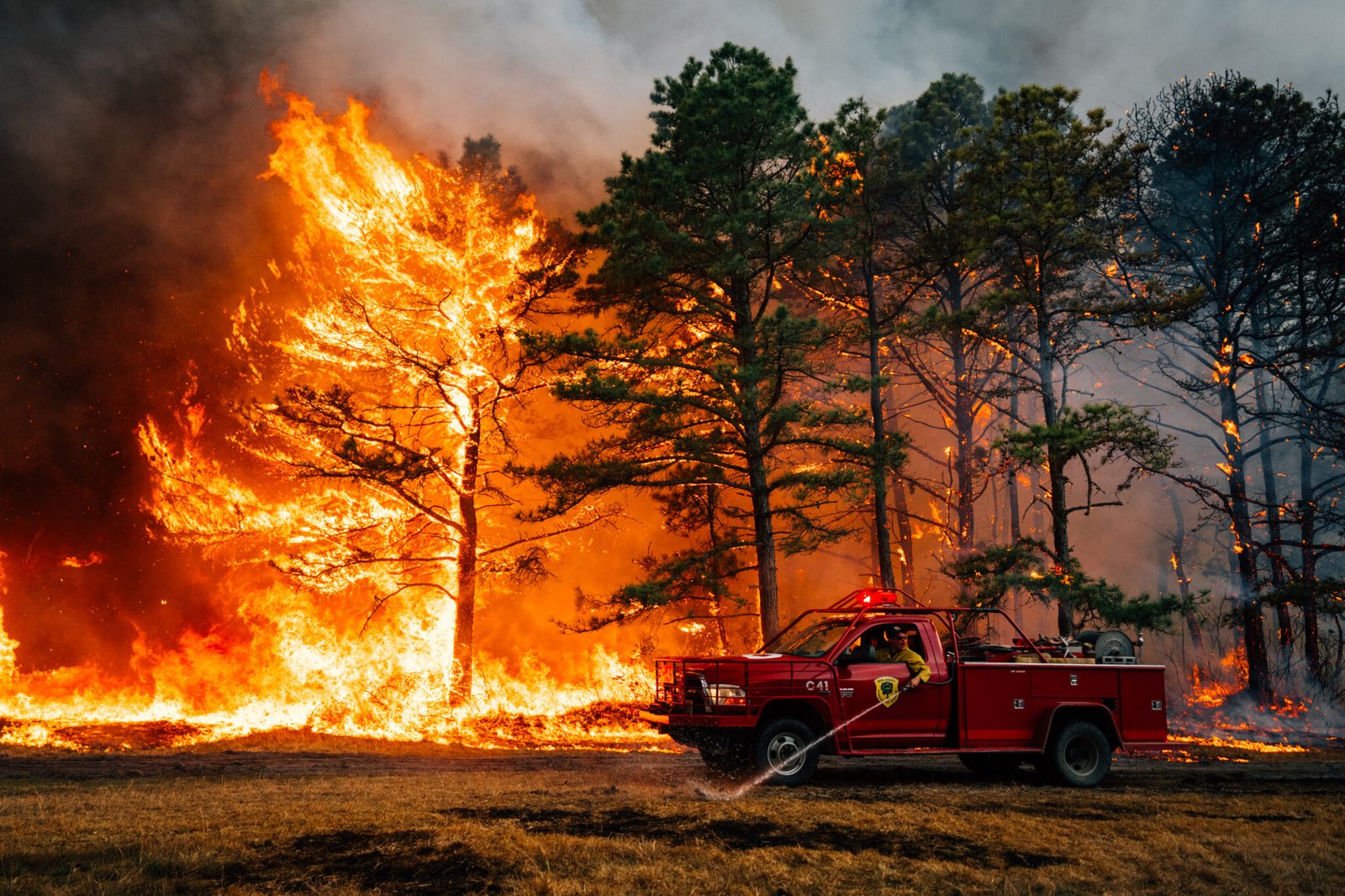
As New Jersey enters wildfire season, state environmental officials say the persisting drought and a dry forecast could combine to keep firefighters hopping this spring.
“The potential is certainly there to have quite a busy fire season,” said Bill Donnelly, state fire warden and chief of the New Jersey Forest Fire Service.
Firefighters have already responded to more than 200 wildfires that have burned more than 150 acres statewide since the start of the year, Donnelly said. That’s lower than last year, when firefighters doused almost 540 wildfires that burned 3,600 acres during the same period, he added.
“While fire activity has been low so far this year compared to years in the past, New Jersey’s residents should not let their guard down,” he said. “It doesn’t take long for a fire this time of year to get up and start running … Spring brings longer days, lower humidity, gusty winds — the perfect conditions for rapid fire spread. In fact, fires can ignite just hours after rainfall.”
Wildfire season typically runs between mid-March and mid-May in New Jersey. The state averages 1,100 wildfires a year, with firefighters battling 1,322 blazes that burned 27,230 acres last year and 1,439 wildfires over 12,355 acres in 2024, said Jimmy Douglas, the digital and communications liaison for State Parks, Forests & Historic Sites and the New Jersey Forest Fire Service.
An unusually bad wildfire in Ocean and Lacey townships, known as the Jones Road wildfire, ballooned last year’s acreage numbers. That blaze alone burned more than 15,000 acres over 20 days last April and May, threatened 1,300 structures, forced the evacuation of more than 7,000 residents, and shut down major highways, including the Garden State Parkway and U.S. Route 9, Donnelly said. It was ruled arson, and several teens were criminally charged after investigators determined they set fire to wooden pallets and then left the area without fully extinguishing the blaze.
“Notably, that day began as a marginal fire day, when suddenly conditions shifted and it became an exceptional fire day,” Donnelly said of that wildfire. “That’s a reminder that conditions can change quickly.”
While last winter was exceptionally snowy, the state remains under a drought warning, with many regions — especially coastal South Jersey — considered severely dry.
The lengthy snow cover kept fire crews from carrying out preventative prescribed fires, which eliminate forest brush, downed limbs, and other ground fuel that helps fire spread, said Greg McLaughlin, administrator of Forests and Natural Lands. Firefighters typically burn 20,000 to 25,000 acres in controlled burns in the months leading up to wildfire season every year, but they could get to only about 8,600 acres over the winter because of the snow cover, McLaughlin said. That’s the lowest acreage treated in about 25 years, he added.
“Despite the snow we had over the winter, the forest remains dry, and the risk is real,” Donnelly said. “Ultimately, Mother Nature will have the final say on what this spring fire season will hold.”
Officials hope other prevention work will pay off.
Twenty-two communities in high-risk areas got $90,000 in federal grants last month to reduce wildfire risks by doing things like thinning wooded areas and creating fire breaks, McLaughlin said.
The state also recently unveiled its first new fire tower in 78 years, he added. The 133-foot tower in Jackson — one of 21 statewide — serves more than 500,000 residents and 200,000 homes in Ocean and Monmouth counties, he said.
“That’s going to serve really well to help us build our initial attack and early response capabilities,” McLaughlin said.
GET THE MORNING HEADLINES.



