
Unlock the White House Watch newsletter for free
Your guide to what Trump’s second term means for Washington, business and the world
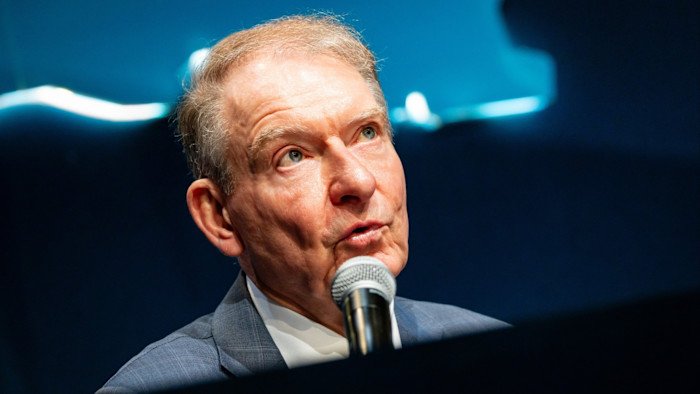
The head of the US Securities and Exchange Commission has said federal regulators should take a back seat to states in policing executive conduct, underscoring the administration’s stance that light-touch regulation will unleash economic growth.
The comments by SEC chair Paul Atkins are the latest indication that federal authorities wish to retreat from aggressive legal and regulatory enforcement, which they have maintained is not ultimately useful to investors.
Politically conservative states, most notably Texas, have been setting themselves up as business-friendly alternatives to traditional corporate and financial powerhouses such as Delaware and New York.
“[We] are focused on ensuring that states, and not the SEC, regulate matters of corporate governance,” Atkins told a conference on Monday in Miami organised by the Texas Stock Exchange, which is set to launch this year, in comments posted on the SEC’s website.
“Over time, the agency has used its disclosure authority to attempt to indirectly establish governance standards that state corporate law should and can address. We must stay in our lane as a disclosure agency and not be a merit regulator,” he added.
Under Atkins, SEC chair since last April, the agency has championed light-touch regulation and sought to discourage “frivolous litigation” and other constraints to private companies going public. It has explored curtailing quarterly financial reporting and shortening “risk factors” sections in securities filings among other changes.
US federal securities laws govern the sale and purchase of securities, largely through disclosure requirements, while state law oversees board of director matters and the application of corporate fiduciary duties. But there is overlap between the two regimes in many areas, such as shareholder proposals and dealmaking.
States such as Texas and Nevada, which restrict the ability to bring shareholder lawsuits, have been increasingly persuading companies to move their incorporation from Delaware, which has historically dominated as the legal home for most big US companies.
However, Delaware has increasingly been viewed as unfriendly to founder-dominant companies such as Tesla, after its trial court twice rejected a $56bn pay package for chief executive Elon Musk.
Tesla and Coinbase are among high-profile companies that have switched their incorporation to Texas, while Nevada has attracted several companies including TripAdvisor and Dropbox.
Atkins’ stance on federalism also stands in contrast to other recent Trump administration actions such as its decision to sue three states for attempting to regulate prediction markets. It argued that those wagers were the domain of the federal government’s Commodity Futures Trading Commission.
Atkins told the FT in February that he rejected the idea of “federalising” corporate law where a single standard for fiduciary duties would apply to all US companies.
Attendees at the Miami event included Florida governor Ron DeSantis and Texas governor Greg Abbott as well as executives from Citadel Securities, the market maker that relocated its headquarters to Florida in 2022.
“I believe that the momentum taking place across the Boom Belt reflects a deeply American idea: that competition — among firms; among markets; and yes, among states — is the animating force behind a system that has produced more prosperity than any other in human history,” Atkins said, referring to 11 southern states including Texas.
Critics of Atkins’ deregulatory drive say shareholder rights and litigation can improve corporate governance to the benefit of both investors and executives.
On Monday, Atkins repeated previous comments about the SEC changing its historic opposition to companies writing bylaws that force shareholder grievances into individualised mandatory arbitration.
“[We] are allowing public companies to have litigation alternatives while maintaining an avenue for shareholders to continue to bring forth meritorious claims,” he said.
“At the SEC, we have been hard at work on executing this plan so that we can shield the innovator from the frivolous — and protect the investor from the fraudulent.”
This article has been amended to reflect that Citadel Securities is the market maker that relocated its headquarters to Florida in 2022



