
Electric vehicle (EV) companies are navigating a challenging landscape as key tax credits have expired and competition is heating up. However, amid this turbulence, Rivian Automotive (NASDAQ: RIVN) is one EV maker attracting investors’ attention.
The company is building on its platform, not just as an EV maker but as a broader automotive technology company. With Rivian stock trading under $16, is now the perfect time to buy? Let’s dive into the company and its outlook to find out.
Will AI create the world’s first trillionaire? Our team just released a report on the one little-known company, called an “Indispensable Monopoly” providing the critical technology Nvidia and Intel both need. Continue »
Investors may see Rivian as an EV automaker, but its internal technology stack, which includes in-house-developed software and a zonal architecture, is quietly gaining traction. Volkswagen is one example of a major automotive company that has struggled with software bugs in its ID series of electric vehicles. The German automaker has partnered with Rivian to use its software and architecture for a prototype of VW ID. EVERY1, Volkswagen’s entry-level, affordable electric vehicle.
Rivian hit a key milestone during its winter testing by proving its technology stack can perform in extreme conditions inside Volkswagen’s vehicles. Not only did the test validate Rivian’s technology, showing it can be sold or licensed to other manufacturers, but it also triggered a $1 billion investment from Volkswagen.
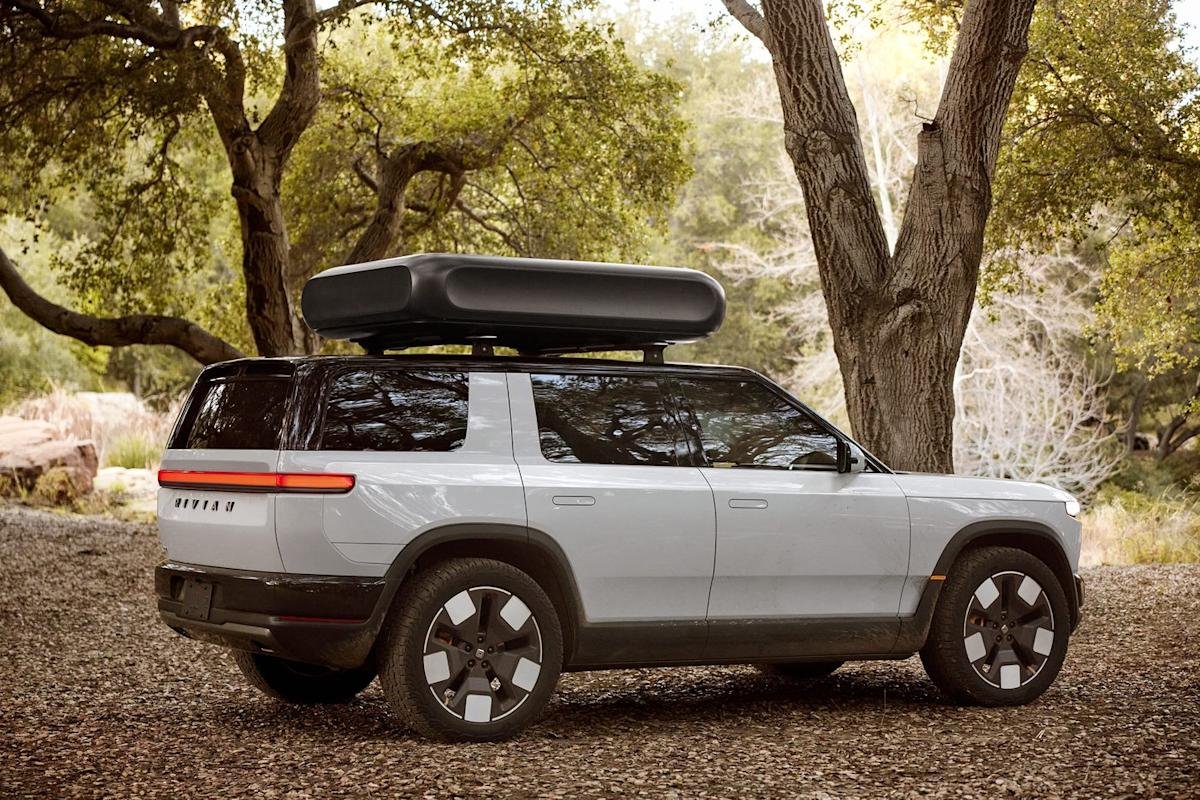
Rivian’s R2 SUV is seen as an important part of the EV maker’s future, providing it with an affordable vehicle and a mass-market competitor to the Tesla Model Y. Right now, Rivian’s R1T and R1S are luxury vehicles priced between $70,000 to $100,000. The R2 provides customers with a more affordable option starting at $45,000.
With the growing demand for mid-sized SUVs, Rivian aims to expand its total addressable market with this more affordable vehicle. The R2 has entered production, and units are being delivered to employees this month, with broader customer deliveries slated for this summer.
Looking further down the road, Rivian has entered into a partnership with Uber to deploy a fleet of 10,000 autonomous R2 robotaxis by 2028, with longer-term plans to expand to 25 cities by 2031.
Uber has committed $1.25 billion through 2031, but the accelerated timeline will increase research and development spending and weigh on profitability in the near term. As a result, the company has walked back its target of achieving positive adjusted EBITDA by 2027.



