
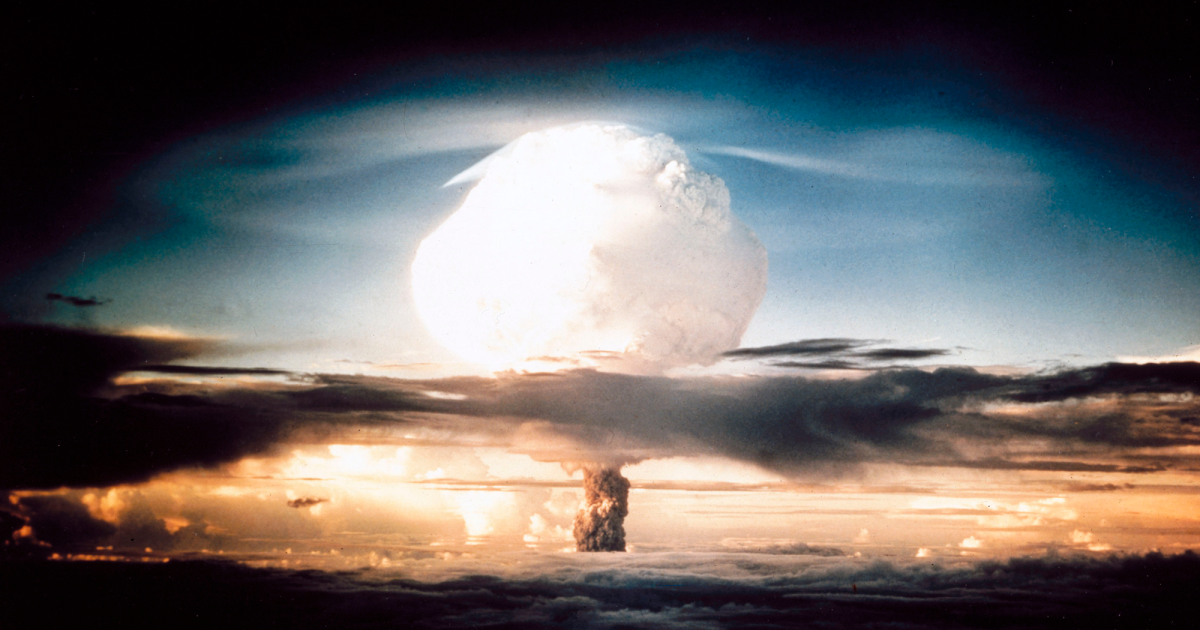
The mushroom cloud produced by the first explosion of a hydrogen bomb at Enewetak Atoll in the South Pacific.SSPL/Getty
Earlier this year, the Bulletin of the Atomic Scientists announced that it was moving the hands of the Doomsday Clock to 85 seconds before midnight, a symbolic hour signifying global catastrophe. The hands have been moved 27 times since the clock’s creation in 1947, and they’re now the closest they’ve pointed to worldwide destruction. The threats of nuclear war, climate change, artificial intelligence, and disinformation all played into the decision. It’s meant as a wake-up call to the world.
One of the experts who helped make that decision is University of Chicago physics professor Daniel Holz, chair of the Bulletin’s Science and Security Board. And even though the clock evokes a potentially terrifying future, Holz takes a more optimistic approach to the entire endeavor.
“Really, the Doomsday Clock is a symbol of hope,” Holz says. “The whole point of this clock is to, yes, to alarm people, to inform people, but also to demonstrate we can turn back the hands of the clock. And we’ve done it in the past, and we can hope to do it in the future. And we must.”
On this week’s More To The Story, Holz sits down with host Al Letson to talk about the Doomsday Clock’s history, why we’re closer to global destruction than ever before, and what we can do to reverse course.
This is an update of an episode that first aired in July 2025.
Find More To The Story on Apple Podcasts, Spotify, iHeartRadio, Pandora, or your favorite podcast app, and don’t forget to subscribe.



