
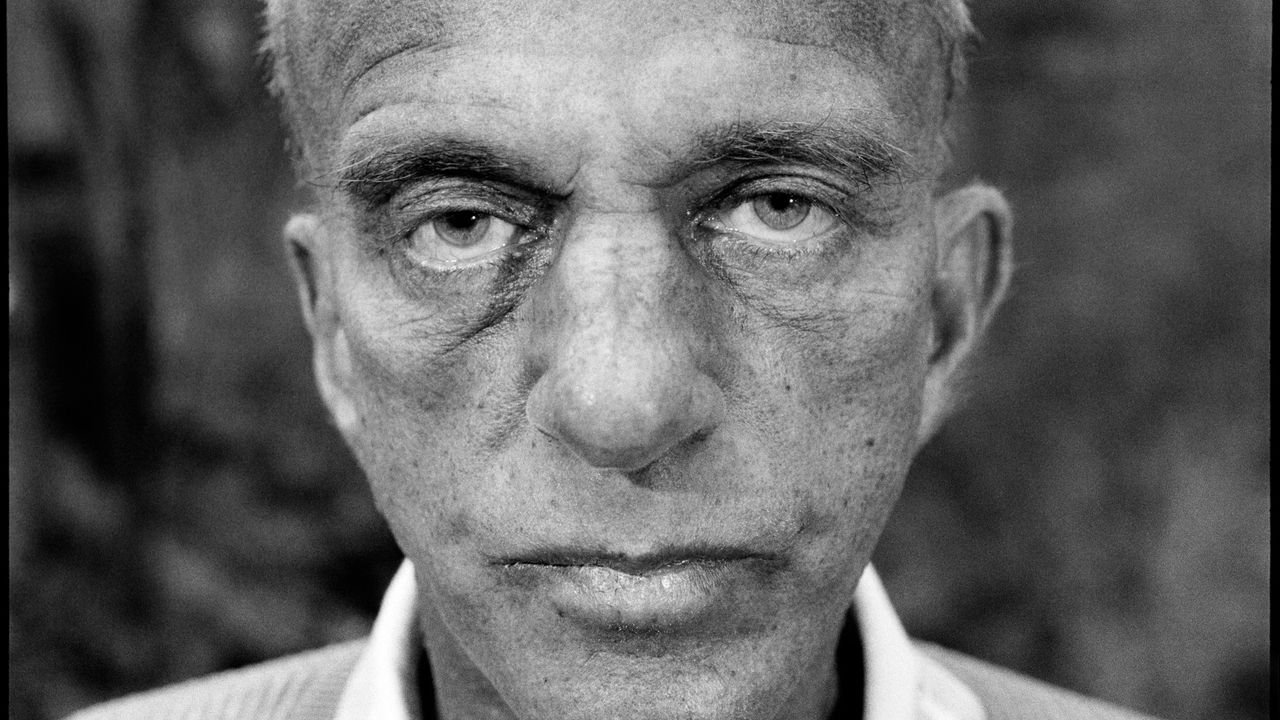
Lawsuits from creditors left Cohn’s assets untouched because his houses, Rolls-Royce, plane, and yacht were leased or held in the name of shell companies. For a time, in the late seventies, the deed to his town house on East Sixty-eighth Street was mysteriously put in the name of his firm’s office manager, Jerry Howard.
“All I own are the clothes on my back and some personal possessions,” Cohn said. “I have no assets. I want no assets, and I need no assets. My parents are dead. I am not married, I have no kids. I don’t need an estate. If anything happens to me, the law firm has a one-million-dollar policy on my life.”
Steven Brill noticed that, during the 2016 Presidential campaign, Trump sounded just like Cohn, using the same idioms and tough-guy language—“If you wanna know the truth” or “That I can tell you.” Whenever Cohn was about to tell a big lie, Brill recalled, he’d preface it with the phrase “to be absolutely frank.” Cohn also taught Trump to talk off the cuff, according to Roger Stone, a friend of Cohn’s who met Trump in 1979. “Trump’s greatest art form would have to be his ability to improvise,” Stone said to Tyrnauer. “This is a man who is working without a net. . . . And he uses the tactics and the strategy of Roy Cohn to be in your face, to attack, to drive the argument.” He continued, “Politics is about who dominates the dialogue.”
Trump admired Cohn’s snarling deportment. Not long after they met, he put a signed photograph of Cohn in his office, and, whenever in-person negotiations with adversaries became tense, he would point to the photo and say, “Would you rather deal with him?” Cohn inspired fear. “The mere sending of a letter from Roy Cohn has saved us a lot of money,” Trump told the writer Ken Auletta, who profiled Cohn for Esquire in 1978. “When people know that Roy is involved, they’d rather not get involved in the lawsuits.” On the other hand, Trump learned that, in an actual courtroom, Cohn had a tendency to wing it. “He could go into a case without any notes,” Trump wrote in “The Art of the Deal.” “When he was prepared, he was brilliant and almost unbeatable. However, he wasn’t always prepared.” Trump claimed that he would interrogate Cohn before every court date. “If he wasn’t prepared, I’d push for a postponement,” Trump said.
He didn’t mind that Cohn was controversial. In an interview last year, Trump told us, “He was a wonderful lawyer. He did a very good job.” The President went on, “Other people probably would say that they weren’t happy with him. But that’s the way life goes, right?”
In 1976, Trump started dating Ivana Zelníčková Winklmayr, a twenty-seven-year-old model from Czechoslovakia. They had met at Maxwell’s Plum, a stained-glass-encrusted Upper East Side singles bar. In a 2016 interview with the New York Post, Ivana described meeting “this tall blond guy with blue eyes. He said, ‘I’m Donald Trump, and I see you’re looking for a table. I can help you.’ I look at my friends and said, ‘The good news is, we’re going to get a table real fast. The bad news is, this guy is going to be sitting with us.’ ” The next morning, Trump sent a hundred roses to Ivana’s hotel. A fast-tracked courtship followed, with dinners at Le Club, “21,” and Tavern on the Green. After five months of dating, Trump broached marriage, on a ski trip in Aspen. (For years, he would brag, falsely, that Ivana had been an alternate for the Czech Olympic ski team.) Back in New York, Trump bought a three-carat diamond engagement ring from Tiffany’s. But, when he called Cohn to tell him the news, his friend discouraged him. “You’re better off not married,” Cohn insisted. “I don’t know why you want to do this.”



