
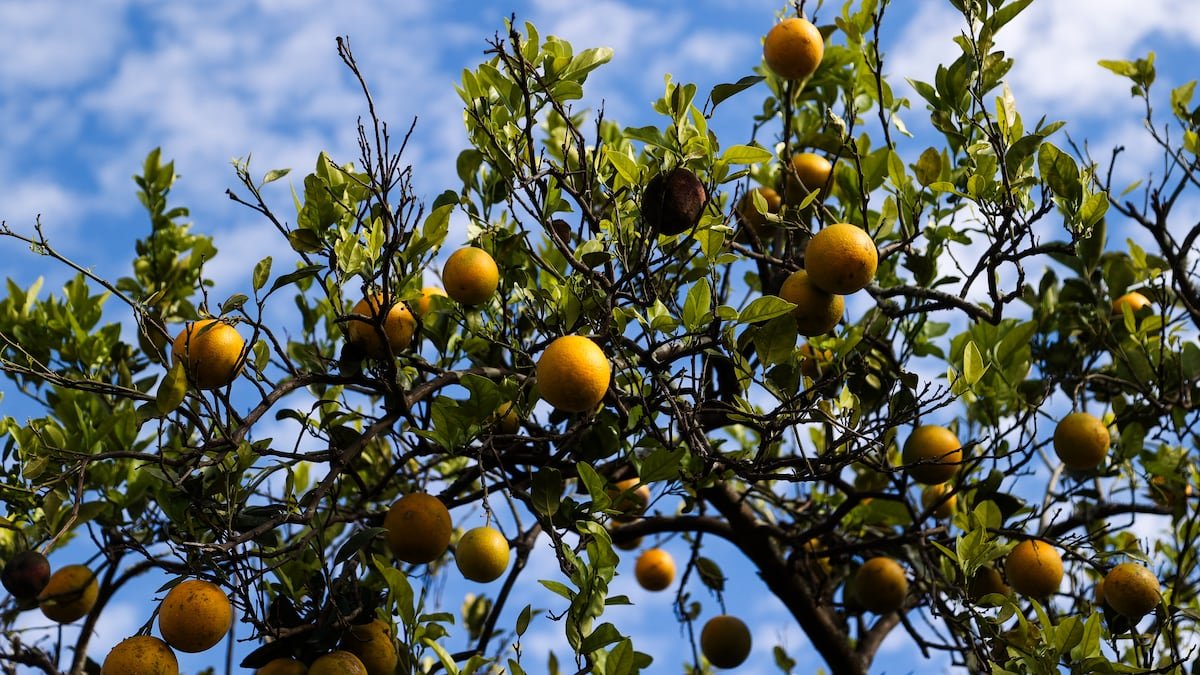
Despite a tumultuous decade for growers — plagued by diseased trees and harsh climates — Florida officials say the state hasn’t outgrown citrus.
In June, Gov. Ron DeSantis signed off on a state budget that invests nearly $196 million toward the citrus industry. The funding will go toward research, field trials, nursery and packing equipment infrastructure and marketing.
With government support and strides in crop research, industry leaders are confident in their ability to revitalize one of the Sunshine State’s most iconic markets. The industry has been in sharp decline for over 20 years, putting it in an uphill battle.
Here’s where the funding is going:
- $160 million for citrus research and field trials
- $20 million for citrus nursery and packing equipment grants
- $5 million in nonrecurring funds for Florida Department of Citrus marketing
- $4.5 million for basic citrus research
- $2.25 million for the Crop Transformation Center
- $2 million for the citrus recovery program
- $2 million for the citrus budwood program
Thirty years ago, citrus was the backbone of Florida’s agricultural industry. But hurricanes, freezes and citrus greening or huanglongbing — a disease killing trees statewide — have caused a nose dive in production since the ‘90s.
Since 2005, orange production in Florida has dropped 90%, alongside steep dips in total growers.
(function(){function e(){window.addEventListener(`message`,function(e){if(e.data[`datawrapper-height`]!==void 0){var t=document.querySelectorAll(`iframe`);for(var n in e.data[`datawrapper-height`])for(var r=0,i;i=t[r];r++)if(i.contentWindow===e.source){var a=e.data[`datawrapper-height`][n]+`px`;i.style.height=a}}})}e()})();
“The Florida citrus industry is not going down without a fight, and we’ve worked for at least the last 10, 15 years to continue to show them [the state] the economic benefits,” said Shannon Shepp, executive director at the Florida Department of Citrus. “Citrus and cattle and trains pretty much built the state.”
Daniel Hunt, president of Hunt Bros. Cooperative, a citrus farming company in Lake Wales, said it’s been a challenging time for growers, but continued support from the Legislature s is encouraging and reminds them that others outside the industry still care about citrus.
“We’re beginning to see a light at the end of the tunnel, but we’ve been beaten up pretty bad over the last 10, 20 years,” Hunt said.
Like Industry leaders, he said the end goal is to reach pre-greening numbers.
The vast majority of government funding, $160 million, is dedicated to citrus research and trials, which helps growers test technologies and practices that keep trees healthy and harvests productive. The research will work like a contract; growers receive financial compensation in return for sharing data they collect, which helps other growers work efficiently and prevent issues like greening.
Citrus greening originated from China and has been around for a century, said Matt Joyner, executive vice president and CEO of Florida Citrus Mutual. First discovered in commercial production in 2005, the disease is spread through tiny insects called Asian Citrus Psyllids, which inject bacteria into plants.
Just like bacteria that infect humans, there are solutions. But because growing and testing citrus trees takes years, research moves slowly.
One practice used to prevent greening is rootstock-scion combinations — fusing two crops to produce desirable traits, such as disease resistance.
“The quicker we can get those in ground, in volume, and collect data on them, the quicker we know how those things are going to work in terms of the future of the industry,” Joyner said.

Another technique is bactericide, which kills greening bacteria and has proven one of the most successful practices, Joyner said. The technology itself isn’t new, but researchers have discovered how to inject the bactericide into trees directly, improving effectiveness.
If you drive by citrus groves, Joyner said, you’ll also typically see small, white mesh bags covering trees — a technique that blocks psyllids from reaching crops.
A U.S. Department of Agriculture forecast released July 10 has sparked hope for Florida citrus. By the end of the 2025-2026 season, the agency estimates growers will have harvested 12.9 million boxes of oranges, up 6% from April, 1.35 million boxes of grapefruit, up 8% from April and 460,000 boxes of tangerines and tangelos, up around 2% from April.
Overall, the forecast remains significantly worse than pre-greening years, but Shepp said it proves the decades spent learning to combat the disease are beginning to bear fruit.
“Growers have been working toward a time such as this, when citrus production is on the upswing,” Joyner said in a statement. “It’s encouraging to end a season marked by historic freezing on a positive note.”




1 comment
Looking to learn about the Forex market? https://forexlanes.com can help. You will gain a structured path into the currency market. The guide explains how the Forex market actually works, what key concepts mean in practice, and how to build the necessary knowledge base before risking real capital.