
As lawmakers listen to funding requests from state departments and various organizations during Trenton budget hearings, they also must consider how to bridge a $3 billion structural deficit. Sen. Andrew Zwicker (D-Mercer), who serves on the Budget and Appropriations Committee, shared some of his fiscal priorities.
Joanna Gagis, anchor: You’ve been outspoken on a number of topics as we are in this budget season. Some of them cost money, some of them maybe not. I want to start with the power grid, because as the state’s balancing its budget, homeowners and residents are trying to balance theirs with these rising costs of energy. You’re calling for upgrades to the power grid. What would that look like?

Andrew Zwicker: There is a lot of new technology out there that will allow us to transmit more electricity over our existing grid. Our grid has been around for decades. It’s old, it’s aging. We’re trying to put more power onto the grid for whatever reason, lower our energy costs by doing that, because it’s a supply-versus-demand sort of thing.
This is requiring the Board of Public Utilities to begin the process so that we can quickly and rapidly upgrade our grid. It’s not about initially building new grid. It’s about upgrading what we currently have.
JG: What are the costs behind some of the upgrades that you’re calling for? Is this an initial investment that needs to be made that could cost the state more at this moment when, like I said, there is somewhere around a $3 billion structural deficit?
AZ: Like anything, there will be a cost to it. What has to be determined is who’s going to bear the brunt of the cost. The state does not own the grid. The utility companies own the grid, but they have the ability to transmit some of their costs to us, the ratepayers. So we have begun those discussions because the No. 1 thing we hear under the dome is affordability, affordability and affordability. So we’re going to have to figure out how to do this without putting it on the back of the ratepayer.
JG: Education — another issue that you’ve been outspoken about not just in this budget cycle but in the past. Let’s start with funding for higher education, because we see Governor Sherrill lay out two different plans. One, she keeps funding flat for public universities, and on the other side, she cuts $4 million in spending for private institutions. Do you agree with the governor’s plan?
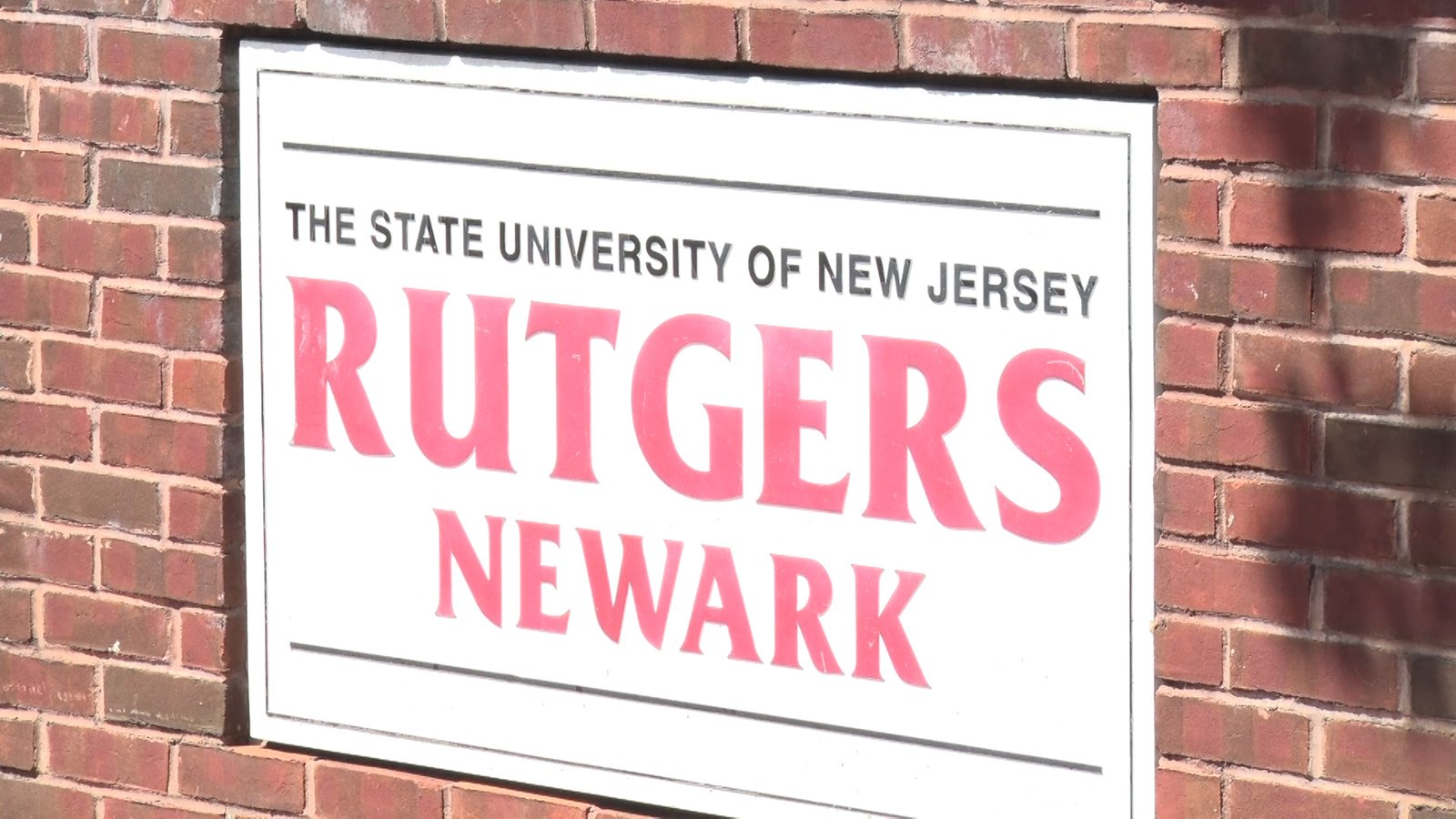
AZ: Look, I have serious concerns about the long-term strategy for higher education. And when you go into the weeds, it’s actually much worse. So, for example, Rutgers New Brunswick stays relatively flat, but Camden and Newark take huge hits. Our two-year community college system where we see more and more people going to get their advanced degrees — they’re taking over a 30% hit in just health care costs. So I have been pushing hard that we have a long-term strategy for higher education. It’s not just about funding, but it’s really about ensuring that New Jersey students, high school students — who want to get a higher education certificate, an advanced degree, whatever it may be — they stay here in New Jersey and get a job in New Jersey.
We need to figure this out because schools have been folding and being folded into other schools. Without a long-term strategy, I really worry about where higher education is going in New Jersey.
JG: Where does the funding come from? And I’m going to ask you the same question when it comes to K-12. But for those districts that may be on the losing side for these higher ed institutions, where do you take the cut? What else comes down in this budget proposal?
AZ: I’m not willing to go to the zero-sum game right now. Let’s do higher education funding. We’ve studied this over and over in the two-year colleges. When we invest a dollar into higher education in New Jersey, we get that dollar back in economic activity twofold, threefold, fourfold, etc.
So this is a money maker — meaning invest today, it makes more money tomorrow. I think we have got to start looking at multiple-year budget scenarios. Otherwise, we get the zero-sum game which says we’re going to pick winners and losers, and there will always be losers.
JG: When we look at K-12 education, you’ve supported in the past bills to create stabilization aid for those districts that have been on the losing end of the school funding formula. Do you see the need for that this year?
 Credit: (NJ Spotlight News)
AZ: Yeah, absolutely. I have with my colleagues led for the last few years trying to ensure that there are not drastic cuts to the schools who have lost under the bill that is known as S2. I have several of them in my district that I represent in Central New Jersey. You know, schools are doing everything they possibly can to cut costs, but class sizes are starting to go up.
The quality of education is at risk here. We are proud in New Jersey of the quality of our public K-12 system, and we should be. It’s one of the best in the country. But we are squeezing it for all it’s worth right now. We need to find that money so that we don’t see these drastic cuts that we’re reading about now in school districts up and down the state.
JG: If we have to have all of this stabilization aid, does it then just make the funding formula null and void? Where is the state in terms of reassessing, reevaluating how that funding formula distributes funds?
AZ: Look, the funding formula has needed a modernization upgrade for quite some time. Special education costs, transportation costs, health care costs — these are all going up dramatically and we have an outdated formula for it. It makes it obsolete, but it does point to the urgency of upgrading it as quickly as possible. We’ve put together a task force of experts to start to do this and it’s going to be so critically important that we get this done in a timely manner. Otherwise, it’s going to be what we’re seeing this year, in previous years, happening in the years ahead.
JG: Hard to talk about this without first saying that we here, of course, are public media. We are NJ PBS. You’ve been very vocal about your support for saving New Jersey public television. First, why?
AZ: Oh, my goodness. There is nothing more important when it comes to our education around public broadcast than PBS, whether that is for children and the shows that you just don’t see anywhere else, whether it is for Spotlight News, whether it is for community events. It is part of a vibrant New Jersey. It’s part of really our democracy ensuring that people are reporting about what’s happening in their local communities.
I have put out calls on my social media and I get parents up and down the state talking about how “Sesame Street” or some of the shows that — I don’t even know because my kids are grown — are critical to just how they are raising their children. And it’s what I remember. You remember. We all remember. I couldn’t emphasize enough the importance of saving public broadcasting. And I’ll tell you right now, working with my colleagues in the Legislature, we are going to make sure that happens. We are not letting public broadcasting go away in New Jersey.
JG: You have a bill on it. You would like to see some money, $9.6 million, to send to the trust for the support of public broadcasting. Any traction there on that bill?
AZ: There’s traction on that. I have another bill I’m about to introduce to take a piece of the film and tax credit — about $400 million of tax credits, for the highly successful film industry that we brought to New Jersey — and take a small piece of that, put that into a dedicated source for public broadcasting. I’ve talked directly to the governor, talked to senior staff. I’ve talked to legislative leadership. We don’t have the final answer yet, but we are starting to coalesce. And everybody is talking about the importance of saving public broadcasting in New Jersey.
JG: And I just have to finish by saying, when my kids first found out that I was working here, they were so excited that I would work with Daniel Tiger.
This story is made possible in part by the Corporation for Public Broadcasting, a private corporation funded by the American people.



