
Key Takeaways
- Rema Serafi, the Vice Chair of Tax at KPMG, joined the Big Four accounting firm 30 years ago in an entry-level position.
- In her current role, she leads a team of more than 10,000 professionals across all tax disciplines.
- Serafi is the first woman to serve as KPMG’s Vice Chair of Tax, a milestone she doesn’t take lightly.
About 30 years ago, Rema Serafi decided to travel to KPMG’s Boston office to interview for a job she didn’t expect to get. KPMG is one of the “Big Four” accounting firms alongside Deloitte, EY and PwC. It has more than 276,000 partners and employees globally, and operates in 138 countries and territories.
Serafi was a couple of years out of graduate school, having completed a master’s degree in international economics from Columbia University’s School of International and Public Affairs, but the competition for this role was stiff.
“I was up against candidates with more experience and bigger networks, but I was determined, persistent and had a real desire to learn,” Serafi tells Entrepreneur in a new interview.
Though she didn’t get the job at the Boston office, the New York office leader of the same group at KPMG took a chance and hired her. “That decision changed the trajectory of my career,” Serafi says. “It’s a big reason I am where I am today, and it’s shaped how I think about sponsorship and paying that opportunity forward.”
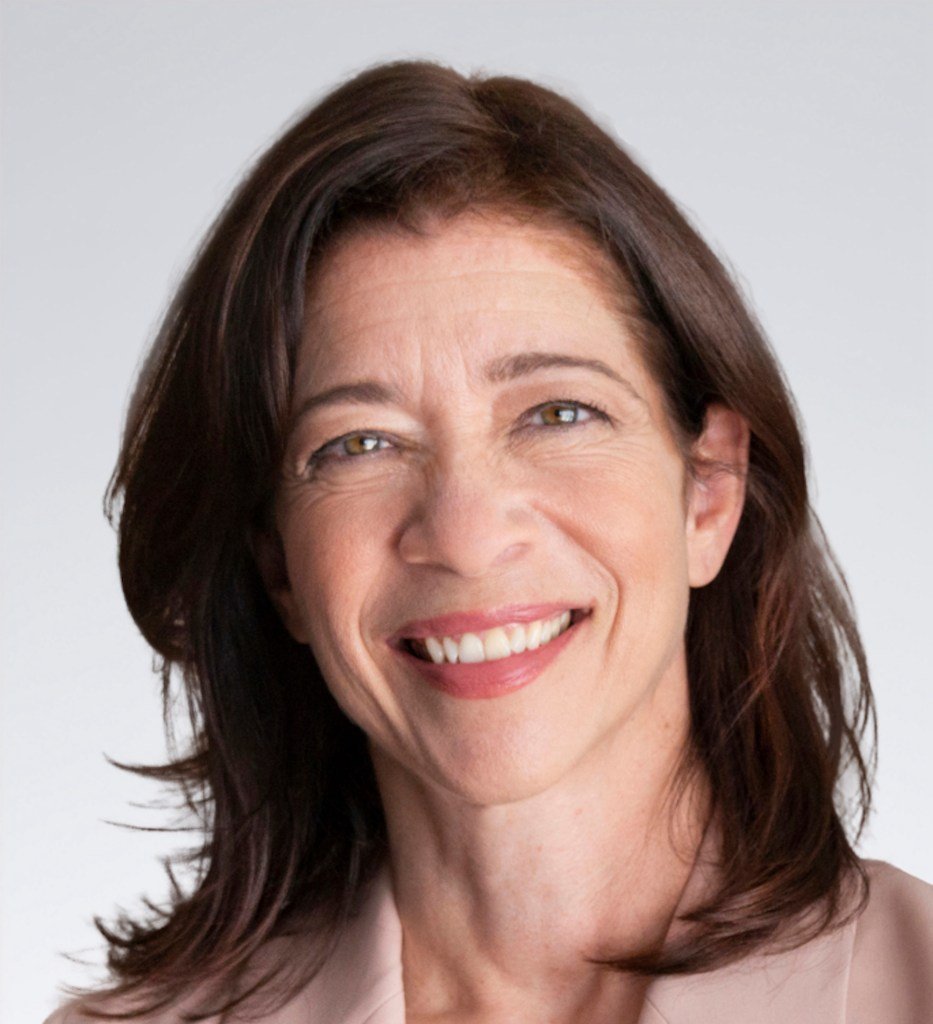
Now, over 30 years later, Serafi is the Vice Chair of Tax at KPMG and Tax Leader for KPMG Americas. In her role, she leads a team of more than 10,000 partners and professionals across all tax disciplines.
How she got to the top
Serafi is the first woman to serve as KPMG’s Vice Chair of Tax, a milestone she doesn’t take lightly. There were three important factors to her success. First, she listens intently to clients, colleagues and people around her. She learned early on in her career that the way to build trust and make better decisions was by listening.
“It helps you understand what people need, not just what they’re asking for, and it makes you more effective as a leader,” she says. “In my view, the best leaders are those who are humble enough to change their minds, who can pivot based on feedback, and who can admit mistakes. That requires active listening and confidence.”
The second way she reached the top was by building and maintaining relationships with her network. “I’ve always prided myself on building and maintaining relationships, because you never know when or where you’ll cross paths with people again,” she says. “Throughout my career, former teammates became clients, colleagues became collaborators in new roles, and leaders I worked with years ago resurfaced as decision-makers at pivotal moments.”
Serafi works hard to make a positive impression, positioning herself as someone people trust and want to work with again. Her focus on building strong relationships with a network of people has opened doors and “multiplied” opportunities, she says.
The final key to advancing was advocating for herself by raising her hand for stretch assignments, being clear about her career goals and stepping into more responsibility at times before she felt 100% ready. Serafi is quick to point out that she hasn’t done this alone. She has had mentors who had a vision for her that was bigger than her own.
“At times, many of us can struggle to see our own potential clearly because we lack the broader context,” Serafi says. “That’s why I think it’s so important to ask trusted mentors and leaders how they see you and your path.”
Her tax tips for businesses
Serafi advises considering three key suggestions when it comes to filing taxes. The first is to “plan ahead where you can” and “model and scenario plan for different outcomes,” because “timing decisions can have real tax consequences,” Serafi warns.
The second tip is to leverage AI and technology to help with taxes. “Even simple cloud accounting tax tools can reduce errors, free up time to run your business and serve as another member of the team,” Serafi says. “You don’t need a big-firm budget to benefit from good advice and technology — you just need to be intentional about it.”
The final recommendation is to “ensure access to good data.”
“The tech is only as good as the data you feed it,” she says.
Leadership lesson
Early in Serafi’s career, she was at a client dinner at a Middle Eastern restaurant. Without thinking, she started ordering for the table in Arabic.
“The client lit up and my team was amazed,” she says. “And in that moment, the very background I had tried to downplay became my greatest asset.”
Serafi is a first-generation American who immigrated to the U.S. from Syria with her family. She managed to differentiate herself in that moment in a positive way. Later, she thought back to her childhood, when she was self-conscious about being bilingual. For years, she saw the language barrier as a weakness and something to overcome.
Eventually, she realized that her bilingual background made her unique. “What makes you different – your background, your perspective, the adversity you’ve overcome – isn’t always an obstacle; it can be an advantage,” she says.
Serafi is a “big fan” of restaurateur Will Guidara’s book Unreasonable Hospitality. His central idea is that unexpected, personal touches can transform interactions in any client service role. A story in the book illustrates that point: Guidara’s team had European tourists in the restaurant who mentioned that they had never tried a New York City hot dog. Instead of just laughing and moving on, a staff member raced out to a street cart, bought a hot dog and served it to the tourist.
“That kind of proactive thoughtfulness – seeing around the corner to anticipate what would delight someone – is what makes the experience unforgettable,” Serafi said. “I think about that a lot in client interactions. To me, ‘good’ is being responsive and reliable. But the next level – the ‘unreasonable hospitality’ level – is when you’re a step ahead and surprise someone with something they didn’t even know to ask for.”
She recalled a pivotal moment when a client went the extra mile to make her life easier. In September 2001, she was on a business trip in London, working on a global project, when the tragedy of 9/11 unfolded. She couldn’t return to New York for at least a week. At that vulnerable time, her client, who lived in London, invited her over for a family dinner. The client wanted Serafi to feel safe during a stressful period away from her loved ones.
“At a time when we felt helpless and unable to be present for our own community, she welcomed us into her home and cooked us a meal,” Serafi says. “Twenty-five years later, I still recount that story. That simple act of hospitality created a bond of trust and loyalty that has lasted decades.”
Serafi tries to bring that same instinct into every client interaction; she sees the person, not just the problem.
“Effective leadership isn’t about needing to be the sole expert,” she says. “Leadership of any team requires many voices and views. There is rarely a clear right or wrong decision.”
Key Takeaways
- Rema Serafi, the Vice Chair of Tax at KPMG, joined the Big Four accounting firm 30 years ago in an entry-level position.
- In her current role, she leads a team of more than 10,000 professionals across all tax disciplines.
- Serafi is the first woman to serve as KPMG’s Vice Chair of Tax, a milestone she doesn’t take lightly.
About 30 years ago, Rema Serafi decided to travel to KPMG’s Boston office to interview for a job she didn’t expect to get. KPMG is one of the “Big Four” accounting firms alongside Deloitte, EY and PwC. It has more than 276,000 partners and employees globally, and operates in 138 countries and territories.
Serafi was a couple of years out of graduate school, having completed a master’s degree in international economics from Columbia University’s School of International and Public Affairs, but the competition for this role was stiff.
“I was up against candidates with more experience and bigger networks, but I was determined, persistent and had a real desire to learn,” Serafi tells Entrepreneur in a new interview.



