
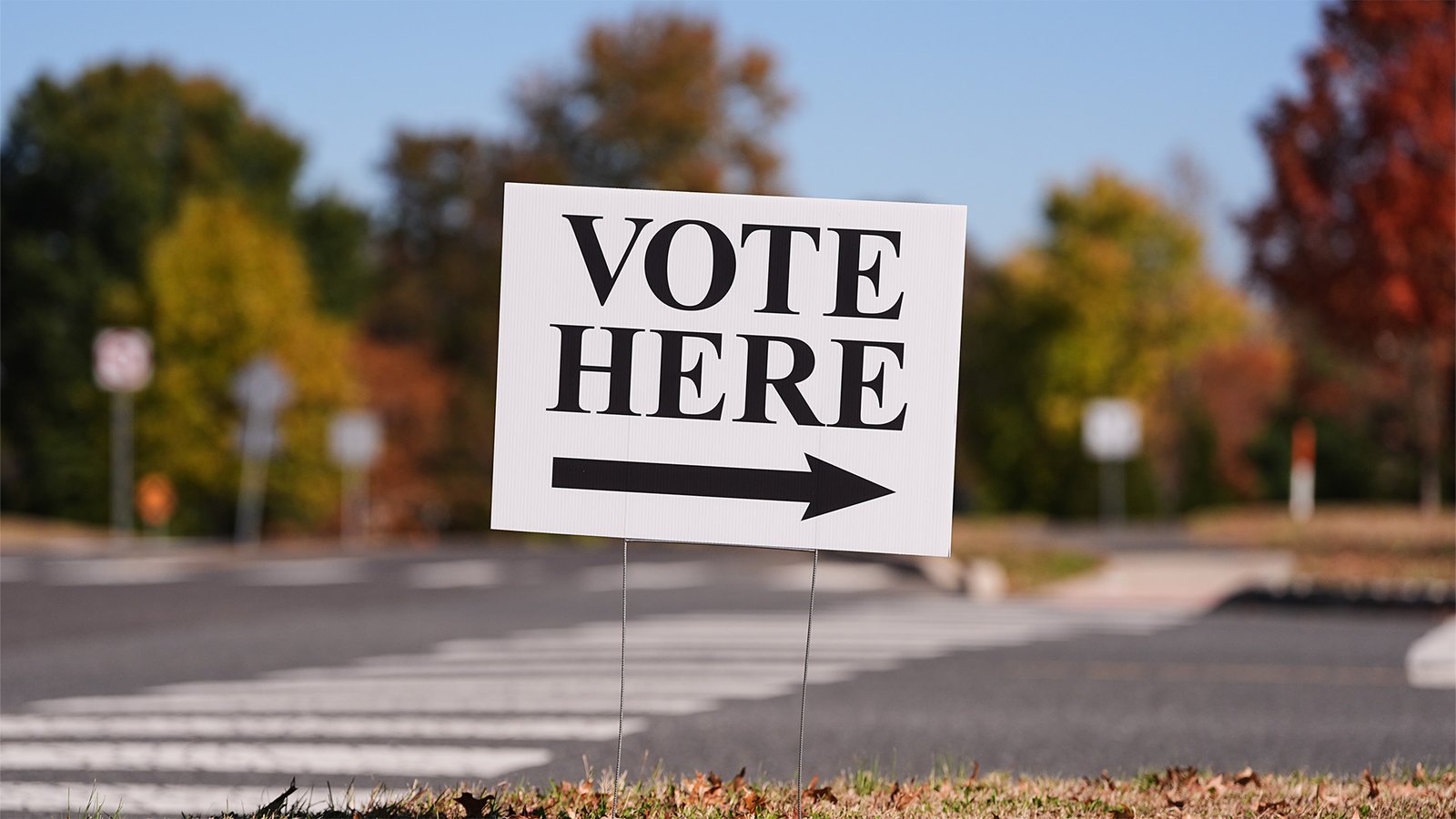
Voting rights expanded to New Jersey’s 17-year-olds this year, and initial special election data show a slow start for teen turnout.
New Jersey joined 20 states and Washington, D.C., when then-Gov. Phil Murphy signed the New Voter Empowerment Act in 2024. It gave 17-year-olds the right to vote in party primaries if they turn 18 by the general election. That law took effect in January.
In total, 32 votes were cast by 17-year-olds in the 11th Congressional District special primary on Feb. 5, according to an analysis of state data by NJ Spotlight News. It’s a dishearteningly low figure for those who lobbied for the teen vote.
“That is way less than I thought it would be,” said Saanvi Kulkarni, a Livingston High School senior who was among the five new young voters casting ballots in her township. “I really wish it was more.”
 Credit: (AP Photo/Matt Rourke)
Scant information has been disseminated about how 17-year-olds can cast ballots, advocates say. Schools, especially, should inform students during events such as NJ High School Voter Registration Week, every April they say.
Around the nation, voters who are 18-29 are playing an increasingly influential role in elections, according to Circle, or the Center for Information & Research on Civic Learning and Engagement, a nonpartisan Tufts University research group that focuses on youth civil engagement.

“Data supports that the earlier people get involved in the voting process, the more likely they’re going to continue to be civically engaged throughout their lives,” said Heather Richner, associate counsel at the New Jersey Institute for Social Justice, a Newark-based nonprofit advocacy group.
At the same time, President Donald Trump claims, without evidence, that voter fraud is widespread. He is encouraging a Congress controlled by his fellow Republicans to pass a bill to tighten voting access with a proof-of-citizenship requirement and other changes. Critics say the bill would have a chilling effect on people of color and immigrants, and on women who register with their married names rather than that on their birth certificates.
Kulkarni recalled participating in the 11th District special primary in February — with one Republican unopposed and 13 Democrats seeking their party’s nomination — as a surreal moment.
“I’m 17 right now and I’m literally voting — like, that’s insane,” Kulkarni said. “I’ve done advocacy work in lowering the voting age so being able to do this in practice and being one of the first to be able to use this new right was really empowering.”
For last week’s election she used a mail-in ballot and worked the polls. Her vote, she said, went to Analilia Mejia, the Democrat who defeated Republican Joe Hathaway and independent Alan Bond, because Mejia campaigned on affordability issues that Kulkarni has seen in her own community.
“There is a false idea that young people don’t care about politics, but we do,” said Kulkarni, who chairs the New Jersey Young Democrats high school caucus. “We care about issues that affect everyone — our family and friends and community.” Voting, she said, should be further expanded to 16-year-olds.
“We work. We pay taxes,” Kulkarni said. “The policies affect us.”
The U.S. in 1971 lowered the voting age to 18, from 21, via a constitutional amendment. A joint resolution to drop it to 16 fizzled in 2023.
Newark in 2024 gave 16-year-olds the right to vote in school board races, the first New Jersey municipality to do so. Turnout was low in last year’s election, when that law went into effect, with fewer than 100 people that age participating.
“I haven’t seen any campaigns that have targeted teens specifically, which is a shame since many young people and parents are probably unaware of this change.” — Jessica Ronan-Frisch, Rutgers Center for Youth Political Participation
Advocates say school is the best place to reach students about voting.
“I haven’t seen any campaigns that have targeted teens specifically, which is a shame since many young people and parents are probably unaware of this change,” Jessica Ronan-Frisch, associate director at the Rutgers Center for Youth Political Participation, said in an interview. “Both the state and schools can play a role in educating teens on this new voting opportunity by providing each teen with more specific primary election information.”
More than a third of the 32 new voters live in Maplewood and South Orange, according to the February special primary election data.
“Students are telling us they are very discouraged by what is currently happening in our political world and may not see their ‘voice’ as something that matters,” Jason Bing, superintendent of the 7,000-student district, said in an email. “As a school district, we have to make the pathway to action [and] participation more visible.”
Reaching students in high school contributes to equity efforts, according to The Civics Center, a Los Angeles-based nonprofit that aims to improve youth voter participation. Students who graduate high school and don’t go on to college “become harder to find and thus more difficult to register,” its website states.
Richner, of the New Jersey Institute for Social Justice, said she’s hopeful that more 17-year-olds will show up for the June primary, which will determine the major party candidates in November’s midterm elections.
“Young people have an appetite for it — to have a seat at the table,” said Richner, who works on the Vote16 campaign to give 16- and 17-year-olds the right to cast ballots in New Jersey municipal and school board elections. “At the very least, it would lead to increased voting in general.”
Colleen O’Dea contributed reporting.



