
With the development of the El Niño climate pattern imminent, exclusive historical analysis from the FOX Forecast Center shows that the presence of El Niño dramatically reduces the odds of a tropical system — including hurricanes — forming in the Gulf during the summer months.
With the development of the El Niño climate pattern imminent, exclusive historical analysis from the FOX Forecast Center shows that the presence of El Niño dramatically reduces the odds of a tropical system — including hurricanes — forming in the Gulf during the summer months, June through August.
2026 HURRICANE SEASON: COLORADO STATE UNIVERSITY FORECASTS EL NIÑO TO DOMINATE AND SUPPRESS ATLANTIC ACTIVITY
However, exactly when El Niño develops will play a key role in how much protection the Gulf receives this summer. If El Niño does not emerge until late August or beyond, there will be a window of greater opportunity for hurricanes to form in the Gulf — a region where the majority of tropical development occurs during the first half of the season.
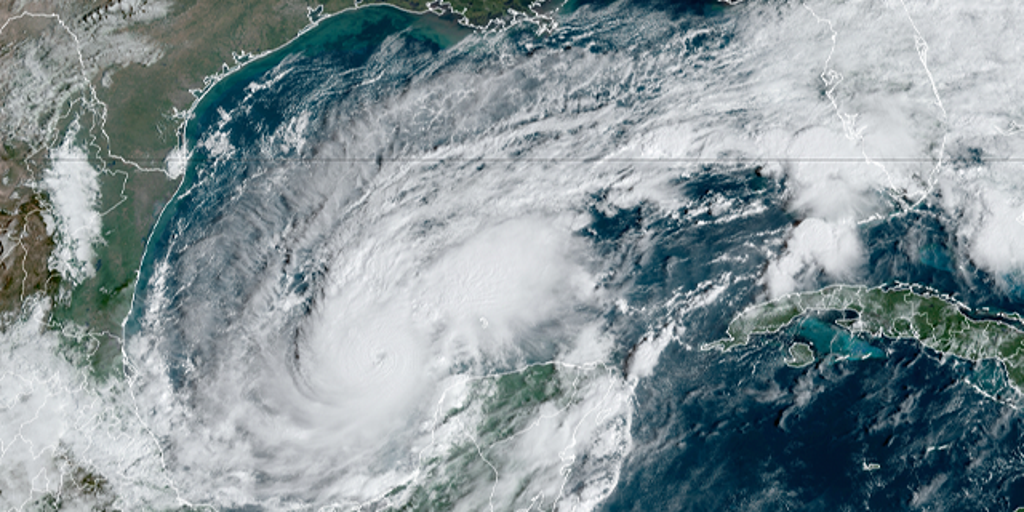
Satellite imagery of Hurricane Idalia in the Gulf Aug. 29, 2023.
(NOAA)
El Niño is one of three climatological phases of the El Niño-Southern Oscillation (ENSO) that describe natural changes in Pacific Ocean temperatures and atmospheric circulation that can greatly influence global weather.
WHAT ARE EL NINO AND LA NINA CLIMATE PATTERNS?
El Niño describes warmer than average water across the equatorial Pacific, while La Niña describes colder than average water conditions, and ENSO neutral refers to a state where temperatures are close to average.
Taken in a vacuum, El Niño generally suppresses hurricane activity in the Atlantic Basin.
El Niño effect on tropical development.
(FOX Weather / FOX Weather)
“During El Niño, above-average water temperatures in the central and eastern Pacific Ocean cause a significant increase in upper-level winds across the tropical Atlantic and Gulf of America,” the FOX Forecast Center said.
HERE’S HOW EL NINO COULD IGNITE HURRICANE SEASON IN THE EAST PACIFIC
“These winds, blowing at different speeds and directions at different altitudes, create wind shear, and wind shear is one of the primary enemies of tropical development. It tilts and tears apart tropical systems before they can organize.”
(FOX Weather)
As of earlier this month, neutral conditions have taken hold across the El Niño zone in the Pacific, and NOAA expects El Niño to emerge sometime within the next six months.
Meanwhile, experts believe this El Niño could be much stronger than the average event, with computer forecast models from both NOAA and Columbia’s International Research Institute for Climate and Society (IRI) suggesting that a “Super El Niño” could form this summer, which would only act to further strengthen the hostile winds.
TYPHOON SINLAKU MAKES DIRECT HIT ON US TERRITORIES IN PACIFIC, BLASTING SAIPAN WITH 130 MPH WINDS
In its analysis, the FOX Forecast Center looked at the formation of all tropical systems in the Gulf during the early-season months of June, July, and August, going back to 1960 — the beginning of the satellite era.

(FOX Weather)
The Forecast Center found that during El Niño years there is a 57 percent chance of a named storm forming and just a 14 percent chance of a hurricane.
By comparison, those odds jump significantly during La Niña and neutral summers, which see a 93 percent and 78 percent chance of a named storm, respectively.
The hurricane risk also rises to 64 percent during La Niña and 43 percent during neutral years.
Notable Gulf storms that formed during El Niño years.
(FOX Weather / FOX Weather)
The FOX Forecast Center noted that there is still a significant difference between the reduced tropical activity during El Niño and even neutral summers. This means that the later El Niño develops this year, the greater the chance for storm formation in the Gulf.
“How quickly that transition occurs matters a great deal, and a slower onset of El Niño would not only provide an uptick to the Gulf of America, but even the rest of the basin.”
However, even if El Niño develops quickly, both the Forecast Center and FOX Weather Hurricane Specialist Bryan Norcross cautioned that even in seasons with fewer storms, it only takes one to create major impacts.



