
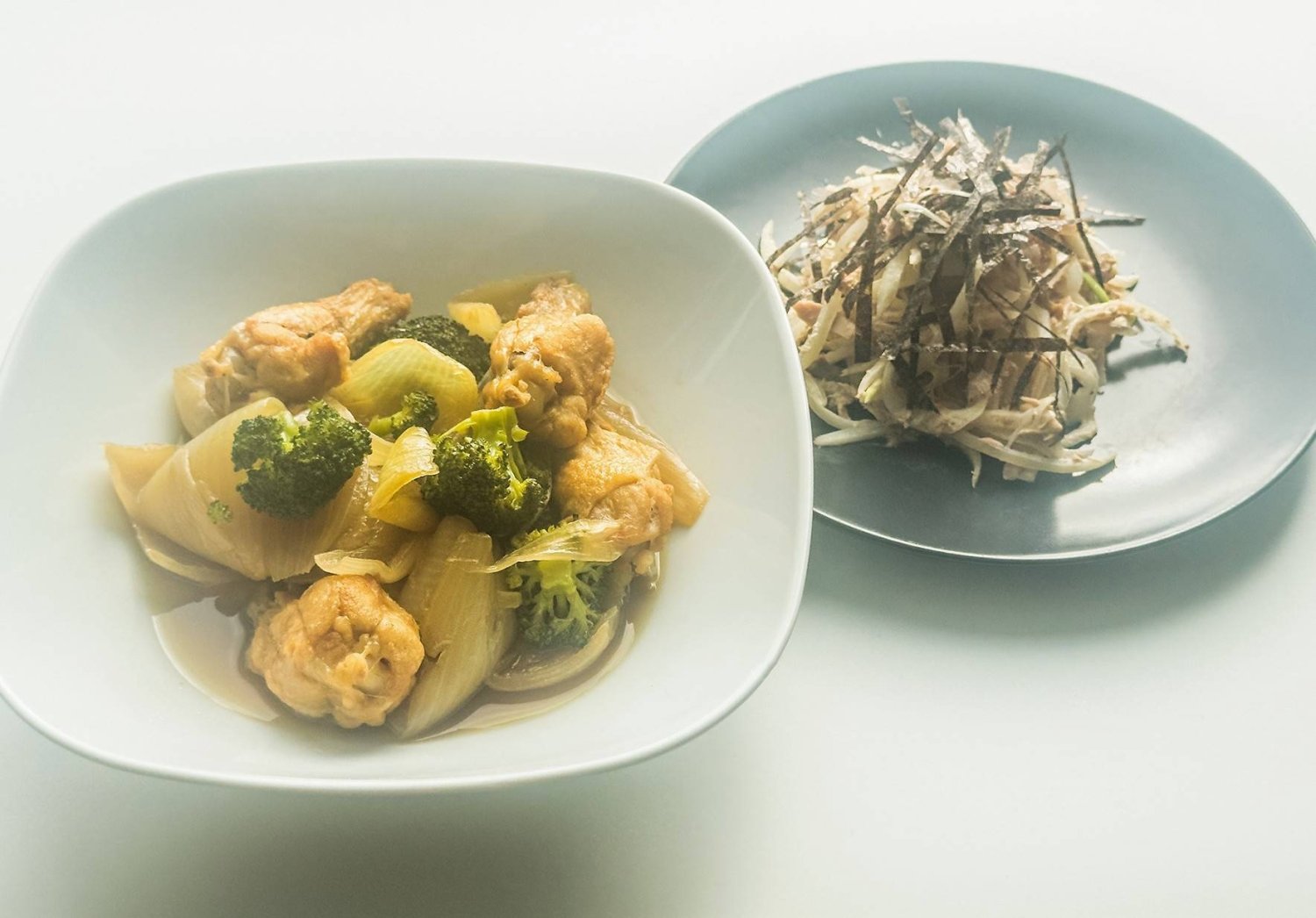
Although green onions and leeks, collectively called negi, have been around in Japan since the Nara Period (710-794) after they were introduced from the Korean Peninsula, their bulbous cousin, the round onion or tamanegi, had a later start. It arrived only in the Edo Period (1603-1867) via the port of Nagasaki when it was opened to Dutch traders.
Originally used for decorative or medicinal purposes, tamanegi did not become established as a crop until the Meiji Era (1868-1912), when its reputation as a healthy food spread across the country. The newly developed farmlands in Hokkaido were also ideal for cultivating tamanegi.
Today, Hokkaido is the top region for growing tamanegi, accounting for nearly 70% of domestic production, mostly the yellow variety that keeps fresh for longer. Indispensable to Japanese cuisine, the vegetable is eaten throughout the year. But spring is the peak season for a highly prized type of onion called shin-tamanegi (new-harvest onion).



