
by Ellie Hodgetts
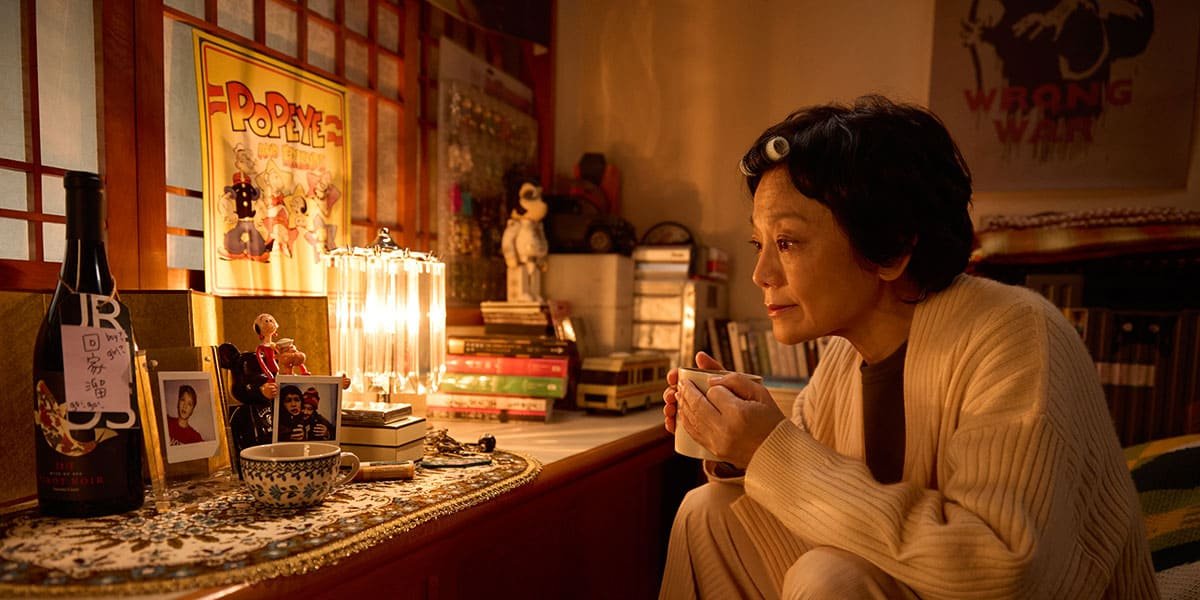
Spanning several years and moving quietly between past and present, “Daughter’s Daughter”, directed by Xi Huang, begins from a hospital bed. It’s an image that immediately places us between generations: mother, daughter, and the fragile space that exists between them. The film follows Ai and her strained relationship with her two daughters: Emma, who was adopted and later reunited, and Zuer, emotionally distant and persistently misunderstood.
From the beginning, connection feels tentative. Zuer, perceived as alternative in both appearance and lifestyle, arrives cautiously. Her girlfriend is referred to as a ‘colleague,’ her ongoing IVF treatment spoken about in practical terms rather than emotional ones. Nobody quite meets her where she is, not her partner, not her sister, not her mother. There’s a quiet, recurring sense that her feelings exist slightly out of reach.
When tragedy arrives suddenly, it is disorientating. Ai is left not only with grief, but with the unresolved weight of everything left unsaid. On top of that, a decision must be made – what to do with Zuer’s fertilised embryo. Freeze it, donate it, terminate it, find a surrogate? The language is medical, procedural. But grief reshapes language. For Ai, the question is inseparable from her own complicated history of motherhood; one daughter she gave up, believing she was offering her something better, and another she loved imperfectly, struggling to bridge the gap between expectation and acceptance.
It’s here that “Daughters’ Daughter” becomes something larger than its premise. Ai’s relationship to motherhood is fractured and layered. In quiet scenes, recording and listening to voice notes, passing through the airport with her daughter’s ashes, staring at unclaimed socks hanging in a laundrette, the film lingers in the ache of regret. It understands that motherhood is not a fixed identity, but something negotiated over time, shaped by fear, pride and expectation.
By the time Ai makes her decision about the embryo, it doesn’t feel like resolution, but a continuation, or another attempt to repair her past mistakes. What makes “Daughter’s Daughter” so poignant is its refusal to simplify motherhood into the cliches of sacrifice or virtue. It seems that by the films end, Ai has accepted at least one thing, that motherhood is both burden and grace, passed down imperfectly.
This review was written as part of the 2026 MINT Emerging Critics Scheme, presented by the MINT Chinese Film Festival, in partnership with Asian Movie Pulse. More reviews from this year’s programme can be found at unicornscreening.com.



