
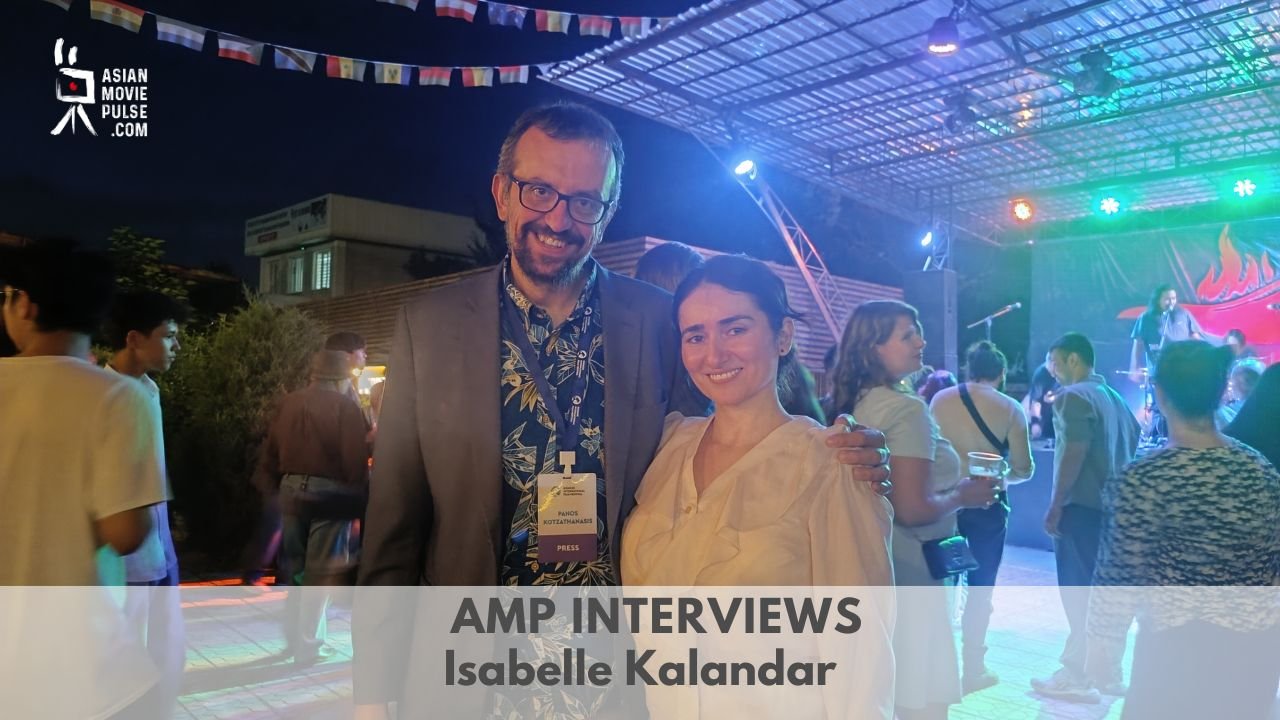
During an interview held in Bishkek, director Isabelle Kalandar spoke about the origins of “Another Birth”, her deeply personal Tajik-language drama about childhood, abandonment, migration and the women left behind. The movie, which unfolds in rural Badakhshan, was born out of memories from Kalandar’s own upbringing in the aftermath of the civil war in Tajikistan, when mass male migration to Russia reshaped entire communities.
Kalandar explained that, although her own father was present at home, she grew up surrounded by cousins and other children who were raised without a father figure. In many cases, men returned once a year, once every few years, or, as in the story that inspired “Another Birth”, after many years with another woman. For the director, the emotional and psychological effect of this absence became impossible to ignore. The project was therefore born out of both resentment and compassion, particularly towards women who waited, endured abandonment, and were still judged by the community around them.
The director also noted that “Another Birth” was made with very limited means, but with the help of her family and the wider village community. Kalandar shot the movie in her mother’s village, using people from her own family and surroundings. The young girls in the cast are her cousins, while other relatives and villagers also appear on screen. Since the production had no major budget, locals helped in any way they could, offering food, animals, housing and their time, even during the demanding harvesting season.
A central part of the discussion was the role of poetry in the movie. Kalandar described poetry as a source of education, pride and cultural memory in the isolated region where the story takes place. In the past, when formal education was limited and electricity was not always available, people would gather at night and recite poems. Children were taught to memorize them from an early age, while those who knew many poems were treated with respect. In this context, poetry becomes not only a cultural element in “Another Birth”, but also a language of emotion.
Check the review of the film
Kalandar also spoke about the importance of Forugh Farrokhzad’s poetry in the narrative. Since women in the region are often taught not to speak openly about their pain, the mother in the movie communicates indirectly through the poems she makes her daughter recite. The child does not fully understand the adult sorrow contained in the verses, just as she does not fully understand the conflicts and grief around her. This contrast between childhood innocence and adult suffering became one of the main structural ideas of the work.
Discussing the visual style of “Another Birth”, Kalandar explained that she worked with cinematographer Janis Brod to create a world seen largely through observation. Since the child protagonist is never fully allowed into adult spaces or conversations, many scenes are framed through windows, doors and other barriers. This approach reflects the way children are often pushed to the margins of serious family matters, even though they are deeply affected by them.
The director also addressed her own appearance in the movie. Kalandar said that acting while also producing, handling costumes, dealing with locations and managing many other aspects of the production was physically exhausting. At times she was sick during the shoot, but continued working because stopping would have threatened the whole production. Although the role was originally written for someone else, she eventually played the mother for practical reasons, while also feeling that the character needed to appear slightly out of place within the village.
Working with children, on the other hand, proved both challenging and rewarding. Kalandar explained that the young performers became tired easily, especially late in the day, but were very good at memorizing lines and behaved naturally in front of the camera. Rather than pushing them toward theatrical acting, she used them almost as models, asking them to say their lines simply and without exaggerated emotion. This decision was also connected to her desire to avoid the kind of overacting she feels often appears in regional productions.
Kalandar also discussed her next projects, describing “Another Birth” as the first part of a trilogy about migration, exile and the way these experiences affect human nature. While the first movie examines the women and children left behind, the second, currently in post-production, looks at the psychological consequences for those who leave. It follows a man who migrates, is deported, and returns home ashamed because he has no money. A third project is now in development, with Kalandar saying that she wants to take more time with it and work with a larger professional team.
For Kalandar, “Another Birth” is not only a story about one family, but also a reflection of a wider social wound. Through poetry, childhood perspective, non-professional performers and the landscape of Badakhshan, the movie turns the consequences of migration into an intimate portrait of longing, silence and survival.



